Physicians are increasing their use of digital tools enabled by augmented intelligence (AI)—also called artificial intelligence—to assist in the documentation of billing codes, medical charts and visit notes.
A reason for this growth in the use of technology, according to AMA research (PDF), is that physicians are learning how AI can streamline workflows, create efficiencies and improve physician well-being.
“AI holds tremendous potential to make our jobs easier, eliminate the most burdensome tasks we encounter, and forever change how we diagnose and treat those within our care,” former AMA President Jesse M. Ehrenfeld, MD, MPH, wrote in an AMA Leadership Viewpoint column.
“But it’s also true that this technology needs human direction and guidance, and that this humanity that has defined patient care for thousands of years will be just as essential in the future,” added Dr. Ehrenfeld, an anesthesiologist.
Surprisingly, this technology may also be helping restore more humanity to the practice of medicine while strengthening and reestablishing the traditional patient-physician relationship.
“Burnout's a multipronged issue and there's no single solution, but we know that clinical documentation is a large contributor to burnout—especially in outpatient arenas,” Jason Misurac, MD, said in a recent AMA webinar.
Dr. Misurac, a clinical associate professor with University of Iowa Health Care, described how his organization piloted and then implemented AI-enabled ambient documentation and chart-review tools.
University of Iowa Health Care is part of the AMA Health System Member Program, which provides enterprise solutions to equip leadership, physicians and care teams with resources to help drive the future of medicine.
Ambient AI creates right ambience
The ambient AI-documentation tool was made available to physicians, trainees, dietitians, nurse practitioners, physician assistants and social workers.
“Anyone who felt that they would have value in using this was able to use it,” said Dr. Misurac, medical director of pediatric dialysis and the health system’s pediatric specialty clinic.

The tool helped reduce burnout in several different ways, according to the system’s internal surveys, but one finding that stood out among the rest is that patients noticed the changes and appreciated the new way visits were conducted.
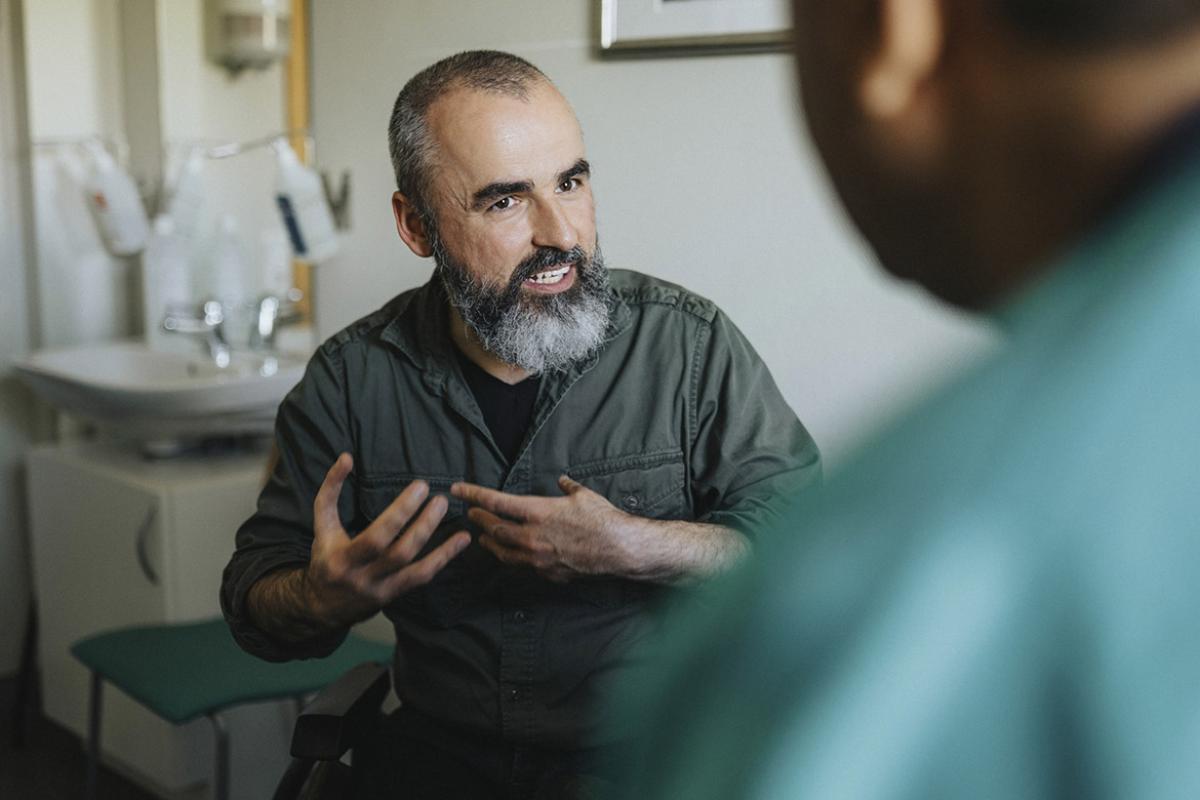
“This can increase the amount of time we spend face-to-face with patients and reduce the focus on the computer in the room,” Dr. Misurac said regarding the ambient AI-documentation tool.
“Patients [are] noticing that we're more engaged, that we can give patients more empathy because we're not spending that cognitive load typing verbatim what they tell us,” he explained. “Patients really feel like they [physicians] listen to what they have to say when the computer's not in between us.”
University of Iowa Health Care uses an ambient AI-documentation tool from Paris, France-based tech company Nabla.
Dr. Misurac described Nabla’s product as a system that listens to the conversation between patients and physicians or nonphysician providers, extracts the concepts discussed, and then generates a draft note that gets reviewed and is then incorporated into the patient’s medical record.
Along with more eye contact and less looking at the computer, the system can also reduce the cognitive burden that clinical note-writing requires, and then free up physicians’ time to do other things, he said.
From AI implementation to EHR adoption and usability, the AMA is fighting to make technology work for physicians, ensuring that it is an asset to doctors—not a burden.
Burnout reduced by 30%
Since launching systemwide use in September 2024, it’s estimated that University of Iowa Health Care physicians and nonphysician providers have used the ambient AI-documentation tool in 220,000 patient encounters or between one-fourth and one third of their clinical volume.
Users report an average of 2.6 hours a week in perceived savings in time spent on after-hours documentation.
A greater than 30% reduction in overall burnout scores was recorded 30 and 90 days after the rollout. Scores were generated using the Stanford professional fulfillment index.
The significance of this metric was that it showed physicians transitioning from burned out to not burned out, Dr. Misurac said.
Challenges to the widespread adoption of ambient AI that were cited by Dr. Misurac included the cost—ranging between $100 to $600 per physician per month depending on the vendor—and both the internal and public concerns regarding the accuracy of AI-powered outputs.
In terms of accuracy, Dr. Misurac compared ambient AI documentation with the use of in-person scribes or electronic transcription services.
“There's a potential for error in any form of documentation that you do,” Dr. Misurac noted.
He added that, while the tool will help generate the draft of a note, physicians are ultimately responsible for ensuring that an accurate account of the visit ends up in the patient’s chart.
It was also noted that the University of Iowa Health Care privacy and security team nixed the use of any device that generates a recording of the patient encounter. Dr. Misurac pointed out that the Nabla tool produces five- to 10-second “snippets” of an onscreen transcription but does not generate a permanent recording of the verbatim conversation.
“If a recording is created, that's going to be a ‘No’ for us,” Dr. Misurac was told by the University of Iowa Health Care privacy and security team.
“There's no full recording of the conversation ever created,” he said.
Stay up to date on AI
Follow the latest news on AI and its applications and effects for health care—delivered to your inbox.