Chronic disease remains the most stubborn—and costly—challenge facing U.S. health care. Despite decades of innovation, national control rates for conditions such as hypertension and diabetes continue to decline, and as patients are accumulating multiple diagnoses that compound risk and complexity.
Sutter Health believes reversing that trend requires more than remote monitoring alone. It demands a fundamentally different approach to how data, care teams, technology and patient behavior come together over time.
That belief underpins Sutter Sync, a systemwide digital care program designed to help patients with chronic conditions move into—and stay in—healthier states. The program integrates proprietary connected devices, a dedicated care team and Epic-based workflows that aim to reduce friction for patients while relieving pressure on frontline physicians and care teams.
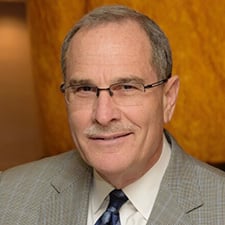
For Richard Milani, MD, a cardiologist and chief clinical innovation officer for Sutter Health, the urgency of the problem is clear.
“Over 80% of the deaths in the United States are due to chronic diseases,” said Dr. Milani. “It's the majority of health care costs across the nation. It's the number one reason for disability in the United States.”
Just as troubling, he said, is how poorly the system is managing those conditions today.
“Each year our control rates for diabetes and hypertension continue to diminish,” Dr. Milani said. “They're not getting better with time. They're getting worse with time.”
Sutter Sync launched in spring 2025, beginning with patients whose hypertension had remained uncontrolled despite standard care. Enrollment has grown to over 5,000 patients.
“Within six months, we have 80% of them in control,” Dr. Milani said.
Patient experience scores have been strong as well.
“Our net promoter score is 74,” he said—well above national health care benchmarks.
Financial outcomes take longer to measure, but the pathway is well established.
“If I take people who are out of control and get them in control, they have less events,” Dr. Milani said. “Less heart attacks, less strokes, less hospitalizations. Those benefits inevitably ripple out across the population we’re serving.”
Sutter Health is part of the AMA Health System Member Program, which provides enterprise solutions to equip leadership, physicians and care teams with resources to help drive the future of medicine.
Managing one disease at a time falls short
The challenge for getting chronic conditions into healthier states grows even steeper when conditions overlap—a reality for most patients living with chronic disease.
“The majority of people who have chronic disease have more than one,” Dr. Milani said. “In fact, the average person has at least two chronic diseases today.”
That overlap drives downstream risk.
“If you have diabetes and hypertension, which is a very common combo, only 15% of those are both controlled,” he said. “Which means 85% don’t have them both under control.”
Those patients are most likely to experience heart attacks, strokes and hospitalizations—outcomes that health systems are increasingly accountable for preventing.
“As a health system, what we're saying is: OK, what could we do better? How can we improve how we manage chronic diseases?” Dr. Milani said. “That’s what Sync is all about.”
Rather than treating remote patient monitoring as a standalone intervention, Sutter Sync was designed as a comprehensive chronic disease management framework.
“It encompasses multiple pieces,” Dr. Milani said. “One is devices from home. One is the care team and how we assemble that. One is looking at issues like health literacy and behavioral conditions like diabetes distress. Each of those little pieces are a brick in the wall towards building better control.”
Reducing the burden on patients
A major design principle behind Sutter Sync was minimizing the cognitive and technical load placed on patients—particularly those managing multiple conditions.
Dr. Milani pointed to recent research showing why that matters.
“There was a recent paper in JAMA that looked at digital solutions for chronic diseases,” he said. “What they discovered was that roughly 97% of all the digital solutions that exist are for a single chronic disease.”
That fragmentation creates real barriers.
“If a person's going to be managing this through a digital solution, they would have to have multiple devices with multiple programs,” he said. “You’d have to download this app and that app. That creates an enormous burden.”
For patients with limited digital literacy, those steps can be prohibitive.
“The answer we used to get all the time was, ‘I’ll set this all up when my daughter comes to visit me in a couple months,’” Dr. Milani said. “That can easily turn into them not setting it up at all. We had to make it easy for people in a broad range of circumstances to use and use it well.”
To enable more effective user experience, Sutter Sync takes a different approach. Sutter-developed blood pressure cuffs, scales and glucometers connect directly to Epic’s MyChart using Bluetooth technology that pairs as easily as wireless earbuds—without requiring patients to download device-specific apps.
“The only app you’ll need for all this stuff is MyChart,” Dr. Milani said. “There’s nothing to download. It connects very easily.”
That simplicity solves several problems at once.
“It’s taking away the burden of multiple apps and multiple different devices,” he said. “And there’s no place in between—no latency in the data.”
From AI implementation to digital health adoption and EHR usability, the AMA is fighting to make technology work for physicians, ensuring that it is an asset to doctors.
That includes launching the AMA Center for Digital Health and AI to give physicians a powerful voice in shaping how AI and other digital tools are harnessed to improve the patient and clinician experience.

Engagement that builds self-efficacy
While Sutter Sync supports more frequent data flow, its goal is not constant monitoring for its own sake. Instead, the program focuses on engagement that builds understanding and confidence.
“It may not be daily data sharing,” Dr. Milani said. “It could be weekly.”
Even that level of participation, he noted, can be powerful.
“Just by the virtue of taking your own blood pressure, that improves patient engagement. It improves self-efficacy, which is an important attribute toward disease control,” he said. “Just having to do that task, seeing the results, and then learning what the results mean, whether they’re not good, good, or better, really improves the chances for that person to get their disease under control.”
Solving the data overload problem
Remote monitoring has often stumbled on a familiar obstacle: overwhelming physicians with data they don’t have time to manage.
“If we look at the existing system, we have a primary care doc who is already overburdened,” Dr. Milani said. “Throwing a thousand more data points on top of their workflow—that’s not a recipe designed to succeed.”
Sutter Sync was intentionally built to do the opposite.
“The idea is we are taking that work off of the physician,” he said. “We have a dedicated team that's actually managing the medicines per the guidelines, altering the drugs, ordering the labs.”
Incoming data is filtered through analytics that triage patients based on need.
“This person is getting better, getting worse—this needs your attention today, this sometime this week,” Dr. Milani said. “The alerts are ordered in a way where it’s more manageable.”
For primary care physicians, that means less noise, not more.
“It’s actually taking the burden away so that she or he can go on about their daily duties with that support,” he said. “It can have a major effect on outcomes and the increase in positivity has its own benefit.”
Designed for equity and access
Sutter Sync was also designed to reach patients who are often left out of digital health initiatives, whether because of limited digital literacy, lack of confidence with connected devices, or no access to a broadband internet network.
“This is exactly the type of program that does reach those patients,” Dr. Milani said. “All you need is a smartphone.”
The devices transmit data through cellular connectivity, eliminating the need for home broadband. Health literacy is addressed just as deliberately.
“We know that 36% of patients across the United States have a low level of health literacy,” Dr. Milani said. “Based on that, we adjust the mechanism by which information is provided.”
That might mean videos, simplified visuals or other formats that support understanding without reducing substance.
“Whatever it takes to have that person fully understand what’s expected,” he said. “We’re not giving them less information. Rather, we’re making sure the information can be better understood.”
Trust, team-based care and the physician relationship
Rather than bypassing physicians, Sutter Sync is designed to extend the care team in ways that reinforce trust.
“We operate in conjunction with the referring physician, but we take the burden off their back,” Dr. Milani said.
Patients experience that extension as continuity—not fragmentation.
“You broaden the family of folks who are caring for me, and it’s all working well together,” he said.
That coordination shows up in patient experience metrics.
“Patients who get referred into the program typically increase their CG CAPS scores for their primary care physician,” Dr. Milani said.
Just as important, the program is designed for durability.
“It doesn’t make any sense to get them in control and then say bye,” he said. “What our program does is not only get them into control but keep them there.”
Sutter Health built the program entirely within Epic and MyChart, making it scalable across health systems using the platform.
“We built it in such a way that any other Epic customer anywhere in the world could utilize the program,” Dr. Milani said.
As Sutter Sync expands to additional conditions—including cholesterol management and Type 2 diabetes—the focus remains on reducing friction while addressing the full spectrum of factors that influence health.
“We’re adding behavioral components,” Dr. Milani said. “Because if the goal is to get you where you need to be and keep you there, we have to remove every barrier that exists.”
In a system where chronic disease continues to drive cost, disability and premature death, Sutter Sync offers a different blueprint—one that treats chronic care not as a series of disconnected tasks, but as a sustained partnership between patients, clinicians and technology.
The AMA Remote Patient Monitoring Implementation Playbook offers a step-by-step process to help guide your practice through the implementation of remote patient monitoring. It is part of the AMA Digital Health Implementation Playbook Series that includes a Telehealth Clinical Education Playbook and a Patient Access Playbook.