As a medical student, do you ever wonder what it's like to specialize in cardiovascular disease? Meet AMA member Josselin Vachon, MD, a cardiovascular disease specialist and a featured doctor in the AMA's “Shadow Me” Specialty Series, which offers advice directly from doctors about life in their specialties. Check out his insights to help determine whether a career in cardiovascular disease might be a good fit for you.
The AMA's Specialty Guide simplifies medical students' specialty selection process by highlighting major specialties, detailing training information and providing access to related association information. It is produced by FREIDA™, the AMA Residency & Fellowship Database®.
Learn more with the AMA about the broader medical specialty of cardiovascular disease.
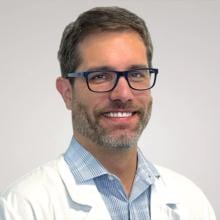
“Shadowing” Dr. Josselin Vachon
Specialty: Cardiovascular disease.
Practice setting: Group practice.
Employment type: Employed by CenterWell Senior Primary Care, in Altamonte Springs, Florida. CenterWell Senior Primary Care is part of the AMA Health System Member Program, which provides enterprise solutions to equip leadership, physicians and care teams with resources to help drive the future of medicine.
Years in practice: One.
What the specialty of cardiovascular disease is: It is the medical specialty that focuses on heart and blood vessels. While it sounds very specific, good knowledge of internal medicine is still necessary as the cardiac and vascular structures can be impacted by other organs and diseases.
A typical day and week in my practice: In a typical day, I work in the office from 8 a.m. to 5 p.m. I see about 18–20 patients and read echocardiograms. I believe the most important aspect of my work is to educate patients on their conditions.
In a typical week, I work in an office all five days and do not have any inpatient or call responsibilities. We do resting and stress echocardiograms in the office. I also have some administrative and teaching responsibilities within the practice.
The most challenging and rewarding aspects of cardiovascular disease: My practice focuses on a senior population with diverse pathologies and needs. We want to help them have good quality of life, which is never measured by the number of tests or medications we prescribe. We always need to ask ourselves the following question: How can I significantly improve my patient’s life? Sometimes, we do so by simply not ordering a test or by making a point of deescalating care.
The most rewarding aspects are when patients come back for a follow-up with a smile and feeling better, as well as when they never miss an appointment because they are happy to see me.
The impact burnout has on cardiovascular disease: Burnout in cardiology is real. Most cardiologists work long hours, both inpatient and outpatient. Work-life balance is difficult.
How CenterWell Senior Primary Care is reducing physician burnout: CenterWell is one of the nation’s only value-based cardiovascular practice models, so there are no nights, weekends or hospital on-call duties. We are only incentivized to drive great clinical outcomes and deliver an excellent patient experience. We are not volume based.
How my lifestyle matches, or differs from, what I had envisioned: I went to medical school abroad, in France, and the medical system I grew up in is completely different. But while recertifying in the U.S., I never thought I would be able to find a system that would give me the chance to spend time with patients at the bedside. I am thrilled to have found a company that deeply cares about patient outcomes and employee well-being.
Skills every physician in training should have for cardiovascular disease but won’t be tested for on the board exam: Social skills and how to interact with patients cannot be tested, and while excellent communication and empathy are very important in any medical field, they are especially important in cardiology. Also, the willingness to keep up to date in this fast-evolving field is a must.
One question physicians in training should ask themselves before pursuing cardiovascular disease: Have I talked to a few cardiologists prior to engaging in cardiology? It is a demanding field, and one must make some sacrifices along the way to succeed. Just make sure to be aware of that before starting.
Books, podcasts or other resources every medical student interested in cardiovascular disease should be reading or listening to:
Additional advice I would give students who are considering cardiovascular disease: If you are considering cardiology, you MUST love math and physics. If you don’t, then it is not for you.
For example, I read an article about a French cardiac surgeon who has a passion on the side. He is a plumber and started his own company. We often use the analogy of a plumbing system to describe the coronary arteries to patients.