A project seeking to improve medical students’ ability to quickly differentiate between opioid and nonopioid overdoses took the top prize in the 2025 AMA Research Challenge, leading to a surreal moment for soon-to-be physician Addison Shenk in which she wasn’t certain she had actually won.
Watching a video of the final announcement, Shenk thought it was possible the video team was simply filming possible winners for a later presentation.
“I didn’t know if it was real or not,” she said of being shown the video naming her the winner. “Then, they shut the cameras off and I was like: ‘Was that real?’”
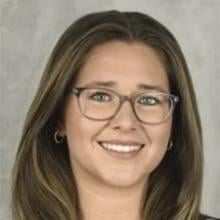
It was, indeed, the real thing for Shenk. She is a fourth-year medical student at the Edward Via College of Osteopathic Medicine in Blacksburg, Virginia, and earned the $10,000 award from Laurel Road with her project, “Hands-On Naloxone Training: Advancing Curriculum and Assessment Through Simulated Manikins Learning” (PDF).
The project took first place among 1,400 abstracts submitted by medical students, physician residents and fellows, and international medical graduates as part of the AMA Research Challenge, which is the country’s largest national, multispecialty research event. Of the abstracts submitted, 1,000 were accepted to the virtual poster symposium, and of the qualifying abstracts, the 50 highest-scoring projects competed in the semifinals.
In announcing the winner, AMA President Bobby Mukkamala, MD, called the finalists “an extraordinary group whose work represents the innovative thinking that moves medicine forward.”
For medical students, residents and international medical graduates looking to hone their research skills, the AMA offers resources and programs that bring you from the basics all the way to the AMA Research Challenge where you too can compete for a $10,000 prize. The call for abstracts is now open for the 2026 AMA Research Challenge. The submission deadline is July 16.
Tackling an important issue
As noted in the “2025 AMA Report on Substance Use and Treatment: Progress, Policy and Future Directions” (PDF), about 75,000 Americans are dying annually of overdoses—predominantly from potent, illegally made fentanyl.
The national problem is also taking lives in Virginia, where Shenk attends medical school and where the state health department reported 2,463 overdose deaths in 2023, of which 2,058 were related to opioids.
The idea for Shenk’s winning project was sparked after she and other medical students in an anti-overdose task force took a suggestion from departing task-force members to examine the school’s training for first-year medical students on using the opioid-overdose reversal medication naloxone (marketed under the brand name Narcan, among others). Shenk and the other medical students added a simulation component to the existing naloxone training, which is a slide deck and lecture-based lesson, to see whether that would help the first-year students better absorb and retain this potentially lifesaving information.
The medical school already had Wi-Fi-enabled manikins for simulations in its health-care training, and the researchers decided to program the manikins to display symptoms of either opioid or nonopioid overdoses.
The manikins are “such an excellent way to train medical students, and we were very lucky that we got that training all throughout our first two years before we got any clinical practice because that really did prepare us then to go into our rotations,” Shenk said.
In the training, first-year medical students were taught to identify the three telltale signs of opioid overdose—respiratory depression, lack of response to painful stimuli and pinpoint pupils. Shenk and her fellow researchers found that the medical students who had both the traditional slides-and-lecture training and practiced with the manikins were faster to distinguish between overdose types and felt more confident that they would be able to use their skills in the case of an actual overdose.
“The biggest part for us was: How confident were they in their abilities and how confident were they in their ability to translate that into the real world?” Shenk said. “Because if you have first-year medical students who are confident enough in their training, then you have them in the real world, if they ever encounter the scenario, confident to jump in and assist if they've got Narcan on them or access to Narcan.”
The AMA believes that science, evidence and compassion must continue to guide patient care and policy change as the nation’s opioid epidemic has become a more dangerous and complicated illicit drug-overdose epidemic. Learn more with the AMA’s End the Epidemic website.
The winning formula
The judges who selected the winner from the finalists in the 2025 AMA Research Challenge said that in evaluating the entries, they looked for originality, effective methodology and the ability to communicate complex topics.
“I’m really interested in the impact that these projects will have on populations now and in the future,” said one of the judges, John Andrews, MD, the AMA's vice president for medical education and professional development. The projects “all address important issues. And the degree that they move the needle on the way we approach those issues in the future will be a significant area of interest.”
Shenk credited the win to the formation of a solid team—one that included fellow fourth-year medical students Austin Gordon and Brooke Nelson, with assistance from third-year students Tobias Addis, Alexandra Reagan, Penny Clanor and Natalie Graham, as well as James Mahaney, PhD.
Shenk said the researchers are already eyeing the next population they might want to target for training on identifying opioid overdoses—college students with no science background.
“That would be a really good place to start because it’s a controlled environment,” she said. “And it’s a good translation because, unfortunately, a lot of overdoses happen in college.”

Shenk’s advice for medical students competing in future research competitions is to choose a subject that matters to you. In accepting the award, she shared that someone in her life struggled with addiction and talked about how she had witnessed an overdose while in college.
“If you pick something you care about, it won't feel like a check mark for your CV or a medical school necessity or something to make [you] look better for residency programs,” she said. “It’ll be something you actually want to do and want to continue, and I think that will give you better success than if it were just something that you jumped into because you thought you had to.”
In taking the top prize, Shenk joins an esteemed list of recent AMA Research Challenge winners.
In 2024, MD-PhD student Ayush Kumar won the AMA Research Challenge for his poster exploring a potential treatment for triple-negative breast cancer.
In 2023, third-year medical student Jesse Kirkpatrick won the AMA Research Challenge for his poster on the detection of cholangiocarcinoma—a rare bile duct cancer that is among the deadliest forms of cancer.
In 2022, MD-PhD candidate Leelabati “Leela” Biswas won the $10,000 grand prize for her research examining potential genetic biomarkers of infertility.
Learn more with the AMA about how to get started in research as a medical student.