Peter Hull, MD, MBA, is heartened by what he sees in younger physicians entering residency programs.
“More and more now, we see a genuine organic interest in being leaders. Their natural leadership capability is quite impressive,” said Dr. Hull, an emergency medicine physician and chief medical officer of Sutter Health’s Greater Sacramento Division.
Fostering leadership in a health system isn’t just about recruitment. You need to encourage prospective leaders to develop these skills so that they stay engaged in leadership, according to Dr. Hull. A bi-directional relationship between physicians and health care administration is also imperative to address the challenges and frustrations doctors face and ensure that their voices are heard, he emphasized.
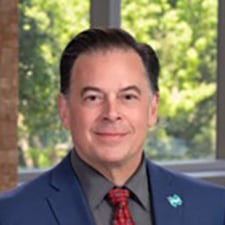
Dr. Hull talked more about Sutter Health’s experiences in updating its leadership development programs to support a new generation of physicians during an AMA Insight Network webinar.
Based in Northern and Central California, Sutter Health is part of the AMA Health System Member Program, which provides enterprise solutions to equip leadership, physicians and care teams with resources to help drive the future of medicine.
Among other benefits, members of the AMA Health System Program have access to the AMA Insight Network’s Quality, Safety and Equity community. This virtual forum provides an opportunity for like-minded leaders from across the country to hear more examples of how leading systems are finding innovative ways to address health care inequities in their communities.
Dr. Hull is no stranger to leadership roles at Sutter Health. He has done a great deal of work to position Sutter Health at the forefront of creating physician leadership experiences, noted forum moderator Suja Mathew, MD, senior physician advisor with the AMA.
He has been responsible for ensuring quality of care, “providing administrative guidance and support to the medical staff and ensuring communication between hospital administration and physicians. His role involves integrating acute and ambulatory activities” across the Greater Sacramento division, Dr. Mathew said.
In other capacities, Dr. Hull has served on the Sutter Valley Operating Unit Board of Directors, and chaired committees on medical affairs, safety and quality, and research and education.
An important part of being an impactful leader is understanding who you are, said Dr. Hull. There’s an opportunity to find out more about yourself and recognize how you’re going to be an impactful leader.
“All of us who have gone through these various programs at Sutter Health have benefited from it. We have a fairly strong success rate,” he added.
Drilling down the leadership modules
Sutter Health offers the following leadership development programs:
- Phys & APC Emerging Leader, which is new leader development that includes skill building and personal growth.
- Phys & APC Accelerated Leader for critical leadership knowledge.
- Phys & APC Business Bootcamp, which is for leader business development.
- Managing Clinical Excellence to enhance teamwork.
- Leadership Academy, which is a year-long Sutter Health intensive training.
Many of Sutter Health’s new physician leaders come from one of its aligned medical groups but it also gives leadership counseling to independent physicians as well. And it’s not just physicians—people from other areas of health care, such as consulting, gravitate toward the leadership modules.
On average, the new leader development module represents 80% physicians and 20% nonphysician providers. But these percentages can vary from program to program. Managing for Clinical Excellence and the Leadership Academy aren’t just for physicians. Clinicians typically make up somewhere between 20% to 25% of participants.
The programs have good retention of participating leaders, said Dr. Hull.
Dr. Hull, who participated in the academy nearly 15 years ago, estimates that a quarter of his class are still with the health system.
The standard of care in physician well-being recognition
Institutions in this article have been honored by the Joy in Medicine® Health System Recognition Program.

Leadership is one of the six pillars of the AMA Joy in Medicine® Health System Recognition Program empowers health systems to reduce burnout and build well-being so that physicians and their patients can thrive.
Fostering teamwork
Two of Sutter Health’s modules, Managing for Clinical Excellence and the Leadership Academy, underscore the fact that leaders are part of a team, said Dr. Hull. This is about everyone working together to deliver the best care to patients, he emphasized. It's not about confirming that “whatever the doctor says” is the right thing.
Sometimes the physician is the quarterback, the leader on the team. Other times, the physician is there just to listen and hear the different perspectives, to help create a consensus on the best course of action.
“We’ve all been in those circumstances where we come up with a great idea and we recognize this isn't going to work for the nurses, or this isn't going work for another group,” he said. “You may have great ideas as a physician, but you maybe don't have the best ideas. And listening to others is really an important part” of that teamwork.
“It’s really about everybody working together. Whatever delivers the best care to our patients is what we want,” said Dr. Hull. “When you truly invest in a culture that permits everyone to be a contributor, the amount of engagement you get, not only from your physicians, but from everybody, increases exponentially.”
Scoping out talent
Senior leaders at Sutter Health convene regularly to identify talent in the organization. Finding those potential leaders isn’t an exact science, said Dr. Hull. People with leadership traits aren’t always interested in taking the leadership path in their careers. They might be a few years out of residency and not be ready to commit to a leadership position.
“We try to be as mindful as we can about who's coming on board and who may have interest and desire,” he added.
Chief medical officers at each of Sutter Health’s facilities and ambulatory surgery centers are often tasked to look for people who would make great leaders.
“We always see chief medical officers as the cornerstone of safety and quality and strategic planning,” said Dr. Hull.
This calls for an ability to recognize and develop talent, to be impactful mentors, to make certain that you’re identifying people who have that desire and capability of moving forward in a leadership role. For CMOs, this is a core competency in recruiting effectively and growing future leaders, he said.
Download the 2025 AMA Joy in Medicine® magazine (log into your AMA account to view) to see whether your organization is part of the prestigious group of 164 organizations across 40 states and the District of Columbia that are currently recognized for their dedication to physician well-being.