- Physicians bring energy, advocacy to Capitol Hill during AMA National Advocacy Conference
- AMA grants four Outstanding Government Service Awards
- Medicare Advantage risk scores should be aligned with plan costs
- On price transparency, AMA supports technical improvements while recommending more customized data, payer transparency
- HHS requests information on accelerating AI adoption in clinical care
- More articles in this issue
Physicians bring energy, advocacy to Capitol Hill during AMA National Advocacy Conference
Every year, hundreds of physician advocates take to Capitol Hill to advocate on issues of crucial importance to health care as part of the AMA National Advocacy Conference—and this year, the asks (PDF) focused on reforming Medicare physician payment, fixing prior authorization and protecting access to care in Medicaid.
“Lawmakers hear from insurers, tech companies, pharma, and advocacy groups every day. What they must hear—clearly and consistently—is us. The physician perspective. Aligned. Focused. Relentless about what patients need,” said AMA CEO John Whyte, MD, MPH, in his opening remarks.
Mark Cuban, entrepreneur and co-founder, Cost Plus Drugs, and Sanjay Gupta, MD, Chief Medical Correspondent, CNN, kicked off the conference with lively discussions on AI and technology in health care, preserving humanity in medicine and opportunities in health care reform.
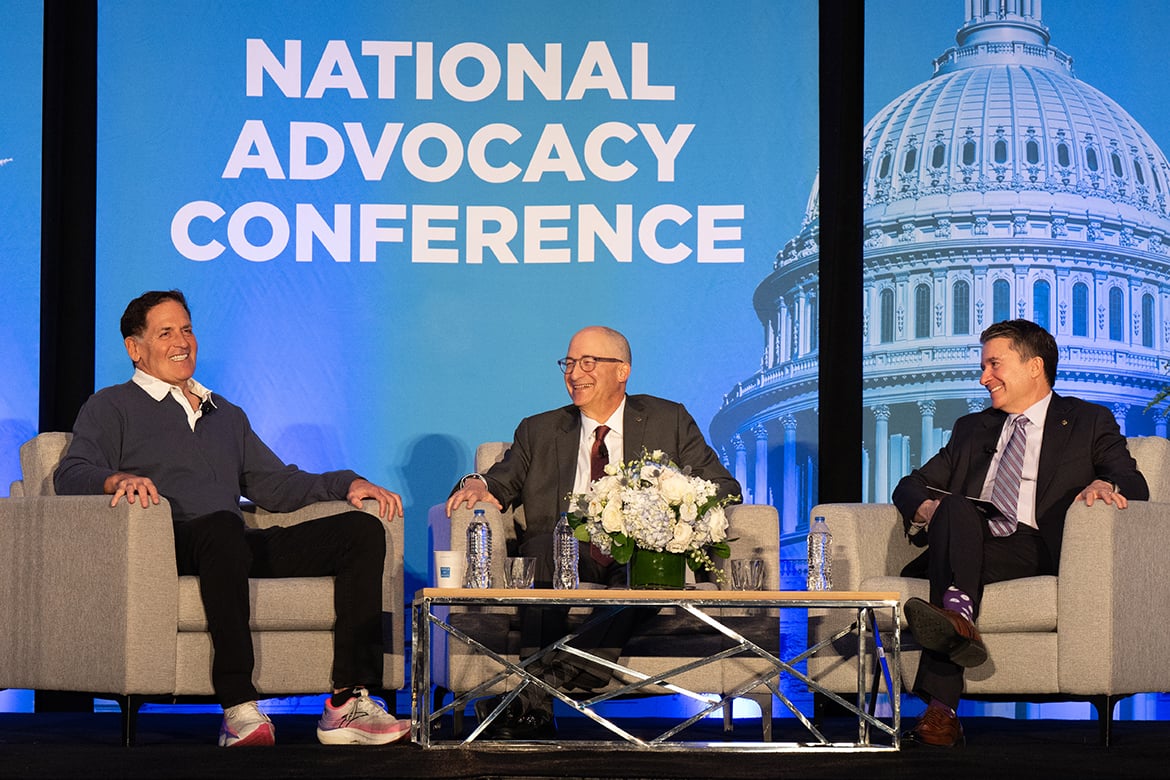
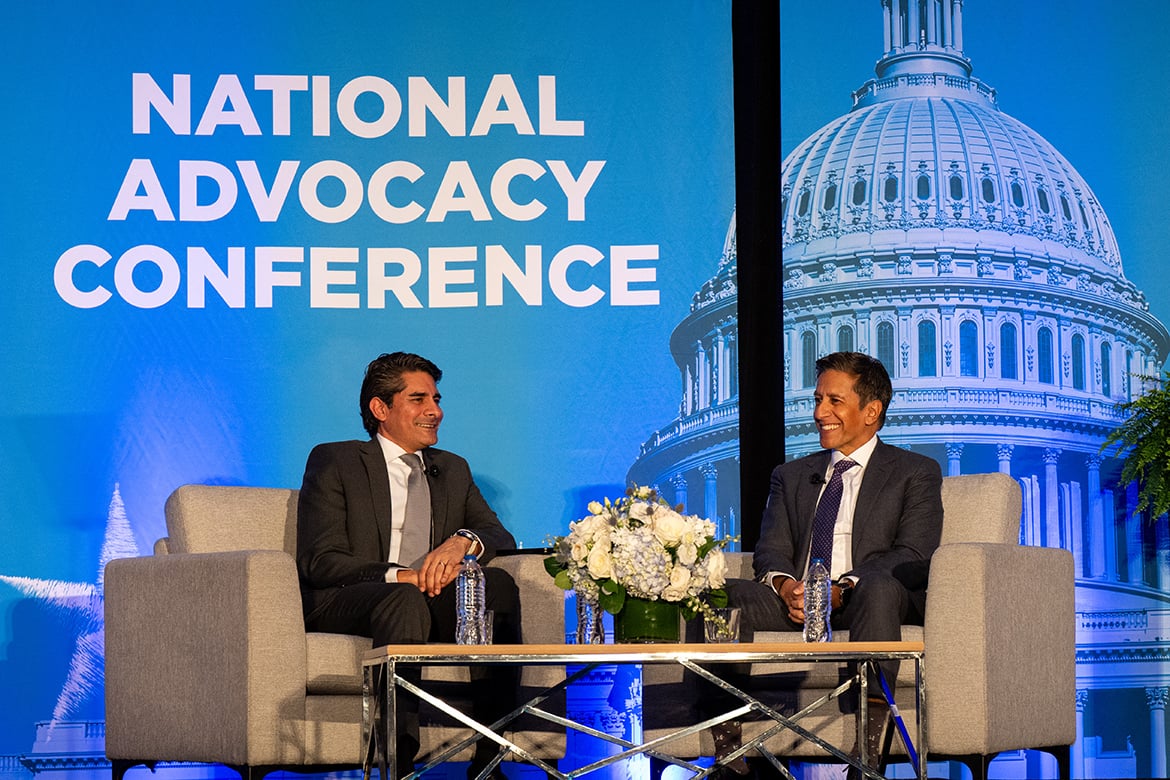
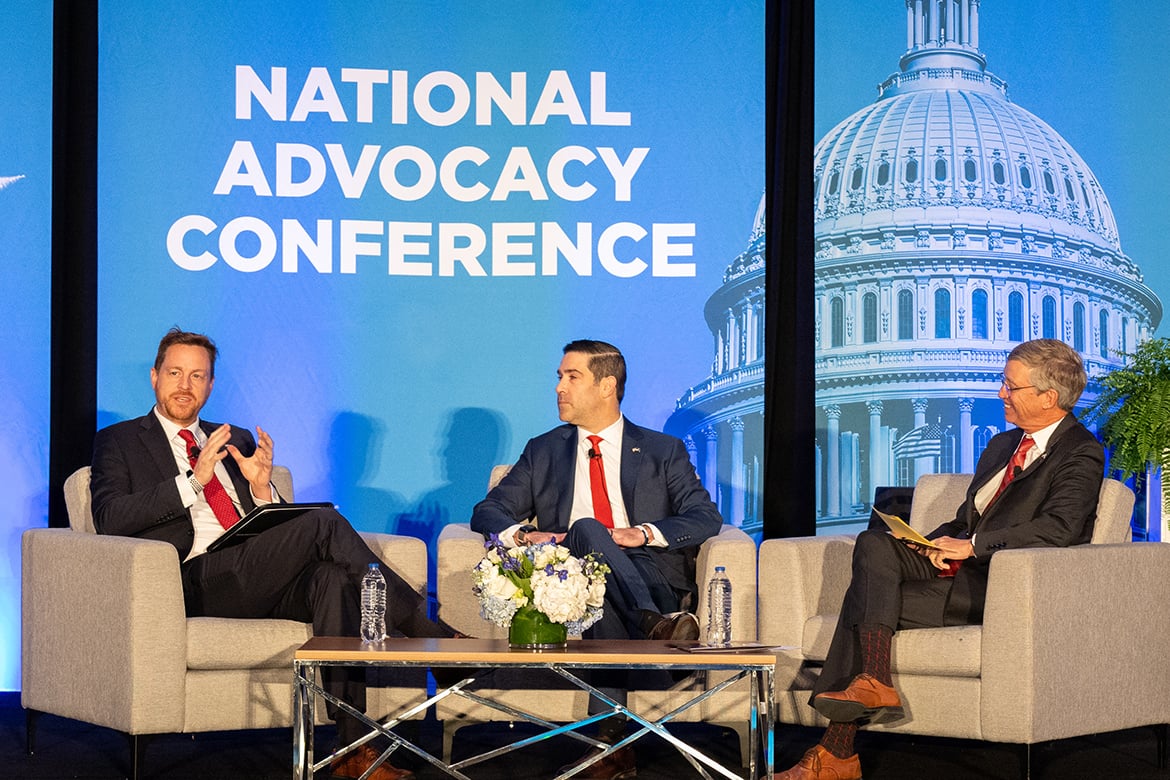
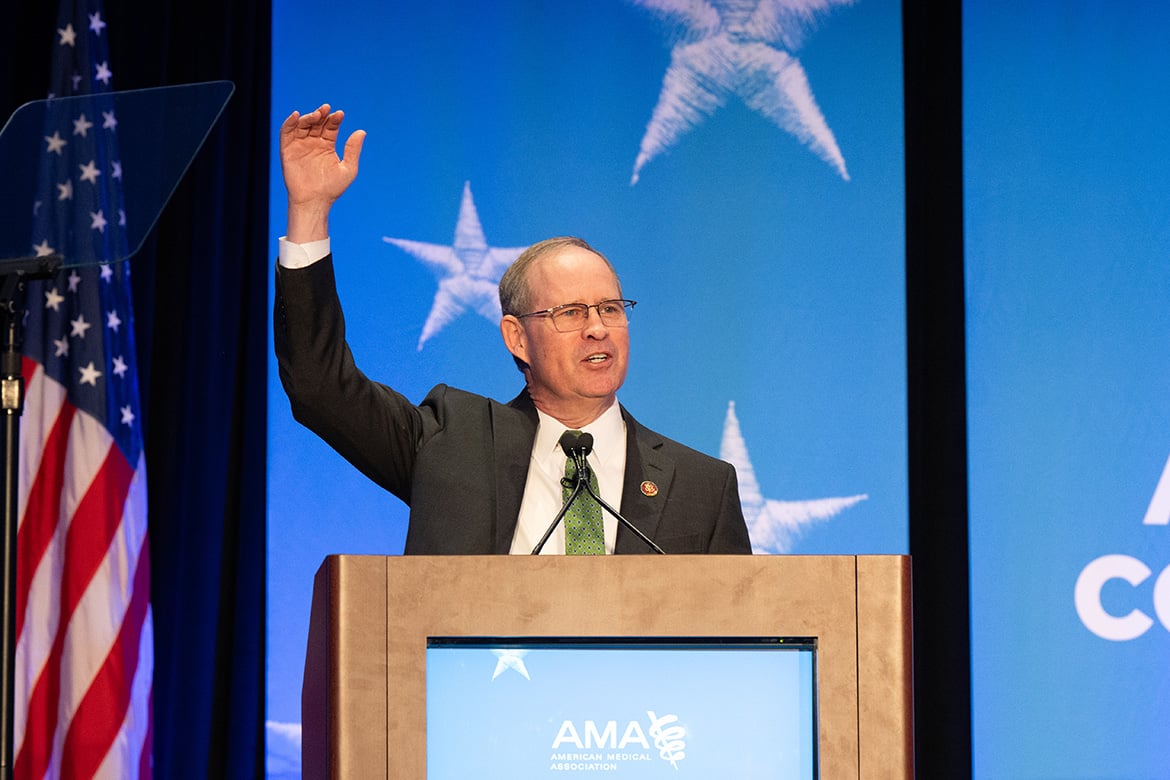
Attendees also heard from the Administration and Members of Congress:
Chris Klomp, director of the Center for Medicare, deputy administrator of the Centers for Medicare & Medicaid Services, chief counselor for the Department of Health and Human Services
Daniel Brillman, director of the Center for Medicaid & CHIP Services, deputy administrator of the Centers for Medicare & Medicaid Services
Rep. Steven Horsford (D-NV)
Rep. John Joyce, MD (R-PA)
Rep. Mariannette Miller-Meeks, MD (R-IA)
Rep. Greg Murphy, MD (R-NC)
Rep. Kim Schrier, MD (D-WA)
Rep. Jill Tokuda (D-HI)
Sen. Peter Welch (D-VT)

See more highlights from the conference on the AMA’s social media channels and by following #AMANAC.
Save the date for next year’s AMA National Advocacy Conference at a new venue—Feb. 22-24 at the Mayflower Hotel in Washington, D.C.
AMA grants four Outstanding Government Service Awards
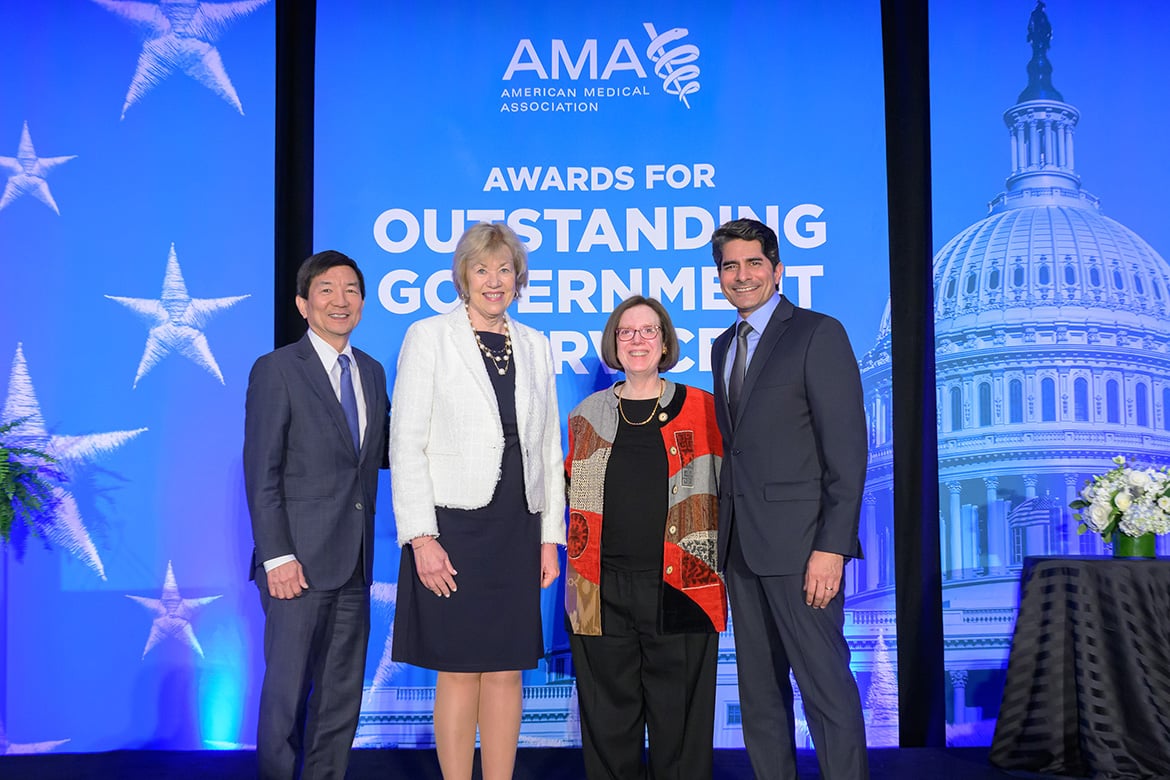
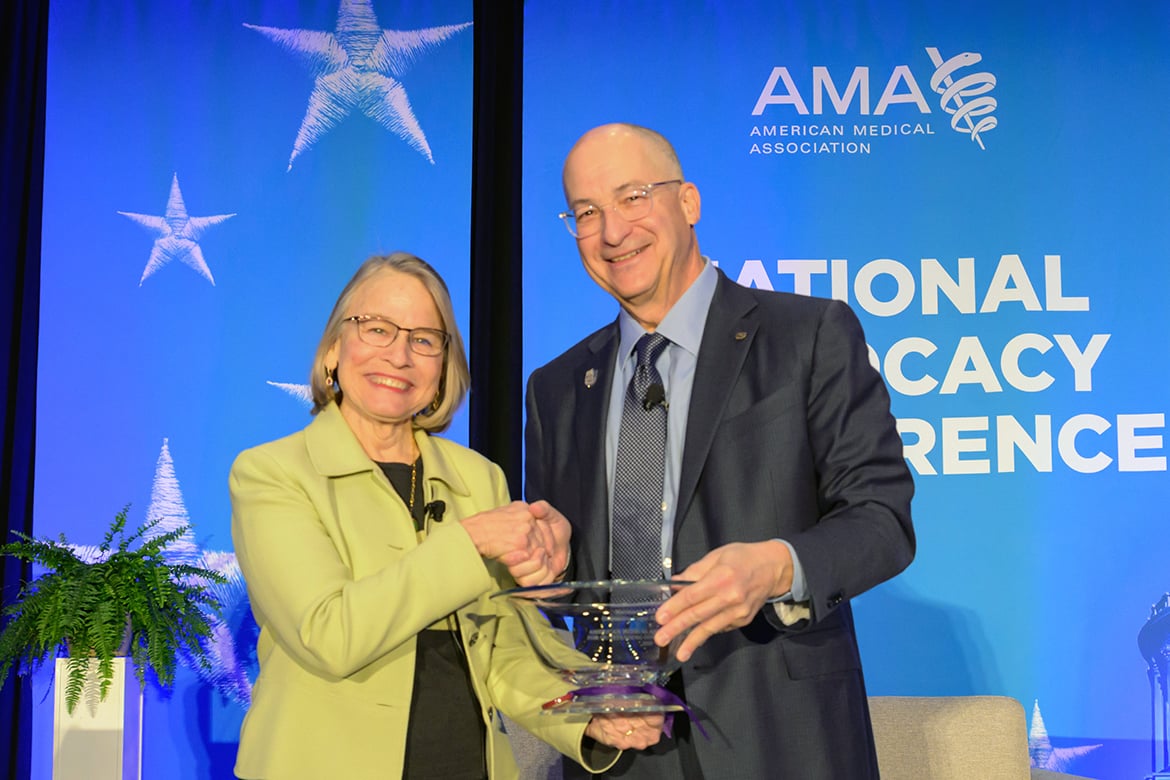
As part of this week’s National Advocacy Conference, four recipients were honored with an AMA Award for Outstanding Government Service.
The AMA awards honor elected officials and career government employees at the local, state and federal levels for their significant contributions to the advancement of public health and the promotion of the art and science of medicine.
This year’s recipients include:
Philip Huang, MD, MPH, director, Dallas County Health and Human Services
Mariannette Miller-Meeks, MD (R-IA), representative, U.S. House of Representatives
Julie A. Morrison (D), senator, Illinois State Senate
Lisa G. Rider, MD, head, Environmental Autoimmunity Group at the National Institute of Environmental Health Sciences
Medicare Advantage risk scores should be aligned with plan costs
Each year, the Centers for Medicare & Medicaid Services (CMS) issues an Advance Notice indicating its planned updates in Medicare Advantage (MA) and Part D policies for the subsequent year. In a letter to CMS Administrator Mehmet Oz, MD, MBA (PDF), the AMA voiced support for the agency’s new proposal to exclude from MA risk score calculations any diagnosis codes that are derived from MA plans’ chart review and are not linked to any service provided to the patient. The AMA also recommended that CMS extend this policy to apply to diagnoses identified through MA health risk assessments that do not have any associated service encounters.
Consistent with AMA policy that plans’ risk adjustments should reflect their actual costs of delivering care, the proposed 2027 policy would only recognize diagnosis codes for risk adjustment if there is an actual service provided to the patient, such as a test or treatment, associated with the diagnosis code. As the AMA letter noted, the purpose of identifying patients’ health conditions with diagnosis codes should be to manage and treat them, and delivery of these treatment services is what increases health plans’ costs. For risk adjustment to reflect the actual cost of providing care, patients need to not just have a diagnosis but to obtain services related to treatment or management of their diagnosis.
The AMA comments also provided detailed information about many of the quality measures used in MA Star Ratings that are discussed in the Advance Notice. The letter emphasized that Star Ratings should focus on performance factors that plans can control, such as timely access to medically necessary care, rather than physician clinical actions. CMS should assign the highest weight to measures of:
Access to care, with a focus on serious and chronic conditions that are expensive to treat.
Payer minimum quality standards, to include immediate access to a live representative during business hours.
Efficiency of health plan customer service.
How well plans address provider questions and concerns, payment efficiency and resolution of provider and patient appeals.
The 2027 MA Final Notice is expected in the first week of April.
On price transparency, AMA supports technical improvements while recommending more customized data, payer transparency
The AMA recently submitted comments (PDF) on proposed rulemaking to refine price transparency data. In the letter to the Internal Revenue Service, CMS and the U.S. Department of Labor (“the Departments”), the AMA noted strong support for making health care prices more transparent to help empower consumers to make informed decisions and improve the overall efficiency and cost effectiveness of our nation’s health care system. To that end, the AMA reiterated that the most appropriate way to facilitate this is through tools that provide individual out-of-pocket pricing data that is customized to an individual’s unique coverage terms in lieu of publicly posting negotiated provider-payer rates, while avoiding potentially damaging market consequences.
The AMA did express support for several technical proposals in the rule, which make improvements relative to finalized 2020 policies to make pricing data more accessible, accurate and actionable. The letter also included several recommendations for additional areas where the Departments could further enhance transparency, such as requiring payers to publish how they calculate qualifying payment amounts (QPAs) under the No Surprises Act. The AMA also noted the importance of active oversight to ensure the accuracy of pricing information for patients.
HHS requests information on accelerating AI adoption in clinical care
On Feb. 23, the AMA submitted detailed comments (PDF) to the Department of Health and Human Services (HHS) in response to a recently released request for information (RFI) regarding actions that can accelerate adoption of artificial intelligence (AI) in clinical care. The RFI posed a number of questions regarding regulation of AI, including questions regarding potential legal issues and reimbursements, while also seeking input on research and development, the impact of AI in clinical care, and others.
AMA comments focused on promoting AMA policy calling for transparency mandates, increased focus on data privacy and cybersecurity, and an appropriate risk-based approach to AI regulation. Additionally, the AMA submitted detailed comments regarding concerns about increased physician liability risks when engaging with AI and highlighted the need for reimbursement for high-quality, high-value AI technologies.