As a medical student, do you ever wonder what it's like to specialize in physical medicine and rehabilitation? Meet AMA member Travis Quinn, MD, a physical medicine and rehabilitation physician and a featured doctor in the AMA's “Shadow Me” Specialty Series, which offers advice directly from doctors about life in their specialties. Check out his insights to help determine whether a career in physical medicine and rehabilitation might be a good fit for you.
The AMA's Specialty Guide simplifies medical students' specialty selection process by highlighting major specialties, detailing training information and providing access to related association information. It is produced by FREIDA™, the AMA Residency & Fellowship Database®.
Learn more with the AMA about the broader medical specialty of physical medicine and rehabilitation.
“Shadowing” Dr. Quinn
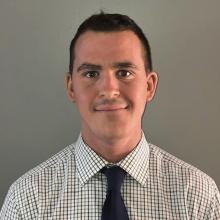
Specialty: Physical medicine and rehabilitation.
Practice setting: Skilled nursing facility.
Employment type: In private practice within Medrina in Melbourne, Florida. Medrina is part of the AMA Health System Member Program, which provides enterprise solutions to equip leadership, physicians and care teams with resources to help drive the future of medicine.
Years in practice: Four.
A typical day and week in my practice: I round five days per week in skilled nursing facilities, which also involves performing administrative tasks and managing calls and scripts. I work at least 40 to 50 hours per week.
The most challenging and rewarding aspects of physical medicine and rehabilitation: The most challenging are dealing withthe limited resources available in the skilled nursing facility setting and managing chronic pain. The most rewarding is improving quality of care.
The impact burnout has on physical medicine and rehabilitation: Physicians are quitting because of burnout. This and other challenges can slow down my day or impact my motivation.
How Medrina is reducing physician burnout: Medrina offers competitive pay, and it provides flexibility with time off and schedules.
How my lifestyle matches, or differs from, what I had envisioned: There are more off-hour tasks than I envisioned. Also, a lot of routine day-to-day work and cases feel less rewarding than I thought they would. Physicians must be mindful to not let the stresses of their job enter their homes.
Skills every physician in training should have for physical medicine and rehabilitation but won’t be tested for on the board exam: You have to understand business development, contracts and taxes.
One question physicians in training should ask themselves before pursuing physical medicine and rehabilitation: Depending on my practice, I am likely to be managing chronic pain: Am I okay with the challenges that accompany this?
Books, podcasts or other resources every medical student interested in physical medicine and rehabilitation should be reading or listening to: I recommend reading and listening to whatever interests you. As a medical student, it is difficult to read for pleasure when you need to be reading to study, but try to make time for this too. The same can be said for podcasts. It would also be wise to check out financial advice podcasts and books to better understand taxes and investments.
Additional advice I would give students who are considering physical medicine and rehabilitation: Your relationships with nursing, therapists and administration are important. Being kind and getting along with everyone as best you can are as important as your clinical skills. Your job is to fix problems, not cause more of them.