Food insecurity has long been recognized as a social issue with direct and measurable impacts on the physical health of a community’s members. It often exists alongside financial instability, inadequate housing, unreliable utilities, transportation and income.
The problem hit particularly close to home for Rush University Medical Center in Chicago. Located on the city’s Near West Side, the academic medical center sits in close proximity to communities that have long faced structural barriers to food access. Pre-public health emergency estimates were that more than half a million of its neighbors on the nearby West Side had difficulty accessing nutritious food, which exacerbated other health issues. The geographic proximity of Rush to these communities made the issue both visible and urgent.
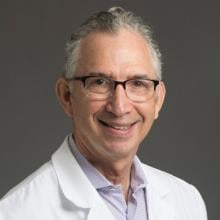
“We’ve known for years that the conditions under which people live, work, play and pray have an impact on their health,” said David Ansell, MD, MPH, an internist and senior vice president for community health equity at Rush University System for Health. “For instance, we found that the blood pressure of patients with food insecurity was six points higher, and every point of hypertension control is a two-point opportunity to reduce cardiovascular mortality.”
Improving access to food aligned with Rush’s broader goal of narrowing the up to 20-year life expectancy gap between the city’s Loop and North Side neighborhoods and the communities to the south and west. Residents of those areas also experience disproportionately higher rates of hypertension, diabetes and cardiovascular disease.
The goal was to not simply provide short-term relief but to create a sustainable model embedded within clinical care. In 2022, Rush’s Office of Community Health Equity and Engagement launched its “Food Is Medicine Veggie Rx” program.
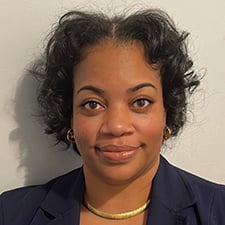
“The Food Is Medicine program plays a vital role in addressing food insecurity and diet-related health disparities among Rush patients by recognizing that access to nutritious food is foundational to health,” said Julia Bassett, PhDc, senior manager of health and community benefit at Rush and director of the Food Is Medicine program.
“By improving access to fresh produce and reinforcing healthy eating habits, the program supports better nutrition, which can contribute to improved disease management, greater energy and quality of life, and fewer diet-related complications,” Bassett added.
Rush University System for Health is part of the AMA Health System Member Program, which provides enterprise solutions to equip leadership, physicians and care teams with resources to help drive the future of medicine.
Offering same-day support
The operational foundation of the program is Rush’s institutionalization of the entire process, from initial screening to resolution, and embedding it into common practice and care. All patients are routinely asked a set of standardized questions that include inquiries into any social needs that may impact health, including depression, violence, housing and food access. Positive screenings for any of these factors are entered into the EHR, and those around food immediately prompt a referral to the Food Is Medicine pantry.
“People appreciate that we are asking them these questions,” Dr. Ansell explained. “It’s all part and parcel of holistic care and what it’s like to be a patient at Rush.”
The pantry’s location in a primary care setting, rather than off-site in a separate space, makes it convenient for patients to “shop” on the same day as a routine clinic visit and is designed to feel less stigmatizing. Patients are greeted by a community health worker in a setting that’s cooperative, supportive and respectful.
Instead of simply being handed a prepackaged, presumably “one-size-fits-all” parcel, patients can select fresh produce, healthy proteins and shelf-stable items that meet their needs, and suit the tastes, of their own households.
“Patients can shop for food directly from shelves, refrigerators and freezers, often selecting about 75 pounds of nutritious food to meet household needs,” Bassett explained, adding that community health workers “also help assess preferences, provide encouragement and connect patients to additional resources when appropriate.”
Community health workers also enroll patients in three months of home delivery of produce to ensure ongoing access to fresh fruits and vegetables after their first visit and connect patients to additional resources if needed.
Systemwide and community partnerships
As screening expanded, so did awareness of the scope of the problem. While the program was initially conceived to address the needs of patients, Rush leaders soon realized that food insecurity was even more pervasive, and much closer to home than they thought.
“We subsequently learned that some of our medical and nursing students were food insecure as well,” Dr. Ansell said, adding that it should not have come as such a surprise.
“Everyone knows that med students and nursing students generally don’t have a lot of income and probably have a lot of debt, so now our students and our employees have been able to access the program too,” he said.
The program has since expanded beyond its initial clinic-based pilot at the main campus to include Rush Oak Park Hospital and emergency departments systemwide, where patients who present with immediate needs can access resources before discharge.
Connections with other sources of long-term food assistance and existing public benefits are facilitated too. Patients granted access to the pantry are also screened for eligibility in programs such as SNAP and Meals on Wheels. If patients qualify, they receive assistance in the application processes.
“A lot of people are eligible for those programs and don’t even know it,” Dr. Ansell observed. “So, if they come to the pantry, they can get enrolled in other food programs too.”
Other efforts have grown from the model. Those include a food surplus program that redirects prepared food from the hospitals’ cafeterias to homeless shelters, and partnerships with other community organizations, including the Greater Chicago Food Depository, Forty Acres Fresh Market, Top Box Foods and Dion’s Chicago Dream.
Greater Chicago Food Depository distributes food to two school-based health centers through its School Delivery Program: Orr High School and Simpson Academy. Forty Acres is an independent, Black woman-owned grocery business based on Chicago’s West Side that was founded specifically to increase access to affordable, high-quality fresh food in underserved neighborhoods without full-service grocery stores.
Meanwhile, Top Box Foods is a nonprofit in Chicago that offers free home deliveries for nutritious and affordable food. And Dion’s Chicago Dream is a nonprofit organization with the goal of improving health outcomes and centering health equity through its industry-leading approach to addressing food security.
Rush also partners with an urban farming initiative on reclaimed land in a nearby food desert. Staffed by returning citizens and students, they grow culturally sensitive and appropriate foods for the area’s population every summer, reinforcing the program’s focus on culturally relevant care. They will also be opening a site at Sankofa Wellness Village, a community-driven wellness campus created to address longstanding health inequities through integrated, holistic services. This location will feature a pop-up food pantry along with nutrition education, healthy recipe sharing and live cooking demonstrations to support families in preparing fresh, nourishing meals.
The health system is also a founding member of West Side United, a collaborative working to ensure that communities on Chicago’s West Side can overcome social, economic and environmental barriers to staying healthy. The AMA also is a West Side United anchor mission partner, having invested $5 million in the effort since 2020.

Measuring impact and scaling accountability
The Food Is Medicine model is not just about food distribution for Rush and its leaders. It is about integrating measurable social care into actionable clinical care. Screening for health-related social needs is now routine practice across the entire system and tracked on a corporate dashboard.
Screening rates now exceed 90%, well above the initial internal benchmark of 80%. In fact, leadership compensation is partially tied to achieving such thresholds, reinforcing that screening is not optional or sporadic, but operational at scale.
“We never used to screen, and now we do,” Dr. Ansell said, and as a result, “we never used to provide food, and now we do that too.”
Dr. Ansell and his colleagues believe the impact extends beyond hunger relief. By pairing food access with nutrition education, behavioral support and digital remote monitoring tools, the health system is working to strengthen chronic disease management.
“We think that chronic disease needs to be addressed at multiple levels,” Dr. Ansell said. “There is a virtuous cycle here, and we’re still learning the best ways to do this.”
The program is still largely supported by philanthropy, though evolving Medicaid waivers may create more sustainable funding pathways for food-based health care interventions. In the meantime, the work continues through community partnerships, educational initiatives and digital health tools, including remote patient monitoring, a behavioral change app and meal tracking.
Dr. Ansell recommends that other health systems considering similar models start with the most basic foundational step: screening. Once needs are identified, integrating food into care becomes not an adjunct service, but a clinical responsibility.
“We want the best outcomes and experiences for our patients,” Dr. Ansell said. “If you address health-related social needs as part of a routine visit, it opens the door to better outcomes and experiences, which is why we do what we do.”
Check out this interactive CME course that details the basics of health equity.
Also, the AMA offers resources and customized support for federally qualified health centers and community health centers, which are a vital part of our nation’s primary care safety net and provide essential care to individuals in underserved communities and those with limited access to health care.