As a medical student, do you ever wonder what it's like to specialize in physical medicine and rehabilitation? Meet AMA member Arpit Kaul, DO, a physical medicine and rehabilitation physician and a featured doctor in the AMA's “Shadow Me” Specialty Series, which offers advice directly from doctors about life in their specialties. Check out his insights to help determine whether a career in physical medicine and rehabilitation might be a good fit for you.
The AMA's Specialty Guide simplifies medical students' specialty selection process by highlighting major specialties, detailing training information and providing access to related association information. It is produced by FREIDA™, the AMA Residency & Fellowship Database®.
Learn more with the AMA about the broader medical specialty of physical medicine and rehabilitation.
“Shadowing” Dr. Kaul
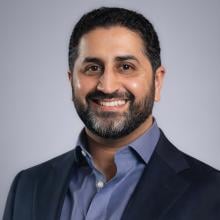
Specialty: Physical medicine and rehabilitation.
Practice setting: Skilled nursing facility.
Employment type: Employed by a private practice within Medrina in Philadelphia. Medrina is part of the AMA Health System Member Program, which provides enterprise solutions to equip leadership, physicians and care teams with resources to help drive the future of medicine.
Years in practice: Eight.
A typical day and week in my practice: My mornings are spent checking charts, responding to emails and coordinating care, then driving to my facilities, where rounding takes two to three hours. Afterwards, I message providers about recommendations and then finish the day with EHR charting.
The most challenging and rewarding aspects of physical medicine and rehabilitation: In terms of challenges, my patients often lack resources and family support, and many often return after discharge. This does, however, allow for continuity of care, as I become very familiar with their histories.
Seeing a patient make significant progress and stay in the community is often very rewarding.
The impact burnout has on physical medicine and rehabilitation: Burnout can be high if one is seeing many patients per day and has a medical/socially complex patient population.
How Medrina is reducing physician burnout: We often have peer support to allow physicians to discuss their frustrations and share ideas for reducing stress and workload.
How my lifestyle matches, or differs from, what I had envisioned: While in medical school, I did various rotations in fields I was interested in. Physiatry stood out as the best in terms of diversity of practice and lifestyle balance by a large magnitude.
Skills every physician in training should have for physical medicine and rehabilitation but won’t be tested for on the board exam: It’s important to have a nuanced approach to explaining to patients their functional status and realistic goals they can set for themselves while they are in inpatient therapy.
One question physicians in training should ask themselves before pursuing physical medicine and rehabilitation: What kind of patient population do you wish to treat, and what kind of lifestyle do you envision having?
Additional advice I would give students who are considering physical medicine and rehabilitation: Rotate in your area of interest and do multiple rotations at different institutions if you have the ability to do so.