As a medical student, do you ever wonder what it's like to specialize in physical medicine and rehabilitation? Meet AMA member Kunal Kamboj, DO, a physical medicine and rehabilitation physician and a featured doctor in the AMA's “Shadow Me” Specialty Series, which offers advice directly from doctors about life in their specialties. Check out his insights to help determine whether a career in physical medicine and rehabilitation might be a good fit for you.
The AMA's Specialty Guide simplifies medical students' specialty selection process by highlighting major specialties, detailing training information and providing access to related association information. It is produced by FREIDA™, the AMA Residency & Fellowship Database®.
Learn more with the AMA about the broader medical specialty of physical medicine and rehabilitation.
“Shadowing” Dr. Kamboj
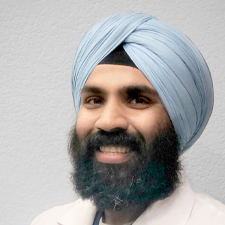
Specialty: Physical medicine and rehabilitation, with subspecialties in pain medicine and neuromuscular medicine.
Practice setting: Group practice.
Employment type: Employed by a group within Medrina in Orange County, California. Medrina is part of the AMA Health System Member Program, which provides enterprise solutions to equip leadership, physicians and care teams with resources to help drive the future of medicine.
Years in practice: Five.
A typical day and week in my practice: I usually work around 40 hours per week—35 in direct clinical care and five on administrative duties.
The most challenging and rewarding aspects of physical medicine and rehabilitation: The most challenging aspect is navigating health care access issues for my most vulnerable populations. Most readmissions are less about medical issues than they are about the psychosocial issues that happen after discharge.
The most rewarding aspects are seeing people improve their daily function and quality of life, as well as the relationships I make with patients and my fellow staff.
The impact burnout has on physical medicine and rehabilitation: It is causing increased stress in clinicians and leading them to either take reduced roles or leave clinical medicine altogether.
How Medrina is reducing physician burnout: At Medrina, we are a physician-forward organization and we take feedback into account and support each other with mental health resources, team building and a culture of openness.
How my lifestyle matches, or differs from, what I had envisioned: It is much better than I thought it would be, mostly because I have control of what my day-to-day life is like and how much I want to work. As I have a growing family, I have started saying no, thank you, to opportunities that in the past I would have said yes to. I think it’s important to have frequent self-reflection and find out what really matters to you and your family.
Skills every physician in training should have for physical medicine and rehabilitation but won’t be tested for on the board exam: You must constantly be learning, not only from established medical journals but also from your ancillary staff and other people you work with. As science and evidence change, we should continually strive to be up to date so we can provide the best care to our patients and community.
One question physicians in training should ask themselves before pursuing physical medicine and rehabilitation: What will this specialty be able to offer society and our patients as time goes on? Practice styles and settings will inevitably change, so knowing the goal of your specialty and how its impact might change in the future will be helpful.
Books, podcasts or other resources every medical student interested in physical medicine and rehabilitation should be reading or listening to: I can’t think of any specific books or podcasts that would appeal to everyone, but I think the most important thing would be to read in general—fiction and nonfiction—and attempt to maintain focus and concentration for long periods of time. My favorite books are Moby-Dick, by Herman Melville, Siddhartha, by Herman Hesse, and Paradise Lost, by John Milton.
Additional advice I would give students who are considering physical medicine and rehabilitation: Try to see our specialty in different settings, as the day to day varies significantly. Also, question yourself to see if you can handle the mental toll that sometimes comes with a very sick and/or disabled patient population.