As a medical student, do you ever wonder what it's like to specialize in physical medicine and rehabilitation? Meet AMA member Kyle Jisa, MD, a physical medicine and rehabilitation physician and a featured doctor in the AMA's “Shadow Me” Specialty Series, which offers advice directly from doctors about life in their specialties. Check out his insights to help determine whether a career in physical medicine and rehabilitation might be a good fit for you.
The AMA's Specialty Guide simplifies medical students' specialty selection process by highlighting major specialties, detailing training information and providing access to related association information. It is produced by FREIDA™, the AMA Residency & Fellowship Database®.
Learn more with the AMA about the broader medical specialty of physical medicine and rehabilitation.
“Shadowing” Dr. Jisa
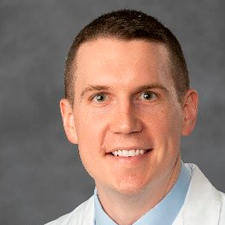
Specialty: Physical medicine and rehabilitation.
Practice setting: Solo.
Employment type: Employed by a group practice within Medrina in Lincoln, Nebraska. Medrina is part of the AMA Health System Member Program, which provides enterprise solutions to equip leadership, physicians and care teams with resources to help drive the future of medicine.
Years in practice: Three.
A typical day and week in my practice: In a typical day, I round from 8 a.m. to noon, and then I focus on documentation and administrative tasks. I generally work 8 a.m. to 4 p.m., with no call and no weekends. My practice also includes advanced practice professionals who work closely with me, and I help support such as with difficult clinical cases throughout the day.
The most challenging and rewarding aspects of physical medicine and rehabilitation: The most challenging aspect is developing care plans for patients who have failed multiple prior treatments and setting realistic expectations for them. The most rewarding aspect is helping patients discharge from the skilled nursing facility to their desired place of living.
The impact burnout has on physical medicine and rehabilitation: It is common in providers who are involved in a lot of administrative work such as frequent meetings and documentation.
How Medrina is reducing physician burnout: Medrina helps manage and prevent burnout through multiple avenues. These include an electronic medical record system that is optimized for our work to streamline documentation and is continuously being improved over time.
Many physicians also use scribes to help create our rounding list and prepare our documentation so that signing notes is a process of reviewing and confirming accuracy rather than creating entire notes for each patient encounter. Physicians are also provided education on how to use artificial intelligence such as Doximity or OpenEvidence to streamline their workflows.
How my lifestyle matches, or differs from, what I had envisioned: I enjoy excellent work-life balance. I appreciate the flexibility this line of work provides to myself as a physician.
Skills every physician in training should have for physical medicine and rehabilitation but won’t be tested for on the board exam: It is essential to build rapport with patients undergoing rehabilitation and to support and encourage them throughout the process. Patients frequently do not want to be in a rehabilitation facility and often prefer to be at home.
One of the most common questions a PM&R physician will hear during rounds is, "When can I go home?" Being able to keep patients focused on achieving and reaching maximum functional ability is critical to ensuring they can return to their desired place of living as soon as possible—and remain there long term.
One question physicians in training should ask themselves before pursuing physical medicine and rehabilitation: “Am I comfortable managing patients who may not be able to improve to their previous level of function?" Physiatrists must be comfortable setting realistic long-term goals and expectations for conditions considered chronic, such as stroke or spinal cord injury.
Books, podcasts or other resources every medical student interested in physical medicine and rehabilitation should be reading or listening to:
- Physical Medicine and Rehabilitation Board Review, by Sara Cuccurullo, MD.
- The PM&R Knowledge NOW website.
- The PM&R Recap website.
Additional advice I would give students who are considering physical medicine and rehabilitation: Always keep an open mind about what interests you and what is important to you, both professionally and personally, as you go through PM&R training. I did not foresee myself practicing PM&R in the subacute rehabilitation setting when I first started residency. Maintaining an open mind enabled me to discover an area of PM&R that I genuinely enjoy—one I might have otherwise overlooked.