As a resident physician, are you thinking about where you want to build your future in medicine? Meet AMA member Nariman Heshmati, MD, an obstetrician-gynecologist and a featured voice in the AMA’s “Finding My Place in Medicine” series.
In this series, physicians reflect on what influenced their decisions when choosing where to work—and what they wish they had known earlier. Explore his journey to help guide your own path toward a fulfilling medical career.
If you are looking for your first physician job after residency, get your cheat sheet now from the AMA. In addition, the AMA Transitioning to Practice series has guidance and resources on deciding where to practice, negotiating an employment contract, managing work-life balance, and other essential tips about starting in practice—including in private practice.
Also, check out Dr. Heshmati's profile in the AMA's “Shadow Me” Specialty Series, which offers advice directly from doctors about life in their specialties.
"Following” Dr. Nariman Heshmati
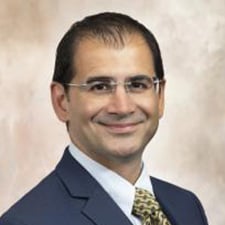
Specialty: Obstetrics and gynecology.
Practice setting: Multispecialty group practice.
Employment type: Employed at Lee Health in Fort Myers, Florida. Lee Health is part of the AMA Health System Member Program, which provides enterprise solutions to equip leadership, physicians and care teams with resources to help drive the future of medicine.
Years in practice: 17.
Key factors that led to me choosing to work at Lee Health: It was important for me to find a place that put a strong emphasis on patient care. There are many things that go into delivering high-value care, including the facilities, the team, the finances, the IT. I wanted somewhere that could offer all of that so that nonclinical issues didn’t stand in the way of providing care as it should be provided.
It was also important for me to choose a place that I felt I could trust, that saw my well-being as a priority, and where I could see myself spending my career.
What stood out to me during the interview and hiring process: At the interview dinner, everyone looked like they wanted to be there. It’s not that they were there because they were told to come. They were there because they loved where they worked, saw themselves as a team and wanted to find the right person to join that team. They were invested, which made me invest in them.
How feedback from peers and mentors influenced my evaluation process: I learned to ask a lot of questions and see if people were happy at their place of work.
I would encourage physicians looking at opportunities to ask themselves: Do I see myself working on this team—and being happy—for years to come? Ask yourself if the opportunity provides what you need to not only succeed but also grow. If these things weren’t present during my interviews, I didn’t consider those job opportunities further.
Why I chose to work in this practice setting: This is a really important consideration. Different practice settings offer different pluses and minuses. For instance, some are single specialty, while others are multispecialty. Some have academic offerings and others are only focused on care. Some are part of hospital systems and some are independent groups. I strongly believe that integrated and well-coordinated care in a multispecialty setting that bridges hospital settings and outpatient care offers the best opportunity to deliver the best medical care.
Something else that is important to consider is access to a higher level of care. Are you going somewhere that can manage the sickest of the sick or, if not, what are the limitations—and how do those align with how you see yourself practicing?
The top three qualities for a great place to work for physicians: One is that it supports physicians. You want to find somewhere that will mentor you and support you through easy times but also hardships—a place that values you versus just seeing you as another person in the call pool.
A second is that it fairly compensates you for your work. Compensation models will change over the years, and you need to know that you are in an organization that is committed to market pay and not looking to get savings from paying you less.
A third is that it is innovative and prepared to adapt to the ever-changing healthcare environment. How care is delivered, the technology we use, the payment models that reimburse us—all of these things have changed dramatically since I entered practice and will continue to change. You want to be in an organization that can not only navigate those changes but succeed in them so you can succeed too.
How my current practice supports physician well-being and work-life balance: This is a really big focus for us at Lee Health. We have a physician who also has a role as the clinician experience liaison and is focused on identifying ways we can support well-being and work-life balance. We are also in the process of doing the AMA Organizational Biopsy to find areas we can improve.
There are additional ways our health system supports physicians, including with flexible continuing medical education, leadership training through the American Association for Physician Leadership and access to the system's leadership; in fact, I’m in leadership, and every physician has my personal cell phone number.
The workplace attributes that contribute most to my job satisfaction at Lee Health: I love the team I work with, and the team looks at how to reduce everyday barriers to care. If you aren’t happy working with the people around you, you aren’t going to be happy at your practice.
You also want a practice that actively supports you. For instance, I had a physician come to me last year about the computers running slowly at a site. It had been frustrating him for a long time, and he decided to tell me and see if something could be done. One email to our CMIO and the pieces were in place to fix it.
There are a million things that can frustrate or stress you. You really want a workplace where those things are addressed when they come up so you can focus on patient care.
The biggest challenges I faced when transitioning from residency to practice: There are so many challenges. You have increasing responsibility for patient care as you advance in residency, but it’s still a bit jarring the first time you are the person totally in charge of someone’s care. There isn’t an attending to go to because you are the attending.
You also have more free time because you had no free time whatsoever when you were in residency, so you start thinking about life challenges like buying a house.
In a sense, after so many years of training and feeling like you were a student, you are suddenly an adult who has people’s lives in your hands. That takes a bit to adjust to, especially because you have to tell yourself you are ready for the responsibility—that your training prepared you for that very moment.

What I wish I had known about evaluating a job offer before choosing my first position: I wish I knew more about how compensation works. You really aren’t taught about relative value units—which you’ll see referred to as RVUs—in training, but then you get out into the real world and that’s how they pay you.
I also wish I had known more about how organizations support their physicians, not only when things are going well but also when they aren’t. One thing that had caught my attention about my first job was that almost everyone had been there for their whole careers. I took that as a proxy that things must be good.
What I would have done differently when choosing my first job after residency: I would have asked more questions. You really don’t know what you don’t know when you enter practice out of residency. I just assumed I was going to be paid fairly, that my partners would mentor me and that I would be supported. I was really lucky because my first job out of residency was with a fantastic group, where I stayed for over 15 years, that offered all of that.
Why I changed practice settings midcareer: I grew up in Florida but first joined a group in Washington state. My group was a large physician-owned multispecialty practice, and we ultimately were acquired by a larger system. I really enjoyed being there. But fast forward to life with a family, including two young children, and I really wanted to be back with my aging parents in Florida. That’s part of what made the decision so difficult—I wanted to find a system I would be just as happy in.
How I knew I was ready for a change: My situation was unique, in that I really got lucky with the first practice I joined and hit a home run. My decision to leave was based on getting closer to where I grew up and where my parents lived. Fortunately, I hit another home run with Lee Health.
It’s getting rarer to see physicians who have remained in the same practices for many years, so I count myself blessed to essentially be on only my second job in the last 17 years.
How my current role compares with what I imagined: I don’t know that I ever imagined my current role, which affords me the opportunity to influence healthcare on a large scale by helping lead Lee Physician Group—a group made up of 1,350+ clinicians who are part of the Lee Health System.
I finished my ob-gyn residency at Vanderbilt and was focused on patient care, and that’s what I did for the first few years in practice in Washington state. Early on, I was offered increasing leadership roles, including as medical director of obstetrics and division chief of women’s and children’s services, as well as a seat on my group’s board of directors. It was a pivot, but I really enjoyed being able to help beyond my one-to-one patient visits.
That’s one of the great things about medicine: We can make an impact in the exam room, the boardroom and a variety of other settings. Two years ago, I had the opportunity to return to Florida, where I grew up, and join Lee Health as the chief physician and operations executive for the physician group. I certainly never imagined opportunities like this when I was leaving residency.