As a resident physician, are you thinking about where you want to build your future in medicine? Meet Lingling Du, MD, a medical oncologist and hematologist with Ochsner Health in New Orleans, and a featured voice in the AMA’s “Finding My Place in Medicine” series.
In this series, physicians reflect on what influenced their personal decisions when choosing where to work—and what they wish they had known earlier. Explore Dr. Du’s journey to help guide your own path toward a fulfilling medical career.
If you are looking for your first physician job after residency, get your cheat sheet now from the AMA. In addition, the AMA Transitioning to Practice series has guidance and resources on deciding where to practice, negotiating an employment contract, managing work-life balance, and other essential tips about starting in practice—including in private practice.
“Following” Dr. Du
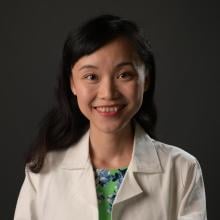
Specialty: Medical oncology and hematology.
Employment type: Employed by Ochsner Health in New Orleans, Louisiana. Ochsner Health is part of the AMA Health System Member Program, which provides enterprise solutions to equip leadership, physicians and care teams with resources to help drive the future of medicine.
Years in practice: Eight.
Key factors that led to me choosing to work at Ochsner Health: One is the very collegial work environment. People here are nice, including colleagues and all the supporting staff. I love working with nice people.
Also, Ochsner is strong in multiple specialties. I work closely with great colleagues in Surgical Oncology, Colorectal Surgery, Radiation Oncology, Interventional Oncology, etc. For a lot of patients, they need multidisciplinary care involving chemotherapy, immunotherapy, surgery, radiation, and liver-directed therapy. At Ochsner, we have a great set of doctors in all these specialties. We hold weekly disease-specific tumor boards to go over patient cases to ensure we are giving them the best care possible and that treatment plans are individually-tailored. I feel proud to be part of the multidisciplinary team here.
What stood out to me during the interview and hiring process: The people. The people who interviewed me were very nice. That’s definitely the best first impression, and I knew that I would love to work here with these people.
How feedback from peers and mentors influenced my evaluation process: When I interviewed at Ochsner, I actually spoke with a pathologist who had been working here for a long time. She highly recommended working at Ochsner because the people are very nice and it’s a supportive environment for doctors.
Why I chose to work in this practice setting: For a lot of the reasons that I mentioned above, especially the multidisciplinary care here at Ochsner—it’s more integrative. We’re all under the big umbrella of Ochsner and the conversations between us and our colleagues are seamless. I love our weekly disease-specific tumor boards and deeply enjoy working with my other great colleagues.

The top three qualities for a great place to work: No. 1 is leadership support. You definitely need your boss to support you both in your career and life. The ancillary staff is also important. Having great advanced practitioners’ and nurses’ support will make your life much easier.
The third thing for me would be the opportunity to collaborate with colleagues and working with the other specialties, such as surgery, interventional radiology, diagnostic radiology, etc. Having good support from them can ensure you are providing patients with the best care possible as a medical oncologist. That is important for career satisfaction.
How Ochsner Health supports physician well-being and work-life balance: We have great support from our leaders. They have put a lot of thought and action into how they structure our work and provide us with ancillary staff support to make work easier and more efficient for us.
The biggest challenge I faced when transitioning from residency to practice: Going from residency, and from fellowship, into being an attending physician without supervision is a big transition. There’s a lot of fear. When I was a fellow, a junior attending told me that the first year being an attending was the hardest. When I became an attending, I understood what that meant and I agreed with her.
Basically, you’re out on your own. Before, you didn’t need to question your decision because there’s always an attending above you to help. But when you’re on your own, a lot of times you question if you’re doing the right thing. Fortunately, when I was a junior faculty, I got a lot of mentorship and great support from my colleagues. They never hesitated in helping me when I reached out to them for advice.
What I wish I had known about evaluating a job offer: My advice for the fresh graduating residents and fellows when they're looking for a job is to ask yourself: Does your practice provide you with an environment that will set you up for success? For example, do they have proper mentorship? When you have a question as a junior faculty, are you able to reach out for help and will they be able to help you? Do you have strong ancillary staff support?