Michael J. Welsh, MD, a pulmonologist with University of Iowa Health Care, has spent more than four decades transforming what it means to live with cystic fibrosis (CF). In fact, he received the 2025 Lasker-DeBakey Clinical Medical Research Award, one of the most prestigious honors in biomedicine, for discoveries that have helped turn a once-fatal childhood illness into a manageable condition for most patients.
“I set out hoping that my research might help people with CF. The dramatic improvements for people with cystic fibrosis have exceeded my hopes,” said Dr. Welsh, who is also professor of internal medicine-pulmonary, critical care and occupational medicine at Iowa Carver College of Medicine.
University of Iowa Health Care is part of the AMA Health System Member Program, which provides enterprise solutions to equip leadership, physicians and care teams with resources to help drive the future of medicine.
Studying how chloride ions move across the airway surface ultimately led to identifying how the cystic fibrosis transmembrane conductance regulator (CFTR) protein malfunctions in cystic fibrosis. Then showing, years before new medicines existed, that the defective protein could be “fixed.”
His laboratory’s discoveries laid the foundation for the triple-drug therapy approved in 2019. The therapy benefits about 90% of people with cystic fibrosis and has extended life expectancy for newborns with CF to levels approaching the general population.
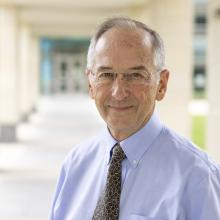
In an interview with the AMA, Dr. Welsh discusses the path from those early questions to today’s life-changing therapies, and the scientific and human motivations that continue to drive him forward.
AMA: What first drew you to cystic fibrosis research?
Dr. Welsh: I worked in a lab when I was a medical student, and I thought it was interesting. Later, as a resident, I found that I enjoyed it even more. I began to focus on research during my fellowship because it was exciting and I thought it could contribute to medicine.
I became interested in how salt moves across airway epithelia, the layer of cells that line the trachea, bronchi and small airways. It started as pure curiosity with the idea that the results might inform the host defenses that protect the lung. Then, while attending and caring for people with cystic fibrosis, I realized that no matter how hard I worked, I could not stop progression of the disease. My clinical work and research then came together. I thought that if we could understand the cystic fibrosis defect in airways, perhaps we could make a difference.
AMA: One patient had a profound effect on your decision to study cystic fibrosis. What do you remember about that encounter?
Dr. Welsh: I remember her vividly. She was maybe 7 years old. I could hear her harsh coughing before I even entered the exam room in the pediatric clinic. I smelled Pseudomonas aeruginosa from her foul sputum. She spoke in short sentences because of shortness of breath. I could see her using her accessory muscles of respiration.
I learned everything she couldn’t do, things kids her age take for granted. Instead, she spent hours each day inhaling mist, undergoing percussion therapy, and with other treatments. It made a big impression, especially when I learned that she probably wouldn’t live into her teens. I think every physician carries with them memories of patients they have cared for, some who did well, and some who did poorly. The memory of that little girl will be with me all my life.
AMA: What did the CFTR protein reveal about cystic fibrosis in the body?
Dr. Welsh: We knew there was a defect in chloride movement across epithelia lining the sweat gland duct; hence, the high sweat chloride used as a diagnostic test. We focused on chloride and found that in epithelia from cystic fibrosis airways, chloride flow across the apical membrane was defective.
A turning point came when Lap-Chee Tsui, PhD, and Francis Collins, MD, and their colleagues discovered the gene that is mutated in cystic fibrosis: CFTR. With the DNA instructions in hand, we could ask what CFTR is. It turned out that CFTR is a chloride channel—a small protein that forms a pore in the cell membrane that allows chloride and bicarbonate to flow through. That discovery tied together the molecular defect and physiological abnormalities in multiple cystic fibrosis organs.
There are now more than 1,000 known mutations in the CFTR gene. We learned that there are a few general mechanisms that disrupt CFTR function. Some mutations prevent the CFTR protein from being made at all. Others misfold, so that CFTR never reaches the cell surface and is degraded. Some channels reach the cell surface, but their opening is impaired. Others don’t make a good pore. This classification system aided understanding and focused drug discovery. The most common cystic fibrosis mutant, CFTR-∆F508, is misfolded and fails to reach the cell surface. The question was, could it be fixed?
We discovered that simply lowering the incubation temperature of cells with the ∆F508 mutation improved folding so that CFTR trafficked to the cell surface. Once there, it opened, but only about a third as well as normal CFTR. These were exciting results because they said that the CFTR-∆F508 protein was not so badly broken that it could not be repaired. We could restore function in the lab, which indicated that there might be chemical ways to achieve the same effect in people.

AMA: What was it like to see patients for whom the medicine worked?
Dr. Welsh: I’ll never forget the first person who participated in a small clinical trial at the University of Iowa and received ivacaftor. At his first clinic visit, he said, “I’m not on the placebo. I haven’t felt this well in years.” That was the first time I realized how targeting CFTR could dramatically change someone’s life.
I recently met a person with CF who is a student here at the University of Iowa. I invited him to speak at our weekly lab meeting. He described growing up wondering if he should go to college, date, or make any long-term plans with his health so uncertain. His doctor had even discussed a lung transplant. Then, after starting the CFTR modulators, he cleared enormous amounts of mucus from his lungs over the course of two weeks, and once it was cleared, he went for a two-mile run. Now he plans for the future—things he never thought possible.
People with CF are now getting married, having children and living lives they could not have imagined a decade ago. Seeing that transformation has been incredibly moving.
AMA: A new documentary follows three people with cystic fibrosis. How do their stories reflect how far CF treatment has gone and where gaps remain?
Dr. Welsh: It’s a very powerful documentary, because these three people tell their own stories. One is a young woman who is running cross-country and winning multiple medals. The documentary shows videos that her mother took of her since she was a child. Another woman tells her story with her baby. She is living a full life and planning for the future. The third person is a man who had significant lung disease before beginning the CFTR modulators. He used to be hospitalized every couple months, but since starting CFTR modulators six years ago, he has not been in the hospital even once.
As someone who has cared for people with cystic fibrosis and watched them suffer and struggle, these dramatic changes are unfathomable. I never anticipated that the results would be so dramatic.
This documentary shows how far we’ve come, but it also shows that challenges remain. People starting treatment at a later age may face complications such as CF-related diabetes, liver abnormalities and intestinal problems. We still have work to do to help them.
AMA: About 10% of people with cystic fibrosis still don’t benefit from current drugs. What next generation solutions seem promising to you?
Dr. Welsh: Gene therapy and gene editing are exciting potential therapeutic options and they are advancing quickly. But a large remaining hurdle is delivery to the right cells in the airway in the right amount. Evolution designed the airway to keep out bacteria, viruses, dust and particles, so it’s a real challenge, but I’m confident the field will succeed.
AMA: The Lasker Award recognizes decades of collaboration. How has that sustained this research, and how do you advise young researchers?
Dr. Welsh: Science is never done alone. Some of the most meaningful messages I received after the Lasker Award were from former colleagues, trainees and staff saying they were proud to have contributed, if even in a small way, to the advances for people with cystic fibrosis. That underscores how discoveries in cystic fibrosis were built by a community of researchers, physicians, staff and trainees working together over decades toward a shared goal.
I tell young people that being a physician-scientist is challenging but deeply rewarding. The work is often hard and can be repetitious with long hours, but curiosity and persistence lead to discovery, and that is thrilling. Seeing something new and understanding it for the first time is exhilarating.
I also advise them to seek an environment that embraces innovation and where everyone has a license to challenge ideas and strive for excellence and truth. When your ideas are challenged or someone asks you questions, never become defensive, instead pay attention and grow.
I tell trainees that at the start, it can be difficult to ask questions because you may not wish to reveal a lack of knowledge. But learn to ask questions. Go into a seminar or meeting with the plan to ask a question. Asking questions demonstrates your engagement, your willingness to learn and your intent to help others with their work. Importantly, planning to ask a question helps you learn and can stoke your curiosity. And remember, curiosity drives good science and good medicine.
AMA: What do the next five to ten years look like for cystic fibrosis research?
Dr. Welsh: I am incredibly fortunate to witness the arc of this journey in my lifetime, from the first young girl with cystic fibrosis that I met as a medical student, to research and drug development, and now back to people with cystic fibrosis who can anticipate a near normal lifespan if treated early. Looking ahead, the playbook is clear.
First, we need strong universities. The vast majority of new medicines and procedures have their origin in university research. That research is both basic and clinical. Advances toward new treatments is usually not linear, and curiosity-driven research very often provides fundamental knowledge and tools that power disease focused research. Many of our insights in CF came from people doing entirely unrelated research—studying frogs, jellyfish, slugs—simply to understand how nature works. Those basic discoveries laid the foundation for breakthroughs in cystic fibrosis. The base of discovery can build slowly with many individual pieces. The small, incremental findings can shape therapies that change patients’ lives.
Second, funding. As Mary Lasker famously said, “If you think research is expensive, try disease.” NIH support for research is essential in two ways. It funds research focused on specific diseases and problems. As important as that is, perhaps even more important is that it creates the foundation for broad areas of discovery and future research. Because research does not follow a straight line, the uncertainty is much too great for any industry or foundation to fund. Of course, philanthropy and foundations are also key, and the Cystic Fibrosis Foundation and Howard Hughes Medical Institute played critical roles in the cystic fibrosis advances.
Finally, industry is required. Companies like Aurora Biosciences and Vertex Pharmaceuticals turned the university-driven discoveries and knowledge into medicines, relying on the groundwork and workforce developed by academic and government research. For cystic fibrosis, Aurora Biosciences and Vertex Pharmaceuticals did a fantastic job developing highly effective new medicines that have transformed people’s lives.
Ultimately, the better we understand a disease, the greater our ability to intervene. That’s the playbook for cystic fibrosis and, really, for every disease.
My son’s cross-country coach used to tell his championship teams, “We’re not done yet,” and that applies here. We’ve made huge progress, but we’re not done yet.