If you’re a doctor who is a woman or unmarried, in the early- to mid-stages of your medical career or work long hours, you’re more likely to experience social isolation, according to a study published in Mayo Clinic Proceedings.
The study found that doctors in the U.S. are more likely than other professions to experience social isolation, which is associated with higher rates of suicidal thoughts, burnout and lower job satisfaction.
From Nov. 2020 to March 2021, investigators surveyed 3,103 U.S. physicians and a probability-based sample of the U.S. working population. They measured social isolation using the Patient-Reported Outcomes Measurement Information System social isolation instrument and standardized instruments to measure burnout and professional fulfillment.
“Broadly speaking, we think of social isolation as this experience of being disconnected from other people. You can be around people, but you're not necessarily fully engaged with them,” said Colin P. West, MD, PhD, the study’s lead author. Several AMA researchers contributed to the study, including Lindsey E. Carlasare, Michael Tutty, PhD and Christine A. Sinsky, MD, who was previously the vice president of professional satisfaction.
As an internist, Dr. West enjoys learning more about his patients. In return, they’ll often ask about his life and family. But historically, doctors have been taught to avoid those conversations because it shifts the focus away from the patient.
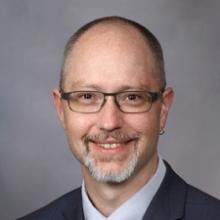
“You’re keeping your own human experiences in the background,” he explained. Medicine has become more demanding and much of what the doctor does now is through direct electronic interfaces.
This has diminished opportunities to deeply engage with other human beings professionally and even personally. These factors may explain why social isolation is a chronic problem for physicians, said Dr. West, emphasizing that “medicine isn’t just about scurrying from one room to another. It's getting to know your colleagues, knowing their families, their successes, maybe even their struggles.”
As the leader in physician well-being, the AMA is reducing physician burnout by removing administrative burdens and providing real-world solutions to help doctors rediscover the Joy in Medicine®.
Scores vary by sex, age, marital status
Across multivariable analyses, physicians were more likely to report feeling isolated than workers in other professions.
Among physician respondents, the mean T-score for social isolation was 48.2 out of 100. Physicians who worked more weekly hours had higher scores, whereas doctors in private practice had the lowest scores.
“Social isolation T-score increased by 0.04 for each additional hour worked weekly,” the study reports.
While it did not vary much across race and ethnicity categories, social isolation scores were higher for women than men physicians and were lower among married physicians. Physicians without children or with younger kids also had higher scores. Meanwhile, social isolation was also higher in physicians 35 to 44 years old but improved in older adults.
While it’s not entirely clear why these differences exist, there are some clues, said Dr. West. Literature on women in medicine and workload suggests that demands with patient portal messages and time with patients tend to be higher among women than men.
“Physicians and women societally, both within and outside of medicine, often will have other roles and responsibilities outside of work that disproportionately fall onto them,” making it harder to connect with other people, offered Dr. West. Social isolation may result not just from increased medical workload, but from nonwork responsibilities such as family and children.
Similarly, early- and mid-career physicians are trying to establish their careers while balancing home responsibilities with young children. They often work long hours, which limits their social circle.
Unmarried physicians may be scoring higher on social isolation metrics because they may not have a natural sounding board with a spouse or a partner to help offset job stressors. Married physicians as well as later career physicians who may have graduated from family responsibilities had the lowest levels of social isolation.
Solo work leads to feeling isolated
Results also varied by physician specialty. These physician specialties had the highest social isolation scores:
- Pathology.
- Physical medicine and rehabilitation.
- Radiology.
- Pediatric subspecialties.
- General surgery.
Meanwhile, these physician specialties had the lowest social isolation scores:
- Dermatology.
- Radiation oncology.
- Ophthalmology.
One explanation is some physician specialties—such as pathology and radiology—are less likely to directly interact with patients and may also work more separately from professional colleagues, said Dr. West. “By the nature of their work, that may be why some of those disciplines have worse social isolation scores.”
With general surgery, there’s often quite a bit of social interaction with other people. However, these physicians work incredibly long hours. With such demanding work, even though they're around other people, “it's so work-focused that they may not be able to fully support social interests or social connections,” he said.
A link between isolation and suicidal thoughts
The strong correlation between high levels of social isolation, burnout and suicidal ideation in the previous 12 months contributes to the larger picture of well-being in physicians, noted Dr. West.
The fact that social isolation was associated with higher risk of suicidal ideation is not a surprise, he said. However, the overall magnitude of this problem “is eye catching.”
Among the highest group for social isolation, one in seven physicians reported suicidal ideation in the last year. Comparatively, the risk of suicidal ideation in the most socially connected physicians was below one in 40.
“One in seven versus one in 40 is a really dramatic difference that speaks to potentially protective effects of social connection relationships,” he said.
The AMA STEPS Forward® toolkit on “Preventing Physician Suicide” outlines four steps to help identify and support at-risk physicians.

The need for intentional self-care
Recognition and awareness are the first fundamental steps in tackling social isolation in medicine, said Dr. West. “We get so busy in medicine that often we sort of bury ourselves in our work and don't pay attention to things that might be diminishing or absent in our lives.”
Physicians need to be aware that social disconnection can lead to burnout and is associated with suicidal ideation, he said, noting the importance of “just being aware that we're at risk for this, that we need other people.”
It’s also important for physicians to give themselves permission to prioritize their social relationships. Physicians are trained that the patient is what matters, and there is something honorable about that duty.
“But at the same time, I think we've been a little bit slow as a profession to recognize that we take the best care of our patients when we ourselves are well,” Dr. West said.
Self-care is part of how doctors can honor their commitment to patients, he continued.
Organizations should also encourage social infrastructure and connection in the workplace.
“I'm not suggesting we go back to the days of doctors smoking cigars in lounges surrounded by other doctors,” Dr. West said. “But we do need to have these social gathering places, this sort of water cooler stop, where we can remember that we're surrounded by people who are working with us to take care of patients, share the same values, the same mission.”
Explore life in these physician specialties
Here—representing both high and low social isolation scores as listed above—is an inside look at different physician specialties from doctors who have participated in the AMA “Shadow Me” Specialty Series, which offers advice directly from doctors about life in their specialties.
Each doctor is from an organization that is part of the AMA Health System Member Program, which provides enterprise solutions to equip leadership, physicians and care teams with resources to help drive the future of medicine.
General surgery
- As a general surgeon at Hattiesburg Clinic, Boris Cehajic, MD, does not remember what his expectations were for lifestyle in general surgery, but he thinks he is “achieving the work-life balance” he wants.
- “I am fortunate to work with seven partners with whom I share call responsibilities and who I can go to for help or advice whenever I need it,” said Dr. Cehajic. “This also gives me some flexibility with scheduling when I need it.”
Pediatric hospital medicine
- For Michelle Puzdrakiewicz, MD, of Ochsner Children’s, pediatric hospital medicine can be practiced anywhere, and with some work, it allows for having a family.
- At Ochsner Health, as a pediatric hospitalist, Dr. Puzdrakiewicz sees “rewards every single day. The kids—the patients—and their families are great. Even when they’re at their sickest, kids are kids, and they give you a smile. It’s really nice to help a family through a difficult illness or cope with a new diagnosis.”
Physical medicine and rehabilitation
- Erica Bechtel, MD, a physical medicine and rehabilitation physician with Confluence Health, says “the most rewarding aspect of our work is being there for patients as they gain independence and function. Witnessing their progress and celebrating their milestones is incredibly fulfilling, and it's something that many other medical specialties don't always get to experience.”
- “We have the privilege of forming long-term relationships with our patients, much like primary care, for individuals with chronic impairments and disabilities,” said Dr. Bechtel. “This continuity of care allows us to see our patients over their lifetimes and contribute to their long-term well-being.”
Radiology
- For Olaseni Arogundade, MD, of Confluence Health, shares that “one of the most rewarding aspects of being a radiologist is our ability to directly influence patient-management decisions through our interpretations of imaging studies.”
- “Additionally, serving as trusted consultants to physicians and other health professionals enables us to contribute our expertise to multidisciplinary care teams, enhancing patient outcomes and fostering collaborative teamwork,” Dr. Arogundade said. “These roles affirm the significant impact we have in patient care and underscore the intrinsic rewards of our profession.”
Dermatology
- When looking at lifestyle in dermatology, Klint Peebles, MD, of Mid-Atlantic Permanente Medical Group, says that it “is unique among many of the specialties in the sense that you are able to design your practice such that it accommodates your needs.”
- “Number of days per week, hours per day, start or stop times—all of these tend to be flexible and negotiable depending on the practice setting,” said Dr. Peebles.” As with all other specialties, there are academic options, private practice, hybrids and others.”
AMA STEPS Forward open-access resources offer innovative strategies that allow physicians and their staff to thrive in the new health care environment. These resources can help you prevent burnout, create the organizational foundation for joy in medicine and improve practice efficiency.