As a medical student, do you ever wonder what it's like to specialize in pediatric hospital medicine? Meet AMA member Michelle Puzdrakiewicz, MD, a pediatric hospitalist and a featured physician in the AMA's “Shadow Me” Specialty Series, which offers advice directly from doctors about life in their specialties. Check out her insights to help determine whether a career in pediatric hospital medicine might be a good fit for you.
The AMA's Specialty Guide simplifies medical students' specialty selection process by highlighting major specialties, detailing training information and providing access to related association information. It is produced by FREIDA™, the AMA Residency & Fellowship Database®.
Learn more with the AMA about the medical specialty of pediatric hospital medicine.
“Shadowing” Dr. Michelle Puzdrakiewicz
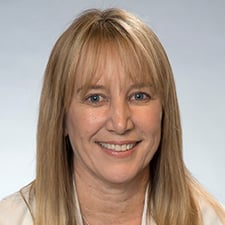
Specialty: Pediatric hospital medicine.
Practice setting: Hospital.
Employment type: Employed by Ochsner Children’s, in New Orleans, Louisiana. Ochsner Healthis part of the AMA Health System Member Program, which provides enterprise solutions to equip leadership, physicians and care teams with resources to help drive the future of medicine.
Years in practice: 25.
A typical day and week in my practice: Medicine has changed a lot in the last 25 years. When I started, there was no such thing as a pediatric hospitalist. We pediatricians did everything. We worked in the clinic; we worked in the nursery; and we worked in the hospital. So that was my role for the first 10 or 15 years of my career.
In 2011, I gave up my clinic role and became a hospitalist, meaning all of my time was spent caring for children who were just born in the newborn nursery or were hospitalized for an illness or injury. Pediatric hospital medicine became a board subspecialty in 2016. Throughout my career, I have practiced in academic centers, spending 11 years in rural health settings and the remainder in large cities or urban environments.
I really enjoyed rural health. We were in an area between Memphis and Nashville, and we were the only hospital for a huge catchment area. So, we took care of those children and had no ICU or specialty care available. We were basically the only physicians around, and we would have to manage the patients until we could get them either transferred, or if they were stable, they would stay with us.
That was the middle of my career, and it was great. So, when I talk to medical students, I always mention rural health, because it’s something that a lot of people kind of forget about. You don't have to do it your whole career, although I usually don't encourage people to do it early in their career. You need experience prior to going into rural health because you are sort of an island, but you have a lot of interesting cases, and you learn a ton.
Now I'm in the later part of my career and my work is about 55% clinical and 45% administrative. My clinical role is as a pediatric hospitalist where we take care of patients on the inpatient ward. My administrative responsibilities involve teaching medical students as the director for the pediatric clerkship for the University of Queensland Medical School, in Australia, and the Ochsner site for the Tulane School of Medicine.
I'm also what's called a society head, for University of Queensland Medical School, which is basically a mentor for medical students from year one through year four. I assist them with finding what they want to do long term, which is exciting. I really enjoy meeting them in their first year and watching the transformation that occurs by the time they finish their fourth year. They go through their first years of didactics and then they move to their clinical years, and that is often when they get to learn what intrigues them and they ultimately select a specialty.
For a physician, finding out what will make you happy is very important because no matter what field you go into, you're going to work hard. But if you enjoy your work, you'll be fine. Burnout is rooted in not finding your passion early on. So, I take that part of my job—helping students find their niche—very seriously.
The most challenging and rewarding aspects of pediatric hospital medicine: Challenges come every day, whether they're very stressful or just minor. If you're not challenged, you're not paying attention. So, it could be from a patient or a parent who is unsure about their care plan or other aspects of their medical care. Our role is to gain their trust so we can take care of them. And that takes a lot of practice. You have to help them understand your point of view and why you think this is best for their child.
But you see rewards every single day. The kids—the patients—and their families, they're great. Even when they're at their sickest, kids are kids, and they will give you a smile. It’s really nice to help a family through a difficult illness or cope with a new diagnosis.
The impact burnout has on pediatric hospital medicine: There's a lot of burnout in pediatric hospital medicine, and it's because we do shift work. We work nights. We work weekends. We work holidays. It’s very important for physicians to look at where they are in their life and what works best for them.
I have had three stages in my career, and each has been based on what was going on in my life. I had young kids at one point—that's when we moved to rural Tennessee. My husband stayed home for seven years while I worked, and it worked perfectly for us. Then the kids grew up and we moved to New Orleans, and I got to have my academic career and a little less of the intense hospitalist time.
What I learned is you can burn out anywhere. It's really important to look at your current life situation and make sure your job, your career, work for you. Because if you try to make it work but it's not helping you or your family, you’ll end up burned out.
How Ochsner Health is reducing physician burnout: At least in my department, our leaders try to pay attention to our individual needs. For example, my boss knew that I have always been very interested in teaching and mentoring, so I found positions within the school to offload some of my clinical time.
We also have physician forums where we can voice our opinions. So, we definitely feel supported. I've always been an employed physician, so the grass is never greener on the other side. Being involved in your organization is what's important—so that you feel like you have a voice.
How my lifestyle matches, or differs from, what I had envisioned: In medical school, I never had an idea of what a lifestyle was. I just thought, “I'll go to medical school, and I'll be a doctor.” We have made changes about every 10 to 11 years based on where our family was. And that has made my career very interesting, but I don't feel like I have had to sacrifice time with my family. We just modified our careers—both my husband and me, so I didn't have any idea what my lifestyle should have been like. I just think it's really important that people focus on what's important to them. Your family is obviously number one.
Skills every physician in training should have for pediatric hospital medicine but won’t be tested for on the board exam: First and foremost, flexibility. Medicine changes because society changes and health systems change. If you're rigid, you're going to get stressed and you're not going to do well. Maybe we can’t yet test for flexibility, but we can certainly model it for our students.
One question physicians in training should ask themselves before pursuing pediatric hospital medicine: Are you happy with this life? Is this a career you want? This is not just a job. This is what you're going to do for the rest of your life, so you want to be happy going to work.
I raised four little kids—they’re all adults now—and I never dreaded going to work because I loved my job, I loved my colleagues, I loved my patients. And the work was stimulating. So, when you're thinking about your specialty, when you're going through all of your rotations, if you are dreading doing that work, that's just not the right thing for you. You have to find what is good for you.
A lot of medical students are nervous in their first and second years and in their third year they're really worried if they haven't found their calling. But it happens. I've even had students towards the end of their fourth year make a change. They find what works for them. And I have had students switch specialties after starting residency, and that's OK. There's nothing wrong with that. This is your lifelong career, and it's important to find where you're happy.
Books, podcasts or other resources every medical student interested in pediatric hospital medicine should be reading or listening to: This is so personal, and I think it is also generational. When I was in residency, we had a book, The Spirit Catches You and You Fall Down: A Hmong Child, Her American Doctors, and the Collision of Two Cultures, by Anne Fadiman. It talks about cultural differences in medicine.
Another is When Breath Becomes Air, by Paul Kalanithi, MD. Both are easy-to-read books that teach you about the personal side of what's affecting patients.
Additional advice I would give students who are considering pediatric hospital medicine: I love my job. That's what I always tell people. I absolutely love my job and my career. I have enjoyed every aspect of it. So, if you're considering pediatrics, I encourage you to talk to all kinds of different pediatricians—general pediatricians, specialists, hospitalists—and get an idea of what makes them happy about their job.