By her own admission, Susan D. Scott, PhD, RN, was an unlikely candidate to become the person now regarded by many as the mother of peer support in healthcare.
A nurse-scientist at University of Missouri (MU) Health Care and an adjunct, associate professor at University of Missouri Sinclair School of Nursing, she spearheaded the creation of the first peer support program of its kind, the forYOU Team. The team was designed for anyone working within a healthcare environment. Scott has since become one of the leading researchers on the topic.
“I never dreamed my career path would lead me to research, and mental healthcare was not my strongest area, Scott said. “However, when I was given the opportunity to become a patient-safety officer at MU Health Care, in the early 2000s I began working closely with care team members after emotionally challenging clinical events, that experience made me realize we could do a better job of supporting our workforce.”
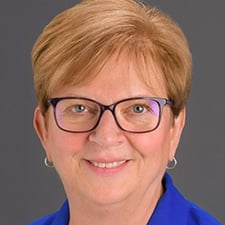
“My clinical background was in neonatal critical care, so I was voyaging in new territory. And what started out as a simple process-improvement team quickly turned into this international phenomenon acknowledging that offering supportive presence after unexpected and challenging emotional clinical events should be the norm—not the exception,” she said. Her new mantra soon became “In healthcare’s hardest moments, no caregiver should have to find their way forward alone.”
The AMA is helping healthcare organizations navigate the process of optimizing peer support with the AMA Peer Support Workshop, a two-day, in-person experience that provides practical tools and proven strategies to help you launch or reinvigorate your peer support program.
- Healthcare executive leaders.
- Well-being, patient safety and quality leaders.
- Peer-support program directors or emerging program champions.
- Clinical managers, educators and risk-management leaders.
The workshop will be held Oct. 28–29 at the AMA headquarters in Chicago. Learn more and register now.
The event reflects the AMA’s role as the leader in physician well-being, providing organizational solutions that help physicians and health systems optimize practice efficiency, reduce burnout, and rediscover the Joy in Medicine®.
Notice the need
It’s been nearly 20 years since Scott started her trailblazing program, and its scope of work has continually evolved.
“When I started the pilot project for the team, in 2007, I was myopically focused on patient-safety events involving a medical error. But before the team launched, our steering team pointed out that healthcare is hard work and can take an emotional toll on its workforce. They encouraged us to expand peer support to address a wider range of difficult experiences,” she said. “For example, a longtime cancer patient finally rings a bell and is in remission, only to die in a car accident on his way home. As a healthcare organization, we owe it to our entire workforce to help them process that emotional trauma.”
Another lesson arrived just a few weeks after deployment.
“I had a nurse manager call me in tears,” Scott remembered. “One of her very young ICU [intensive care unit] nurses had just died by suicide. She said, ‘I need to figure out a way to help my team, and I think a forYOU Team group briefing could help.’ Within three weeks, our team expanded its support to include tragic clinician events.”
Scott said that such events—including workplace violence exposures—now account for one in five peer support responses. Medical errors comprise only about 10–12% of peer responses. The remainder, more than half of all cases, are related to unanticipated adverse patient outcomes that were not caused by a medical error.
This is not flavor of the month
Scott will be leading several of the more than 10 sessions at the workshop.
Besides tackling the initial steps in setting up a peer support program, such as engaging stakeholders and building a team, she and her copresenters will tackle long-term topics such communication, promotion and program visibility.
“The workshop is designed to address peer support team representing various stages of development,” she said. “It can go everywhere from, ‘Huh, I wonder what a peer support team is’ or ‘I'm thinking about creating one’ to ‘We have a program that needs to be resuscitated’ or ‘I want my team to learn from the seminal programs in the country.’”
That last part—the latest research on what works—will make up a big chunk of the workshop.
“During a recent study, we gathered insights from 23 peer support teams in existence for at least four years,” Scott said, explaining the age requirement. “Lots of programs deployed during COVID because they had to, but we wanted to draw from programs that had done it beforehand and have had ample time to show what works. The medical community values evidence-based practices, and these programs have stood the test of time.”

Consider everyone who can benefit
“In my fantasy world, I would love to have a peer supporter for every area that could be impacted, but that isn't realistic,” Scott said, noting that peer support has benefited a wide range of healthcare personnel, including student learners, volunteers. medical interpreters, plant engineers and security guards. “I encourage teams to cast a broad net and include everyone in the healthcare environment, even your student learners and your volunteers.”
She also challenged the notion that support must be strictly peer to peer.
“Over the years, peer support has evolved into true colleague-to-colleague support, which I love,” she said. “Seeing a physician reach out to a bedside nurse warms my heart, just to offer support, that warms my heart. In today’s healthcare environment, we need to reach across disciplines and remember that caring for our patients also means taking care of one another and ourselves.”
The workshop is just one part of the AMA Career Advancement Collective, a powerful new suite of educational programs and training will help physicians develop and advance at every stage of their career.
Learn more and register for one of these career-shaping events now.