- Highlights from the AMA Interim Meeting
- AMA-led coalition urges Congress to act on Medicare payment before year's end
- CMS finalizes 2027 Medicare payment rules
- Registration open: 2027 National Advocacy Conference
- Medicare Diabetes Prevention Program changes expand access for Medicare and Medicare Advantage beneficiaries
- AMA urges HHS to rescind peptide non-enforcement policy
- Psychedelic therapy policies should be guided by science, not social media
- 2027 MIPS payment adjustments released; targeted reviews due by Nov. 30
- More articles in this issue
Highlights from the AMA Interim Meeting
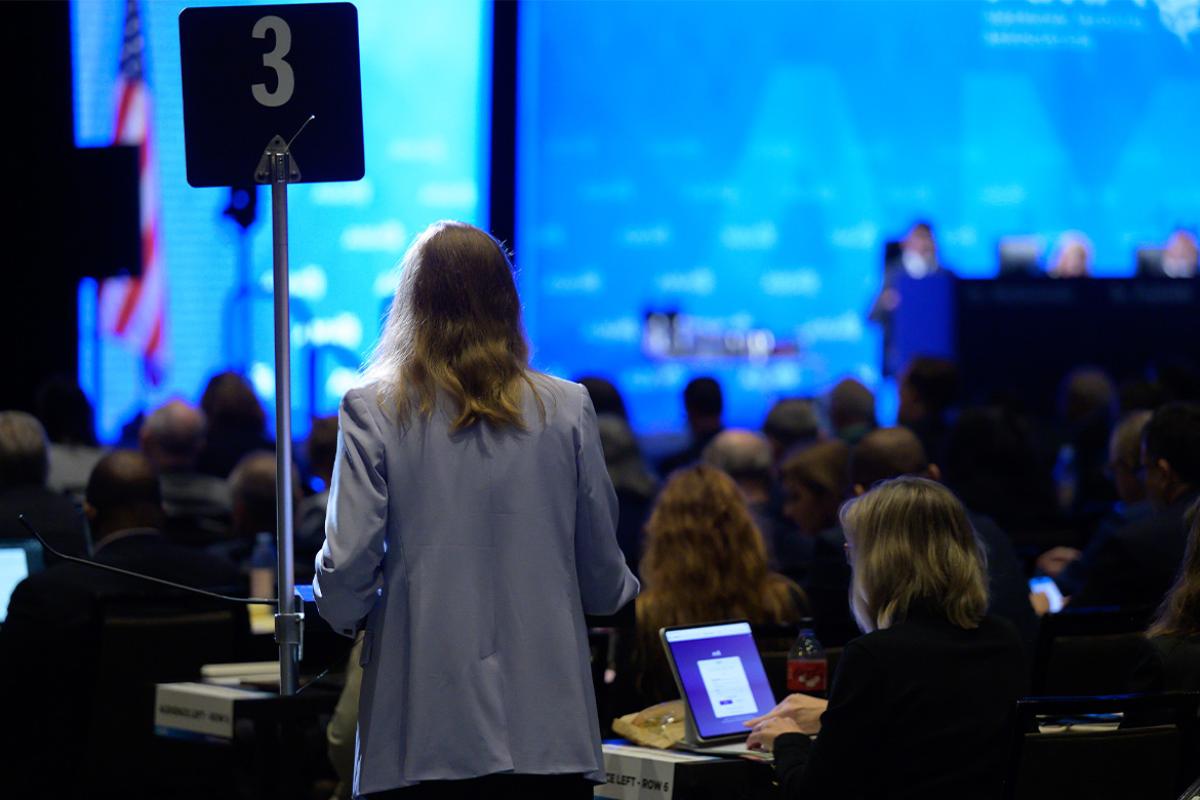
The AMA House of Delegates addressed a range of critical issues impacting the nation’s healthcare system at the 2026 Interim Meeting, which took place Nov. 6-10 in Orlando, Florida.

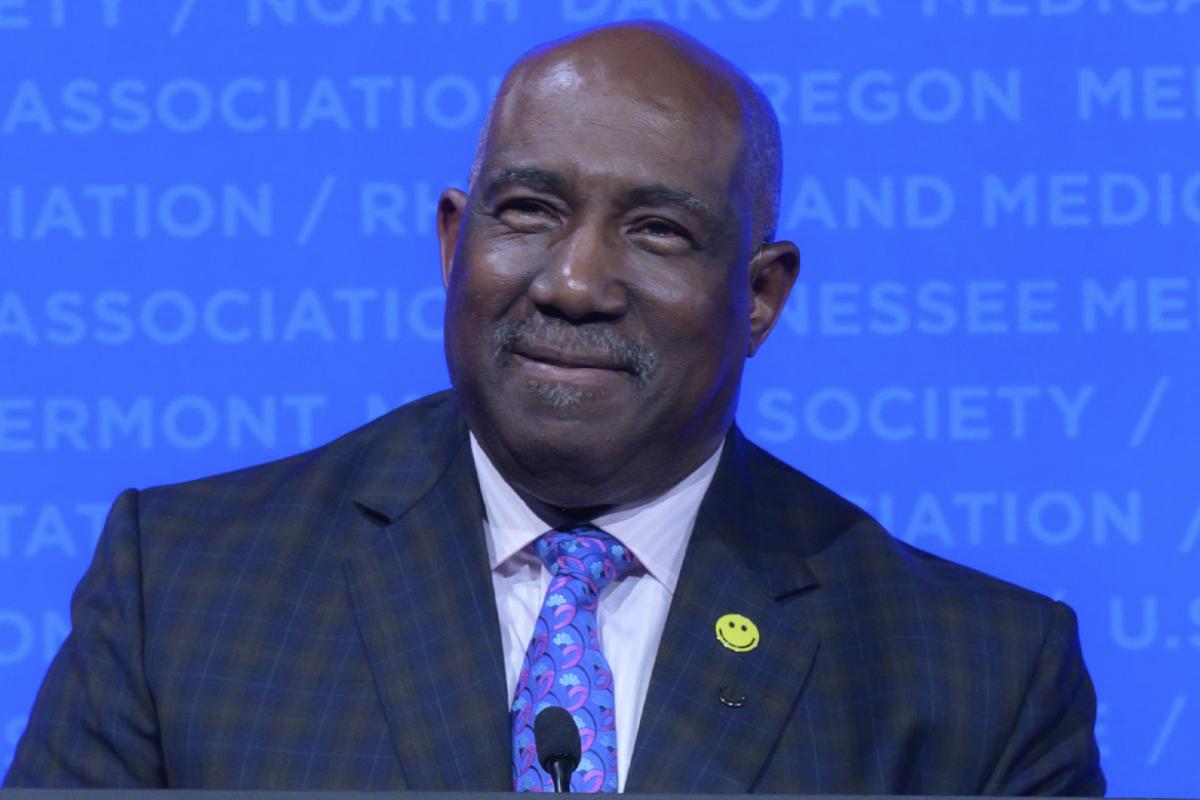
On Friday, AMA President Willie Underwood III, MD, MSc, MPH, and AMA CEO John Whyte, MD, MPH, opened the meeting with addresses to attendees.
Key topics covered at the meeting included:
- Augmented intelligence: New policy adopted at the meeting says that AI cannot be granted physician licensure, professional titles or certification to practice medicine.
- Downcoding: The House of Delegates built on extensive existing policy on payer downcoding—a practice that inflicts significant financial harm on physician practices that is often concealed by opaque payer processes—to deepen physician advocacy on the issue.
- Physician-led care: Delegates adopted new policy to set the standard that "emergency department" means 24/7 coverage by a qualified physician who is immediately available in person as part of broader effort to boost physician-led care and make clear to patients who is providing care.
- Synthetic peptides: The AMA adopted policy to address mounting concerns that synthetic peptides that have not been approved by the Food and Drug Administration lack the safety, efficacy and quality evidence necessary to support their use.
- Modifier 25: Delegates adopted policy calling on the AMA to address the Centers for Medicare and Medicaid Services’ recent Modifier 25 policy through any legal means including direct payer negotiations, regulations, legislation or litigation.
For more information, view the complete overview of day-to-day meeting highlights.
AMA-led coalition urges Congress to act on Medicare payment before year's end
An AMA-led coalition of 62 organizations representing physicians and their medical practices urged Congress to protect Medicare patients' access to care and advance meaningful Medicare payment reform in any end-of-year legislative package. In a letter to House and Senate leaders, the groups asked Congress to:
Extend the 2.5% physician payment update through 2027, as CMS projects a 2.5% increase in practice costs next year.
Enact the bipartisan Provider Reimbursement Stability Act (H.R. 8163/S. 5180), approved 44–0 by the House Ways and Means Committee, which would require CMS to correct budget neutrality adjustments when actual use of services differs substantially from its estimates.
Delay for one year the modifier 25 payment reduction CMS finalized in the 2027 physician fee schedule.
Cap Merit-based Incentive Payment System (MIPS) penalties at 2%, down from as much as 9%, and require timely, actionable performance data.
The letter comes as Congress begins a lame-duck session with a short runway and an uncertain outlook. Lawmakers have about four weeks in session, interrupted by Thanksgiving, before current government funding expires Dec. 11. Nearly 20 health programs expire Dec. 31, along with the 2.5% update Congress provided for 2026. Control of both the House and Senate will change hands in January, so the path forward is unsettled. Congress could pass a broader year-end package, or it could approve a short-term spending bill that pushes major decisions into the new Congress.
Whichever path Congress takes, a unified physician voice will matter. There is strong bipartisan interest in addressing Medicare physician payment, and a broad coalition speaking with one voice gives physician champions in Congress more leverage to secure these provisions. The coalition's asks would provide near-term stability while building toward the broader reform the AMA is pursuing through the bipartisan Patients First Act (H.R. 9693), including predictable, inflation-based updates. The AMA will keep working closely with congressional champions throughout the lame duck. Physicians can urge their members of Congress to act at FixMedicareNow.org.
CMS finalizes 2027 Medicare payment rules
On Nov. 4, the Centers for Medicare & Medicaid Services (CMS) released the calendar year (CY) 2027 final rules for the Medicare Physician Fee Schedule (PFS) and Quality Payment Program (QPP) (PDF), the Hospital Outpatient Prospective Payment System (OPPS) and Ambulatory Surgical Center (ASC) Payment System (PDF), and the Home Health Prospective Payment System (PDF). Physicians face a 2.31% cut to the conversion factor in 2027. The AMA is urging Congress to pass the bipartisan Patients First Act (H.R. 9693), which would establish an annual inflation-based update for physicians. Summaries of each rule follow.
Medicare Physician Fee Schedule and Quality Payment Program
The 2027 conversion factor will fall by 2.31%, to $32.6286, for most physicians, and by 1.83%, to $32.9548, for those in qualifying alternative payment models (APMs). The cut comes primarily from the expiration of a temporary 2.5% increase, while CMS projects that the cost of running a practice will rise 2.6%.
Key provisions include:
- Modifier 25: Following advocacy by the AMA and more than 150 medical organizations, CMS significantly scaled back its proposed cut to same-day office visits and procedures. Instead of cutting payment by 50 percent for 0-, 10-, and 90-day global procedures, CMS will cut payment by 20 percent and only for 0-day global procedures furnished by the same physician or a physician of the same specialty in the same group. The AMA continues to oppose the policy. We are pressing Congress to act during lame duck to delay implementation of the policy for one year.
- Remote monitoring: CMS finalized requirements for an initiating visit and an established patient relationship for both remote physiologic and remote therapeutic monitoring. CMS delayed until 2029 its requirement that these services be furnished only by practice-employed clinical staff. CMS finalized payment cuts for device supply codes, but, as the AMA urged, did not eliminate practice expense payment for treatment management services. CMS also did not adopt new G-codes that would have bundled remote monitoring services. The AMA RVS Update Committee (RUC) will review all remote monitoring codes in January 2027.
- MIPS Value Pathways (MVPs): Thanks in part to AMA advocacy, CMS delayed mandatory MVP reporting by two years, until the 2031 performance period. The AMA continues to call for voluntary reporting and measures that reflect the care physicians provide.
- Electronic prior authorization (PA): Following AMA advocacy, CMS made the electronic PA measure optional in 2027, with bonus points for practices ready to participate, before it becomes required in 2028.
- Reduced paperwork: CMS adopted AMA-backed changes to eliminate unnecessary paperwork, including electronic health record attestations and duplicate security reporting.
- Value-based care incentives: Despite AMA opposition, CMS will cut physician incentives for Alternative Payment Model participation by an estimated $2.4 billion over 10 years, potentially discouraging future participation, particularly among smaller and specialty practices.
- Maternity Care Services CPT codes: The AMA is pleased CMS finalized the revised Maternity Care Services CPT codes, which take effect on Jan. 1. The American Health Insurance Plans (AHIP) had pressured CMS to adopt HCPCS-G codes. The AMA worked closely with the American College of Gynecologists to urge CMS to the CPT code set without parallel G-codes, noting that two coding structures would create confusion and administrative burden for care teams and patients. The new codes reflect modern obstetric practice and will provide much-needed transparency for patients and more granular data to help physicians and researchers better understand the drivers of maternal mortality.
Hospital Outpatient and ASC Payment Systems
CMS finalized a 2.3% payment update for hospital outpatient departments (HOPDs) and ASCs.
Key provisions include:
- Site neutral payment for imaging: Over AMA objections, CMS will pay for imaging services without contrast furnished in grandfathered off-campus HOPDs at the Medicare Physician Fee Schedule equivalent rate, outside of budget neutrality. The policy removes an estimated $260 million from Medicare in 2027, rather than reinvesting those savings in Part B services, including physician payment, as the AMA urged. Rural sole community hospitals are exempt.
- Inpatient Only (IPO) list: CMS removed 637 services across 11 clinical families in the second phase of eliminating the IPO list. The remaining cardiovascular, neurological, and transplant procedures are slated for removal in 2028.
- PA for botulinum toxin injections: Despite AMA concerns, CMS will require PA for eight additional botulinum toxin injection codes in HOPDs beginning July 1, 2027.
- 340B drug payment: CMS will pay for 340B-acquired drugs at average sales price (ASP) minus 28%, rather than the proposed ASP minus 33.4%, citing commenters’ concerns that the steeper cut could limit patient access. Because the change must be budget neutral, CMS will raise OPPS payments for other services by an estimated 7.5%.
- ASC payments: As the AMA supported, CMS will continue to update ASC payments using the hospital market basket for one more year. However, it again declined to eliminate the ASC scaler, which falls in 2027 largely because of the 340B policy.
Home Health: Medicare enrollment provisions affecting physicians
The home health final rule matters to physicians because of its Medicare enrollment provisions, which apply to nearly all physicians and physician practices. In response to concerns raised by the AMA and others, CMS dropped two of the most far-reaching proposals. One would have let CMS revoke all of a physician’s Medicare enrollments based on the denial of a single application. The other would have allowed denial of enrollment based on a debt or payment suspension involving any party with a business or financial relationship with the practice. However, over AMA objections, CMS finalized most of the remaining provisions without change. These make all revocations retroactive, add new grounds for revocation or denial (including certain misdemeanor convictions and a practice’s location or shared office space), and shorten the window for filing claims after a revocation from 60 to 15 days. CMS also declined to re-propose the provisions in the PFS rule, where physicians would expect to find them. The provisions take effect in early January 2027, and the AMA will continue to press CMS for guidance and safeguards that protect physicians acting in good faith.
Registration open: 2027 National Advocacy Conference
Registration for the 2027 AMA National Advocacy Conference is officially open, and we would like to invite you to join us at the new venue—Feb. 22-24 at the Mayflower Hotel in Washington, D.C.
Join hundreds of physician advocates in bringing the power of organized medicine to our nation’s capital, advocating on crucial healthcare issues affecting physicians and patients.
Register early for the AMA National Advocacy Conference for the opportunity to attend the inaugural AMA Honors Gala at the National Portrait Gallery. This special event recognizes individuals whose innovation, leadership, and communication are shaping the future of healthcare.
Please note that gala attendance requires a separate registration. Seating is limited and available on a first-come, first-served basis until capacity is reached, so be sure to reserve your spot early.
View the preliminary agenda (PDF) for more information.
Medicare Diabetes Prevention Program changes expand access for Medicare and Medicare Advantage beneficiaries
World Diabetes Day Medicare is on Nov. 14. Medicare Advantage beneficiaries at risk for type 2 diabetes have more opportunities to access the Medicare Diabetes Prevention Program (MDPP), a lifestyle program created to reduce the risk of developing type 2 diabetes, thanks to several recent changes. The AMA has developed a new resource about the MDPP and who is eligible for physicians to share with their patients. Updates to the MDPP include:
- Medicare now allows a virtual option (in addition to hybrid and in-person), helping to reach more beneficiaries in rural and underserved communities.
- There is no longer a limit on the number of times Medicare beneficiaries can participate in the program.
- Medicare also now covers the A1C blood test for diabetes and prediabetes screening, which means more beneficiaries can qualify for the MDPP and begin preventive measures sooner.
Physicians should encourage eligible patients to learn more about Diabetes screening and prevention options, including the MDPP. For more information and to find an MDPP supplier near you, visit the CMS MDPP webpage and FAQs.
AMA urges HHS to rescind peptide non-enforcement policy
Allowing non-Food and Drug Administration (FDA) approved peptide substances to be compounded without sufficient guardrails and oversight threatens public safety, the AMA warned (PDF) the U.S. Department of Health and Human Services (HHS) this week. The AMA urged HHS to rescind its proposed “non-enforcement” policy (PDF) because “Allowing these substances to be used in compounded formulations exposes patients to unnecessary risks and undermines confidence in the evidence-based standards that guide drug evaluation and approval.”
In addition to urging HHS to rescind its policy, the AMA will urge state medical boards and state boards of pharmacy to enforce strict regulatory oversight and pursue swift enforcement actions against compounding pharmacies, direct-to-consumer telehealth platforms, and online dispensaries distributing unapproved synthetic peptide formulations that lack FDA regulatory review.
Learn more in a recent AMA article, "What doctors want patients to know about injectable peptides."
Psychedelic therapy policies should be guided by science, not social media
As interest in psychedelic therapies and federal investment in related research continue to grow, the AMA emphasized (PDF) to the FDA this week that “regulatory decisions should rely primarily on well-designed clinical investigations and objective outcome measures rather than uncontrolled observations, case reports, or anecdotal accounts.”
In its letter, the AMA highlighted that it “recognizes both the urgent need for new mental health treatments and the importance of ensuring that their development is grounded in rigorous science, patient safety, and ethical oversight.” The AMA stressed that it is concerned about state and federal policies moving “quickly to approve and increase availability of ibogaine and other psychedelic substances before those substances have been reviewed—let alone approved for human use—by the FDA.”
The AMA noted the potential harms associated with psychedelics and encouraged the FDA “to maintain rigorous evidentiary standards throughout ibogaine and other psychedelic substance development and to require robust nonclinical and translational evidence before initiating or expanding human studies.” The AMA further urged that “Accelerated development pathways should not lower the scientific threshold required to demonstrate safety and effectiveness.”
2027 MIPS payment adjustments released; targeted reviews due by Nov. 30
CMS has released 2027 Merit-based Incentive Payment System (MIPS) payment adjustments based off 2025 MIPS performance period data. 2025 MIPS scores determine 2027 payment adjustments. The AMA urges all physicians and group practices to sign in to the Quality Payment Program (QPP) website to review their performance and payment adjustment information to ensure correct calculations. If an EC or group practice believes CMS calculated their final score or 2027 payment adjustment incorrectly, they must file a targeted review with CMS by Nov. 30.
Examples of circumstances that could prompt a Targeted Review include:
Data were submitted under the wrong TIN or National Provider Identifier (NPI).
You have Qualifying APM Participant (QP) status and shouldn’t receive a MIPS payment adjustment.
Performance categories weren’t automatically reweighted even though you qualify for reweighting due to extreme and uncontrollable circumstances. (Learn more in the 2025 MIPS Automatic Extreme and Uncontrollable Circumstances Fact Sheet (PDF).)
CMS generally requires documentation to support a targeted review request, which varies by circumstance. A CMS representative will contact you about providing any specific documentation required. If the targeted review request is approved and results in a scoring change, we’ll update your final score and/or associated payment adjustment (if applicable), as soon as technically feasible. 2025 Targeted Review User Guide (PDF)—Reviews the process for requesting a targeted review and examples for when you would or wouldn’t request a targeted review. Please note that targeted review decisions are final and not eligible for further review.