
Governance
The AMA’s system of governance and policy-making includes the Board of Trustees, House of Delegates, Executive Vice President, Councils and Committees, Sections, and AMA senior leadership and staff. Learn how each contributes to the AMA’s governance, policy development and organizational leadership.

Board of Trustees
The Board of Trustees (BOT) is responsible for the property and financial affairs of the AMA as well as implementing AMA policy. It is composed of twenty-one members, who are elected either by the House of Delegates or the Medical Student Section.

House of Delegates
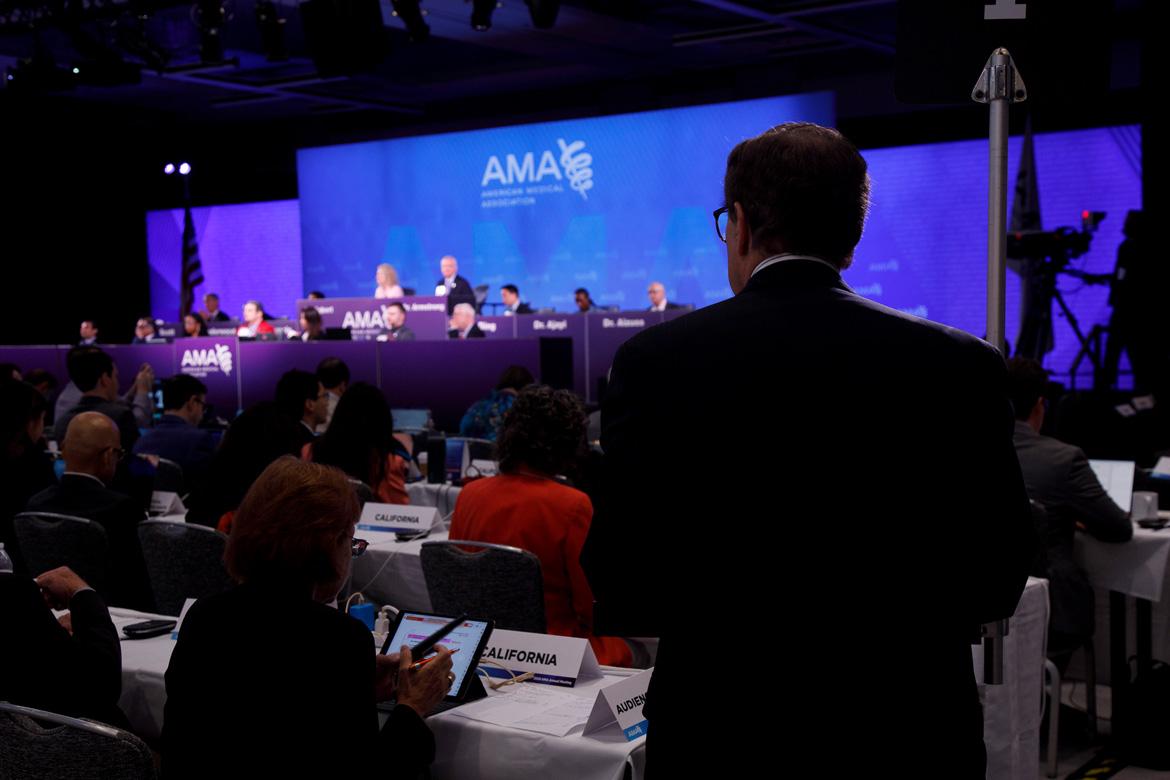
The House of Delegates (HOD) is the legislative and policy-making body of the AMA. State medical associations and medical specialty societies are represented in the HOD, along with AMA sections, other national societies, professional interest medical associations and the federal services.

Councils
The seven AMA councils provide information and recommend policies to the BOT or HOD on various issues impacting patients and physicians, including medical education, professional ethics, legislation, AMA bylaws, long-range planning, medical service, and science and public health.
Member Groups (Sections)
The AMA sections are interest-based groups that offer members the opportunity to shape AMA policy, increase relevant knowledge and skills, and interact with peers with similar interests or backgrounds.

Leadership
AMA leadership is united in advocating for the health and well-being of patients and physicians. Senior leaders are responsible for managing the day-to-day operations of the AMA.