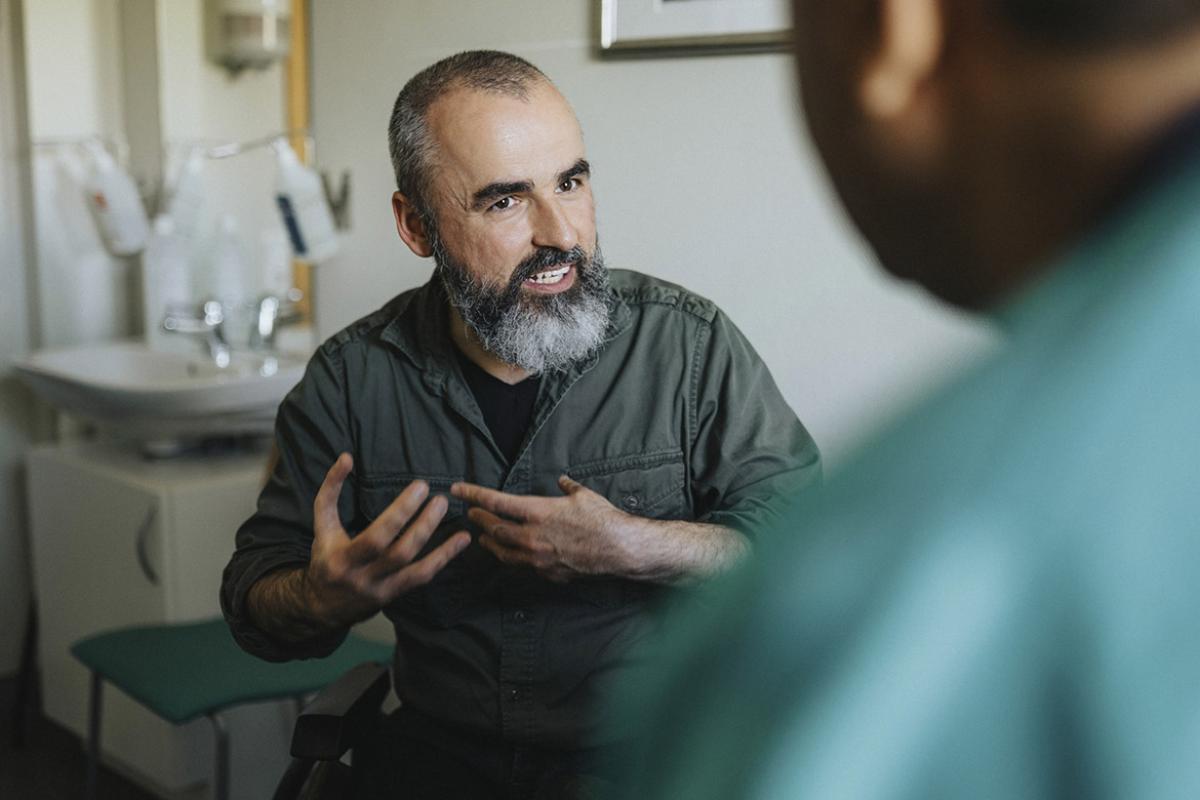
More face-to-face interaction with patients helps bring joy back to medicine for physicians.
Yet exclusive data from all organizations that surveyed with the AMA Organizational Biopsy® in 2024 found that of the average 57.8 hours a week that physicians work, only 27.2 hours are spent on direct patient care. Meanwhile, physicians on average reported spending 13 hours on indirect patient care such as order entry, documentation, test result interpretation and referrals and 7.3 hours on administrative tasks such as prior authorization and insurance forms.
A revamped AMA STEPS Forward® toolkit can help physicians reclaim more face-to-face time with patients by walking practices through a six-step process to design and implement a team documentation process.
The “Team Documentation: Improve Efficiency of EHR Documentation” toolkit guides physician practices on choosing the best workflow model for their needs and shows them how they can train documentation assistants and improve the efficiency of real-time, in-person documentation, even without augmented intelligence assistance.
Over the past decades, the switch to EHRs has changed how physician practices document patient visits. The data gathering and entry that receptionists, medical transcriptionists, medical assistants and nurses traditionally handled have increasingly shifted to physicians. Implementing a team-documentation system can shift some of those responsibilities back to clinical staff and enhance documentation efficiency, reduce redundancy, provide patients with better care and ease physician burnout.
Organizations can see a return on investment when they reduce how much time physicians spend on documentation tasks that others on the team can easily handle. This calculator can help practices estimate how much time and money they may save by implementing team documentation.
From AI implementation to EHR adoption and usability, the AMA is fighting to make technology work for physicians, ensuring that it is an asset to doctors.
Six steps to follow
Here is a brief outline of the six steps the toolkit offers to help physician practices implement team documentation.
Create a change team. Gather a small group of team members to identify barriers and develop strategies to make practice improvements, such as enhancing team documentation. In addition to physicians, the multidisciplinary team should include a high-level champion, such as the medical director, division head or department chair. It should also include people from administration, nursing, information technology, compliance and medical assistants.
Decide which team members will help with the documentation. Clinical team members—medical assistants, nurses and others—can contribute to documentation. Nonclinical team members—such as students, transcriptionists or scribes (including AI ambient scribe options)—and patients themselves can also help document. Physician practices should consider the skill level of the people who will be helping to document patient encounters and assign tasks based on a person’s skill levels.
Choose a model. Practices can go one of two ways: When a clinical team member helps with documentation, the model is called an advanced team-based care model. A specially-trained medical assistant, nurse or other clinically trained team members stays with the patient from the beginning to the end of the appointment to provide team care services and complete documentation tasks. Typically, there are one to three clinical assistants per physician.
When a nonclinical team member is brought on to complete documentation during the patient encounter, it is called the clerical documentation assistant model. This assistant accompanies the physician during each patient visit and only records the encounter and pends orders. Nurses, medical assistants or physicians perform all the clinical aspects of care. Typically, there is one clerical documentation assistant per physician.

Define the workflow. The practice needs to identify who will perform which responsibility during a patient visit. Some things to consider:
- EHR features and functionality. For example, can only one user be in the record at a time or can the record be “passed” from one user to another without being closed.
- Which devices will the assistant and physician use?
- Will template notes be used?
The AMA STEPS Forward Taming the EHR Playbook can help in optimally tailoring the EHR.
Start with a pilot team. Ideally, you should pilot changes with one or two physicians who are enthusiastic about the changes and eager to help shape the new process. You can expect a three-to-six-month implementation and expansion timeline as physicians and staff adjust to the new workflows, the process is refined, and sustainable staffing models are developed.
Assess and optimize. Training needs to be ongoing. The physician and team should meet regularly to review and adjust workflows, remain current with what happens in the practice and address any barriers or other issues.
The AMA designates the toolkit as enduring material for a maximum of 0.50 AMA PRA Category 1 Credit™. The module is part of the AMA Ed Hub™️, an online learning platform that brings together high-quality CME, maintenance of certification, and educational content from trusted sources, all in one place—with activities relevant to you, automated credit tracking, and reporting for some states and specialty boards.
Learn more about AMA CME accreditation.