As physicians get older, they eventually face a period of career transition during which they must decide whether to continue their regular practice or move into a different role—one that could include retirement from a life in medicine.
At a recent meeting of the AMA Senior Physicians Section (AMA-SPS), psychiatrist Debra Atkisson, MD, discussed what older-adult physicians should consider as they evaluate transitioning out of active medical practice. Her presentation was followed by a panel discussion featuring AMA members.
Senior physicians who need to decide the next step in their careers can choose from a wide range of options. They can retire, slow down, teach or change careers entirely, but each decision requires contemplation and preparation, she said.
Dr. Atkisson recommended that as senior physicians make their late-career decisions, they do so by extending to themselves the same empathy and concern they give to their patients.
“It's OK to give yourself some of that same self-care that you would recommend to a patient,” she said during the AMA-SPS session at the 2025 AMA Annual Meeting. “Your physical health, your emotional health—it's the foundation.”
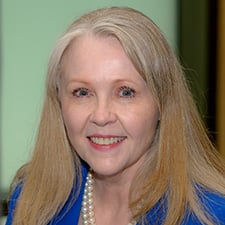
“Please value your energy. It is a resource just like time or money. And that's what I have to say to all of us because as we get older, naturally we would not have quite as much energy. So, the challenge with that is I want you to think about how you choose to spend that with work, but maybe with family and friends, maybe with some of those pursuits you've always wanted to do,” said Dr. Atkisson. She is senior vice president of clinical services at Blended Health, a behavioral health care company that operates 18 outpatient clinics across Texas and Tennessee.
Don’t forsake your identity
Even if you do decide to leave the daily duties of your medical practice, that does not have to mean abandoning your medical identity, added panelist Edward T. Bope, MD, a Columbus, Ohio, family physician and immediate past chair of AMA-SPS.
“I'd encourage you to not throw all of your identity away,” said Dr. Bope. “I keep my stethoscope, still, on a hook by the front door. My house-call bag is easy to grab as I run out the door, and yes, I've used it a time or two—but to me that that's been my life, my identity, I'm proud of it. I loved it, and I encourage you to find the same sort of peace and satisfaction.”
Edward W. Capparelli, MD, of Oneida, Tennessee, and the AMA-SPS officer at-large, spent much of his career as a family physician, including over 30 years delivering babies. “It was something very needed where I lived and I really enjoyed it,” he said. But later in his career, he discovered a new niche.
“When I hit 70, I said to myself, ‘It was time to slow down,’” Dr. Capparelli said. “As I was moving back to part-time, I saw another huge need related to addiction in my rural community. We set up a medication-assisted treatment program that I could run one day a week and serve a need,” given that not enough physicians are available to treat patients with substance-use disorder.
The AMA Senior Physicians Section gives voice to, and advocates on, issues that affect senior physicians, working part time, full time or retired.
Stay connected
Teaching is often a positive career step for older-adult physicians.
“I retired when I was 70,” noted internist-geriatrician Douglas M. DeLong, MD, MACP, the AMA-SPS alternate delegate. “Though I intellectually had an appreciation for what it was going to be like leaving practice, viscerally I did not really appreciate it. I did not know how much my patients and my colleagues were part of my social circle. And so, all of a sudden, I went from a social circle and support of 3,000 people down to 12.
Subscribe to free AMA email newsletters
Get the latest news from the AMA on the topics that matter to you—delivered to your inbox.

“For me, it was sort of doubly difficult. And so now I'm back. I managed to continue to cling onto a couple of committees on the ACP [American College of Physicians]. This very position that I'm doing now is part of what I'm doing to take care of myself,” Dr. DeLong said. “I still get joy out of feeling like I can maybe move the ship of health care policy. ... I continue to work one, two, three days a week teaching residents. I get great joy from that.
“We have a really lovely community library,” he added, “and I'm on the committee. In the wintertime we deliver a bunch of lectures and I enjoy doing that too. So: Keep your options open, be flexible. Relationships are key and jog your brain.”
The AMA provides numerous discounts and benefits to members who are fully retired. These include $84 annual membership, full access to JAMA Network®, savings on vehicle purchases and more.
Visualize yourself
Once you have decided to implement your career transition, Dr. Atkisson advised that older-adult physicians engage in a three-step process that focuses on visualizing yourself with a helpful new identity. She outlined the stages as follows.
- Stage 1: Letting go of your active role. Using steps to transition your role. Increasing personal, family or other interests outside of work.
- Stage 2: Anticipate an emotional reaction. Discuss emotions with a peer, coach or adviser. Remember even positive transitions can have feelings of loss.
- Stage 3: Visualizing yourself with a new identity, such as educator, consultant, adviser, mentor, coach.
Watch a recent AMA video interview with Dr. Atkisson to learn more about when and how to decide to stop practicing medicine.