Michael Jerkins, MD, MEd, was in his second year of residency, working in a cardiovascular intensive care unit and married with two children, when his car was wrecked, and his basement flooded in the same month.
“There were a lot of unexpected costs that came our way, and I already had lots of credit-card debt from the move to residency. It was overwhelming,” he recalled.
When Dr. Jerkins approached banks for a loan to get his family through that rough financial patch, his applications were denied.
“During the day, I'm trusted with the sick, and then at night I'm not treated like a grown adult, which is really odd, especially considering I'm also part of a highly skilled group of people that has the lowest unemployment rate of any occupation, incredibly high earning potential, and, the lowest default rate of any group,” he told the AMA.
That experience eventually led Dr. Jerkins to co-found Panacea Financial, a financial services business for doctors, dentists and veterinarians. A division of Primis Bank, Panacea Financial provides personal and business loans, and banking and payment services for physicians and practices alike. Panacea Financial was landed its first customer in 2020 and now has loaned a total of more than $1 billion and facilitates $6 billion in physician and practice transactions annually.
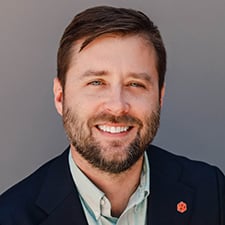
Dr. Jerkins will be among the speakers at the AMA Physician Entrepreneur Forum, which will be held Aug. 7–8 at the AMA headquarters in Chicago. Designed for physicians, residents and medical students interested in health care entrepreneurship and business leadership, the selective event will feature health care leaders who have built successful businesses, practices and ventures. Learn more and register by July 24.
“Doctors are very capable people. We just don't necessarily always have the mentors and the examples that show us what's possible with our finances,” Dr. Jerkins said in an interview during a visit to the 2026 AMA Annual Meeting in Chicago. “We don't always see the different avenues that doctors can go in and affect change.”
Meeting a craving for capital catering
More than 7,000 physicians across all 50 states use Panacea Financial’s platform, according to Dr. Jerkins, who is president and co-founder of Panacea Financial. About one-third are in practice, encompassing roughly 2,000 practice locations, and both practice owners and non-owners. The other two-thirds are divided about evenly between medical students and residents and fellows.
Dr. Jerkins said Panacea Financial’s scale is evidence that “doctors really crave a financial service that’s just catered to them and them only.” Most banks, he noted, don’t offer lending specifically designed for physician practices.
“They mostly put you through a generic small business lender who maybe -30 minutes prior -is reviewing a restaurant or a plumbing business, doesn't know anything about the business of dermatology or primary care. So therefore, you're not going to get terms that make sense for your business specifically.”
By comparison, Panacea Financial’s credit officers each have at least 12 years working in physician practice finance, and the banking team averages about a decade in practice finance.
AMA members receive exclusive member benefits from Panacea Financial, including a 0.25% rate discount on practice and personal loans, and zero-dollar original fees on practice loans, applied after underwriting. Get more details on how to take advantage of this AMA member benefit from Panacea Financial and about the terms and conditions that apply.

Filling knowledge gaps and finding time
Dr. Jerkins co-founded Panacea Financial with Boston hospitalist Ned Palmer, MD, MPH, the company's chief operating officer, and Tyler Stafford, a former college roommate who had been an investment banker and equities analyst, the company’s CEO. “Tyler knew banks inside and out, which obviously helped complement what I knew and didn’t know at the time,” Dr. Jerkins said.
Recognizing which aspects of a business venture are outside a physician’s knowledge and seeking out people who can provide that expertise is a crucial component of entrepreneurship, Dr. Jerkins said.
“It can be intimidating walking to a room of an industry that you're not used to, but very quickly I think doctors find their footing,” Dr. Jerkins said. “We're literally trained at code-switching all the time in our normal work and training.
Like other physician entrepreneurs, Dr. Jerkins found that time constraints were one of his biggest challenges to launching a business venture while also seeing patients. Five years ago, he scaled back his own internal medicine-pediatrics practice to one day a week at a family medicine clinic that is about an hour outside Little Rock, Arkansas.
“I've never stopped practicing,” he said. “I will never stop practicing. I love patient care.”
In addition to requiring professional trade-offs, physician entrepreneurship also demands perseverance and flexibility, Dr. Jerkins told the AMA.
“It’s important to be comfortable at pivoting when needed or changing course when the initial plan, product or rollout doesn’t work.”
Physician entrepreneurship also requires risk tolerance. “Growing businesses is not for the faint of heart,” Dr. Jerkins said.
Dr. Jerkins will draw on his experience helping physician practices thrive when he speaks at the AMA Independent Practice Accelerator Workshop, which will be held Sept. 11–12, also at AMA headquarters. He will discuss owning, opening and expanding a physician practice, offering his perspective from his work with practices at Panacea Financial. Learn more and register now.
Guiding principles for success
While most doctors don’t often have aspirations to become an entrepreneur on their career bucket list, Dr. Jerkins said that the physician’s experience also has instilled in them many of the skills needed for entrepreneurial success. Doctors bring entrepreneurship to their training in gathering and analyzing information, making a plan based on it, and communicating the plan to patients, their families and their care teams.
“This is at the core of our clinical skills and is a fundamental aspect of what successful entrepreneurs do as well,” Dr. Jerkins said, adding that some entrepreneurs may only be skilled at apportion of this process.
Another key to success in entrepreneurship, he said, is intellectual honesty. Just as doctors must acknowledge uncertainty and the need for further investigation in making patient-care decisions, good startup leaders “don’t make decisions without sufficient information and create cultures where their teams do the same,” Dr. Jerkins said.
Relatedly, Dr. Jerkins stressed the value of physician entrepreneurs being receptive to feedback and not regarding input from employees and customers as criticism. “It isn't,” he said. “It's the most direct signal you have about whether what you're doing is working.”
A third key principle Dr. Jerkins identified is keeping in mind the reason for the venture and the value of the undertaking. “Future employees, current employees, customers, partners and referral sources all need to hear from you on the ‘why’ of the company consistently,” he said.
That “why” also can keep a physician entrepreneur motivated—and satisfied. Dr. Jerkins said the greatest reward of becoming an entrepreneur is that it allows a doctor to create positive change on a large scale.
“Entrepreneurship lets you bring your vantage point as a doctor into spaces that have never had a physician at the table,” he said.