As a medical student, do you ever wonder what it's like to specialize in cardiovascular disease? Meet AMA member Evan Jacobs, MD, a cardiovascular disease specialist and a featured doctor in the AMA's “Shadow Me” Specialty Series, which offers advice directly from doctors about life in their specialties. Check out his insights to help determine whether a career in cardiovascular disease might be a good fit for you.
The AMA's Specialty Guide simplifies medical students' specialty selection process by highlighting major specialties, detailing training information and providing access to related association information. It is produced by FREIDA™, the AMA Residency & Fellowship Database®.
Learn more with the AMA about the broader medical specialty of cardiovascular disease.
“Shadowing” Dr. Evan Jacobs
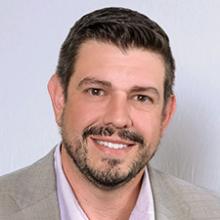
Specialty: Cardiovascular disease.
Practice setting: Group practice.
Employment type: Employed by CenterWell Senior Primary Care, in Fort Lauderdale, Florida. CenterWell Senior Primary Care is part of the AMA Health System Member Program, which provides enterprise solutions to equip leadership, physicians and care teams with resources to help drive the future of medicine.
Years in practice: 10.
What the specialty of cardiovascular disease is: Cardiovascular disease describes the internal medicine subspecialty of cardiovascular disease. People who pursue this subspecialty have to first become proficient and typically board certified in general internal medicine. After three years of internal medicine training, they train an additional three to five years, focusing only on prevention and treatment of cardiac and vascular conditions. That means everything pertaining to the heart, but also peripheral vascular diseases such as aortic aneurysms, vascular blockages in the carotids or extremities, or blood clots or obstructions in veins of the arms, legs or lungs.
A typical day and week in my practice: I typically arrive at the office at 8 a.m. In between patients, I read echocardiograms and vascular ultrasounds being performed in one of our four imaging locations throughout Broward County. I also check in with patients at the conclusion of their stress testing and give them results right there on the spot, so they never leave without knowing the result and the plan going forward. I typically read about eight to 10 imaging studies per day and finish up around 5 p.m.
I split up my work week between direct patient care and administrative responsibilities. I typically work 8 a.m. to 5 p.m., Monday through Friday, and I rotate between two of our main hub specialty offices. I see patients two days per week and spend my administrative days developing our national strategy for specialty care. That work includes developing our lens around where we build, buy or partner with specialists and specialty groups. When it makes sense, we employ specialists who are embedded into our larger primary care footprint. Other times, it makes more sense to align with specialists in value-based payment arrangements, which focus on clinical outcomes, not just volume.
I also spend portions of my week focused on my role as co-chair of our organization’s Evidence-Based Practice Committee, which is responsible for ensuring our clinical programming and practice patterns align with societal guidelines and clinical trial data.
The most challenging and rewarding aspects of cardiovascular disease: Cardiology is largely senior-focused. The most challenging aspect of caring for patients in my specialty is finding the right balance between delivering high-quality, evidence-based care while still weighing a patient’s goals of care and overall prognosis—cardiac and non-cardiac. To do this well requires dedicated time getting to know the patient as a person and, often, extensive time spent on patient education.
When we make the right decisions in cardiology, we can have patients feeling better very quickly. I love the pace of innovation in our field and the efficacy of available therapies. We have some of the most effective treatment tools in all of medicine to address everything from arrhythmias to heart failure. Cardiologists have some of the most loyal patients because the results of the treatment we deliver are often so dramatic. I’d say developing those longitudinal relationships is the most rewarding aspect.
The impact burnout has on cardiovascular disease: Burnout in cardiology is significant. Most cardiologists have a heavy inpatient and outpatient load. It is one of the most financially impactful fields for most hospitals and health systems, so the pressure toward maximizing volume can be extremely high.
Additional pressure comes from the time-sensitive nature of cardiovascular problems. That means lots of nights, weekends and on-call hours for most cardiologists. Work-life balance is difficult in my field. These are just some of the contributing factors to burnout.
How CenterWell Senior Primary Care is reducing physician burnout: CenterWell has one of the nation’s only value-based cardiovascular practice models. In our model, it’s Monday through Friday, 8 a.m. to 5 p.m. It offers excellent work-life balance. Our model is value-based, not volume-based, so our clinicians are only incentivized to drive great clinical outcomes and deliver an excellent patient experience. We have proven that this model is clinically impactful and financially viable, thus we have scaled the program nationally. I am proud to offer this less-burnout-prone practice model to my cardiology colleagues as we expand our national footprint!
How my lifestyle matches, or differs from, what I had envisioned: I never envisioned having the opportunity to work in a value-based practice model when I was in medical school. I heard all the stories of missing family events, working holidays and weekends, and living with a pager on at all times. As one progresses through training, you get accustomed to that lifestyle and it feels very natural at a certain point.
But after I joined CenterWell, all that went away, and I have been able to really just focus on doing the right thing for the patient and developing close connections to colleagues who collaborate on the inpatient side. I am present for my family; I coach my kids’ sports teams; and I maintain a happy marriage.
Skills every physician in training should have for cardiovascular disease but won’t be tested for on the board exam: Cardiology is field of very rapid innovation. There are big dollars attached to that innovation and sometimes it can create conflicts of interest that can skew patient care in the wrong direction. A good cardiologist really needs to have a strong foundation in evidence-based practice and critical appraisal of medical literature, as not every positive study applies to the specific patient in front of you and their goals of care.
In any field of medicine, we need to be able to teach—each other and our patients. There is no exam that tests your ability to teach, but if you don’t hone your public speaking skills and teaching skills, your patients are much less likely to follow your advice. Cardiologists need to be decisive and confident when speaking to patients. To some, that comes naturally, but others may have to acquire those skills.
One question physicians in training should ask themselves before pursuing cardiovascular disease: Can you be happy in a high-risk, high-reward specialty? Cardiology is very demanding. It is a field where you can do everything right and a patient still dies. It is a field where you have to be comfortable trusting your instinct even though you know that sometimes you’ll make the wrong decision and that may have the ultimate consequence for your patient.
Books, podcasts or other resources every medical student interested in cardiovascular disease should be reading or listening to:
- JAMA Guide to Statistics and Methods: You need to have strong skills in critical appraisal of medical literature.
- The Sensible Medicine podcast. It helps you better understand major clinical trials in cardiology.
- The This Week in Cardiology podcast. Explore controversies and management considerations in cardiology.
Additional advice I would give students who are considering cardiovascular disease: If you can’t decide what specialty to go into, cardiology has it all. You get to be a radiologist reading ultrasounds, nuclear studies, CT scans and MRIs. You get to perform procedures and surgeries in the interventional and electrophysiology aspects of cardiology. If you want acute care, you can work in the hospital and see patients with heart attacks. If you want longitudinal care, you can do advanced heart failure/transplant cardiology or general outpatient cardiology. And if you like health and fitness, there’s sports cardiology. It’s really got it all!