As a medical student, do you ever wonder what it's like to specialize in physical medicine and rehabilitation? Meet AMA member Kunwarjit Duggal, MD, a physical medicine and rehabilitation physician and a featured doctor in the AMA's “Shadow Me” Specialty Series, which offers advice directly from doctors about life in their specialties. Check out his insights to help determine whether a career in physical medicine and rehabilitation might be a good fit for you.
The AMA's Specialty Guide simplifies medical students' specialty selection process by highlighting major specialties, detailing training information and providing access to related association information. It is produced by FREIDA™, the AMA Residency & Fellowship Database®.
Learn more with the AMA about the broader medical specialty of physical medicine and rehabilitation.
“Shadowing” Dr. Duggal
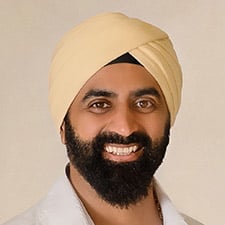
Specialty: Physical medicine and rehabilitation.
Practice setting: Subacute rehab in nursing homes.
Employment type: Employed by Medrina in Chicago. Medrina is part of the AMA Health System Member Program, which provides enterprise solutions to equip leadership, physicians and care teams with resources to help drive the future of medicine.
Years in practice: 12.
A typical day and week in my practice: I work Monday through Thursday, going to two to four nursing homes per day. I also do chart checking and other paperwork in my home office for several hours per day. In addition, I have residents with me from time to time.
The most challenging and rewarding aspects of physical medicine and rehabilitation: The most challenging aspect is dealing with insurers cutting benefits when patients really need more help. The most rewarding is seeing patients returning home to their lives with improved function.
The impact burnout has on physical medicine and rehabilitation: It can be significant for many physicians, as the subacute rehab facilities often times have limited resources and their staff are stretched too thin.
How Medrina is reducing physician burnout: Medrina is incredibly supportive to our physicians and the care team.
How my lifestyle matches, or differs from, what I had envisioned: I love my lifestyle. I have had the autonomy to create the practice that works best for me and my family. This allows me to best care for my patients but also for my family. I have tailored my work hours to provide the most time for my kids once they’re out of school.
Skills every physician in training should have for physical medicine and rehabilitation but won’t be tested for on the board exam: The most important is communication. It is always key in our setting.
One question physicians in training should ask themselves before pursuing physical medicine and rehabilitation: Can you be a team player? Said another way, how can you best contribute to the greater good?
Books, podcasts or other resources every medical student interested in physical medicine and rehabilitation should be reading or listening to: Detox the Mind and Meditation as Medication for the Soul, both by Rajinder Singh. It is important to have a spiritual balance in life. When the spirit is healthy, the body will follow.
Additional advice I would give students who are considering physical medicine and rehabilitation: Really focus on understanding what other health professionals can provide. Find ways to work with experts in other fields so that, as a team, you can best provide care to your patients and also help the facilities.