The time that physicians spend in residency can be stressful, exhausting and fast-paced. When you add in the burdens of participating in research, it’s normal to feel overwhelmed.
But take it from those who have been through the process—you’re probably doing a better job of balancing it all than you think you are.
In an interview with the AMA, David J. Savage, MD, PhD, talked about those natural feelings of worry, as well as some of the other things he wishes he had known about conducting medical research during his time in residency training.
He said it is normal to wonder: “Am I doing enough? Is this one project substantial enough? Am I investing enough time in this project? Am I meeting the expectations of the mentor?” said Dr. Savage, who is an AMA member and remembers experiencing “that doubt a lot.”
“When you're a resident, you have months of time where you just do not have time to work on things. You're in a really busy rotation. You're just barely doing your work and getting your rest,” said Dr. Savage, now an assistant professor of medical oncology at the University of New Mexico’s Comprehensive Cancer Center in Albuquerque.
“I had some guilt about that and wondered if the mentor would understand that I kind of dropped off the radar for a few months,” he said. “In hindsight, I think she 100% understood and, really, I shouldn't have put all that stress on myself because as it turns out, if you just pick away at something as you have time, eventually you'll get some nice work products from it, and everything will work out OK.”
Quality is better than quantity
For resident physicians seeking fellowships or academic jobs, research is key to career development, Dr. Savage said. But when it comes to the number of research projects those physicians undertake during residency, he said it’s more important not to spread yourself too thin.
“One substantial project is just as good as five nonsubstantial projects,” he said. “I saw people who would take every project that was thrown their way, kind of like throwing spaghetti at a wall to see what will ultimately stick, and I feel like those people were very scattered because they couldn't really invest much time into anything. And it led to them having cursory experience with a lot of things, and they couldn't really dig deep into something.”
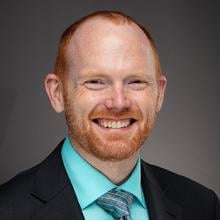
Dr. Savage, whose work focuses on melanoma, nonmelanoma skin cancers and sarcoma, also said that through research, residents establish connections and relationships that may support them for the rest of their careers.
“What I found is that, of course we publish these things, which is great, but you know, really it's the relationship that I formed with her [a mentor] over the time that we did the project that really has paid dividends,” he said. Also, “she's written multiple letters of support for things that I've applied for, and it's been a really nice career-boosting relationship to have worked on these projects with that person.”
Work backward to develop a timeline
Dr. Savage said the planning involved with medical research can be complex, and the timeline in residency can feel rushed. To make things easier, residents should think counterintuitively—beginning at the end.
“Let's say that the ultimate goal is: I want to get into a fellowship; or, I want to have an academic faculty job when I finish. Well, then you're going to take a step back and say: Well, when am I going to apply for that? And that's probably going to be about a year in advance. And therefore, when I'm applying, what do I want to have on my CV at that time?” he said.
Once you have established that ultimate goal, think about those deadlines and work your way back to where you need to be now.
“Then you have to say: Well, if I need to submit something by that deadline, how much time do I realistically have to work on a project?” Dr. Savage said. “Usually, it turns out to be maybe a year or less. And what can I reasonably accomplish in that year with the projects outlined by the mentor?”
Find good guidance
It’s critical that researchers seek as a mentor someone who has a track record of productivity and has strong experience working with residents. That mentor also should be able to meet your timeline and needs. Dr. Savage suggested setting expectations early in the process.
“When you have your first meetings, be very explicit based on that timeline,” he said, making sure to ask if it’s realistic. “The answer may be yes. The answer may be: Well, I didn't really think of it that way, but if that's what your timeline is, I can help you meet that goal. Or the answer may be: No way in this world can I satisfy that timeline. And those are all valid responses.”
He said it’s better to know before beginning the research whether your mentor is a good fit.
“That way you don't have to stress over: Are we on the same page? You define that on day one.”

Ask for the resources you need
Whether it’s time off or travel to present an abstract, money for statistical analysis or a technical writer, funds to submit materials, or other resources for research purposes, Dr. Savage said residents should not be shy about making requests.
“Especially if you're at an academic program as a resident, the program has a lot of incentives to help you be successful with your research,” he said. “Residents should not be hesitant or timid about asking their program for the support that they need. I made several asks along the way for money and for time, and I was almost always told yes. Sometimes I would ask thinking it was a long shot, and I still got a yes.”
Dr. Savage said that residents looking for resources to support research should know that they can go to the general graduate medical education program that supports all residencies in the program, their specific program—in Dr. Savage’s case, internal medicine—or the department or division of the resident’s mentor.
“They all have pots of money and resources, and it just never hurts to ask for what you need and hope for a yes,” he said. “If you can reasonably define what that is, a lot of programs will figure out a way to make it work.”