Tickborne illnesses can start with a single bite. Know the signs, prevention steps and when to call a doctor to protect your health.
These three simple stretches can help improve hip mobility, reduce tension and counter some of the effects of prolonged sitting—no equipment necessary.
Are you a tech innovator? Get answers to questions about how to incorporate the code development process during the path towards clinical adoption of new technologies.
Download PDFs to learn about the latest changes for CPT Category III Codes for emerging technologies, services and procedures.
Register for upcoming ChangeMedEd webinars, watch webinars on-demand and listen to episodes from the Catalyzing Change in MedEd podcast series.
A framework for educators and administrators who create programs for coaching medical students—view videos, purchase books or download directories of workshop participants.
As surgical gender gaps slowly shrink, women aiming for surgical residency positions can succeed by finding mentors and seeking early clinical exposure.
Take on leadership opportunities at the local, state or national levels to represent medical students and address their concerns—download PDFs or applications in DOCX format.
Physicians, don’t overlook these important distinctions when evaluating your options for disability insurance.
Physician pay increasingly hinges on bonuses and RVU targets, shows data from contract review and negotiation firm Resolve.
Stay informed with top advocacy news and essential updates on key national and state issues impacting physicians, patients and the healthcare environment in August 2026.
Senate introduces Provider Reimbursement Stability Act and more in the latest National Advocacy Update.
In this AMA STEPS Forward® Innovation Academy webinar, physician leaders share how they're overcoming challenges while advancing high-value specialty care.
Access key resources and PDFs related to the AMA's self-paced Business of Medicine course.
Read the House of Delegates (HOD) speakers' updates for the 2026 HOD Interim Meeting.
The speakers provide resolution submission guidelines and office hours, the opening date for the Online Reference Committees (ORC), and appeal for volunteers.
The council investigates general ethical conditions and all matters pertaining to the relations of physicians to one another or to the public, and make recommendations to the House of Delegates or the constituent associations through the issuance of reports.
Download PDFs of reports organized by year for the Council on Ethical & Judicial Affairs (CEJA) presented during the AMA Interim and Annual Meetings.
Representatives for the YPS Assembly represent the interests of young physicians and are voting members. Apply to be a member of the governing council.
Get involved in the AMA Women Physicians Section (WPS), working to raise the number of women physicians in leadership roles.
Find out about steps the CPT Editorial Panel has taken to ensure transparency in its process for meeting materials and deliberations related to the CPT code set.
In the news: Containing a measles outbreak can cost millions, CDC expands cyclosporiasis outbreak, key factors linked to more dementia-free years and more.
UME Technology showcases the latest technology happening in undergraduate medical education. Find out more about the latest innovations on the AMA.
AMA adopted policy at its Annual Meeting aimed at ensuring that medical students receive quality clinical documentation experience using EHRs.
Renewed focus is needed to increase EHR efficiency and fluency among medical students and residents.
To make medical students into practice-ready residents, one program is focusing on practical application of what they have learned.
Many impediments to interprofessional education persist. A recent webinar offered examples of innovative technologies that can help eradicate them.
A fellowship program at the Regenstrief Institute aims to develop physicians and other health professionals who can translate big data into better care.
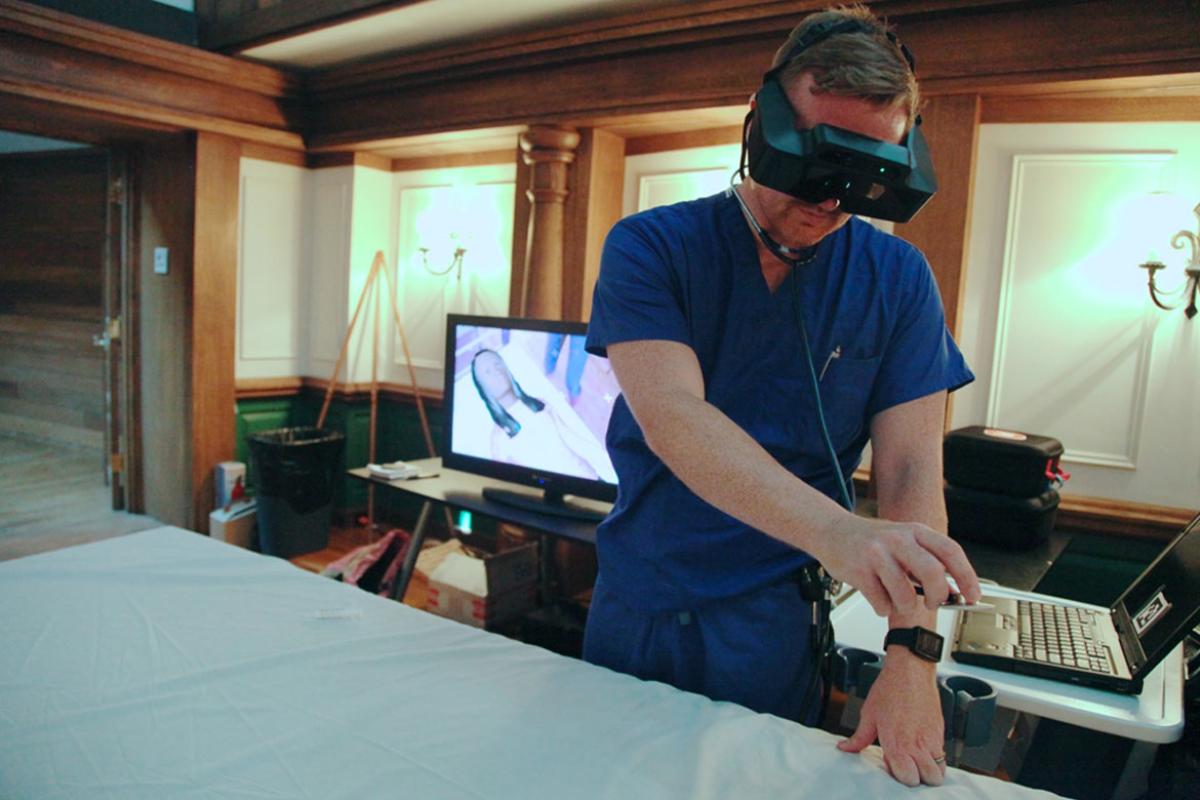
SimX is using VR technology to give medical trainees customizable experiences with simulated patients of all sizes, ages and colors.
Health information technology had a significant impact on medical education—at both the graduate and undergraduate levels—in 2017.
An NYU big-data project is giving medical students a way to explore real-world health delivery phenomena.
Jay Margalus comes from the world of video games and big data, and says there’s room for creative thinking in medical education.