Building a connection between physician residents and fellows and those who are training them isn’t just the right thing to do. New research published in JAMA Surgery shows that an environment of trust may have measurable effects on the performance of residents and fellows, improving their skills in addition to their well-being.
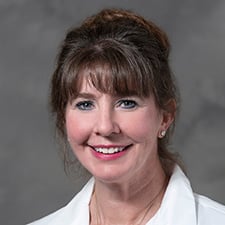
“In addition to acknowledging the amount of stress that you’re under when trying to learn to become a doctor or living in the ecosystem of medicine, we need to lean harder into making sure that people feel safe and that they belong,” said Brooke M. Buckley, MD, MBA, vice president of medical affairs for Henry Ford Health in Detroit, and an alternate delegate for the AMA House of Delegates. Physicians in training “are not totally comfortable in all of these environments and decisions yet. We need them to want to ask questions and to feel safe doing so.”
Henry Ford Health is part of the AMA Health System Member Program, which provides enterprise solutions to equip leadership, physicians and care teams with resources to help drive the future of medicine.
As researchers dig further into the links between well-being and performance, leaders and those training the next generation of physicians are asking themselves: How can human connection help improve the practice of medicine?
The line from belonging to performance
The latest study, “Sense of Belonging in Surgery and Resident Performance,” written by Rachael C. Acker, MD; Sarah I. Landau, MD; James E. Sharpe, MS; and Rachel R. Kelz, MD, was published in December as a research letter.
Researchers looked at 6,136 surgical residents’ sense of belonging and their performance on the 2025 American Board of Surgery In-Service Training Examination, which was administered in January 2025.
Researchers found that residents who felt the least sense of belonging—in the bottom 10%—did worse on that exam than those who fell into the top 10% of the belonging spectrum. Their average test scores were lower, at 476, than those who felt they most belonged, who had an average test score of 532. Those who didn’t feel they belonged ranked lower, in the 43rd percentile, compared with the 55th percentile.
The most pronounced differences were between the residents at the very bottom and the very top of the belonging scale.
“It is not clear from this study whether belonging precedes or is influenced by performance, and the association may be bidirectional,” the study’s authors noted. “For example, belonging may foster engagement resulting in better performance, or high performance may reinforce belonging.”
Tackling burnout by connection
The study also reveals that surgical residents who felt less like they belonged also reported feeling more stressed.
The numbers of physicians reporting symptoms of burnout have fallen from the historic highs seen during the COVID-19 public health emergency, but the issue remains a pervasive—and challenging—one. Physicians in the U.S. are still at a higher risk for burnout than are other workers, and the latest national burnout survey found more than 45% of physicians were reporting at least one burnout symptom.
As the leader in physician well-being, the AMA is reducing physician burnout by removing administrative burdens and providing real-world solutions to help doctors rediscover the Joy in Medicine®.

Take intentional steps
The study’s authors noted that even modest efforts to improve connections may yield powerful results, suggesting that “providing opportunities for residents to socialize with faculty may be one mechanism to encourage a stronger sense of belonging in surgery.”
Dr. Buckley said that “the world is changing so quickly, and our population and the way we experience the world is changing so quickly that we really have to be intentional about building trust.” She added that residency program and health care leaders need to ask themselves, “What does a foundation of trust do for us in terms of quality, safety, stability and finances? And the work to normalize that trust isn't something that just happens; it has to be intentional and fostered.”
Henry Ford Health achieved bronze-level distinction in 2024–2025 as part of the AMA’s Joy in Medicine Health System Recognition Program, which acknowledges the outstanding efforts the organizations have undertaken to address the systemic causes of physician burnout in six domains: assessment, commitment, efficiency of practice environment, teamwork, leadership and support.
“We often think about belonging in terms of demographic identifiers, and I think as we pursue belonging, it's so much deeper than that,” Dr. Buckley said, acknowledging that creating trust “takes time.”
Find out more with the AMA STEPS Forward® toolkit, “The Value of Feeling Valued Playbook: How Organizations Can Support Individual Physicians.” It is enduring material and designated by the AMA for a maximum of 0.75 AMA PRA Category 1 Credit ™.
Learn more about AMA CME accreditation.