Despite the name, it’s not a dance move! The inchworm is a simple exercise with big benefits.
Not sure which sunscreen to choose? Dermatologist Micah Brown, MD, explains the key features that matter most in sunscreen.
Baptist Health Medical Group fosters physician belonging through listening, trust and support to help reduce burnout and strengthen retention.
No matter when or why you’re considering starting a private practice, the owner of one has recommendations. She’ll speak at an AMA event in September.
Register for upcoming ChangeMedEd webinars, watch webinars on-demand and listen to episodes from the Catalyzing Change in MedEd podcast series.
A framework for educators and administrators who create programs for coaching medical students—view videos, purchase books or download directories of workshop participants.
The path to residency starts homing in on the right programs. Learn how to create a balanced list of options that aligns with your ambitions.
Find information about responsibilities and terms of service for medical student regional delegates and alternate delegates of the Medical Student Section (MSS) and how to apply.
JAMA Network journals have editorial fellowships—chances for residents, fellows and early-career physicians to explore a career in publishing.
AMA member Kunwarjit Duggal, MD, of Medrina, changed jobs to regain the feeling that he was making a positive difference in the lives of patients.
Stay informed with top advocacy news and essential updates on key national and state issues impacting physicians, patients and the healthcare environment in August 2026.
Senate introduces Provider Reimbursement Stability Act and more in the latest National Advocacy Update.
The AMA's Distinguish Yourself IMG Summit will feature IMG-specific education sessions on leadership, research, advocacy and preparing for the Match as an IMG.
In this AMA STEPS Forward® Innovation Academy webinar, physician leaders share how they're overcoming challenges while advancing high-value specialty care.
Look at a list of official observer organizations in the AMA House of Delegates (HOD) and learn how to become an official observer.
The speakers provide resolution submission guidelines and office hours, the opening date for the Online Reference Committees (ORC), and appeal for volunteers.
The Council on Long Range Planning and Development (CLRPD) works on projects based on actions of the AMA House of Delegates or Board of Trustees.
The council investigates general ethical conditions and all matters pertaining to the relations of physicians to one another or to the public, and make recommendations to the House of Delegates or the constituent associations through the issuance of reports.
Learn more about the meetings and events held by the Medical Student Section (MSS) for MSS members.
Find the agenda PDF, documents and more for the 2026 MSS Interim Meeting on Nov. 5-6 at the Walt Disney World Swan and Dolphin Resort, Orlando, Florida.
Understand the role the AMA/Specialty Society RUC plays in providing physicians a voice in shaping Medicare relative values.
Find a current list of generic drug names the USAN Council is considering and are therefore protected by intellectual property laws.
The AMA is committed to reducing disparities in medical school admissions. Learn more about the medical school diversity efforts of the AMA.
AAMC data shows rise in the number of medical students from historically excluded racial and ethnic groups. What comes next is a bigger conversation.
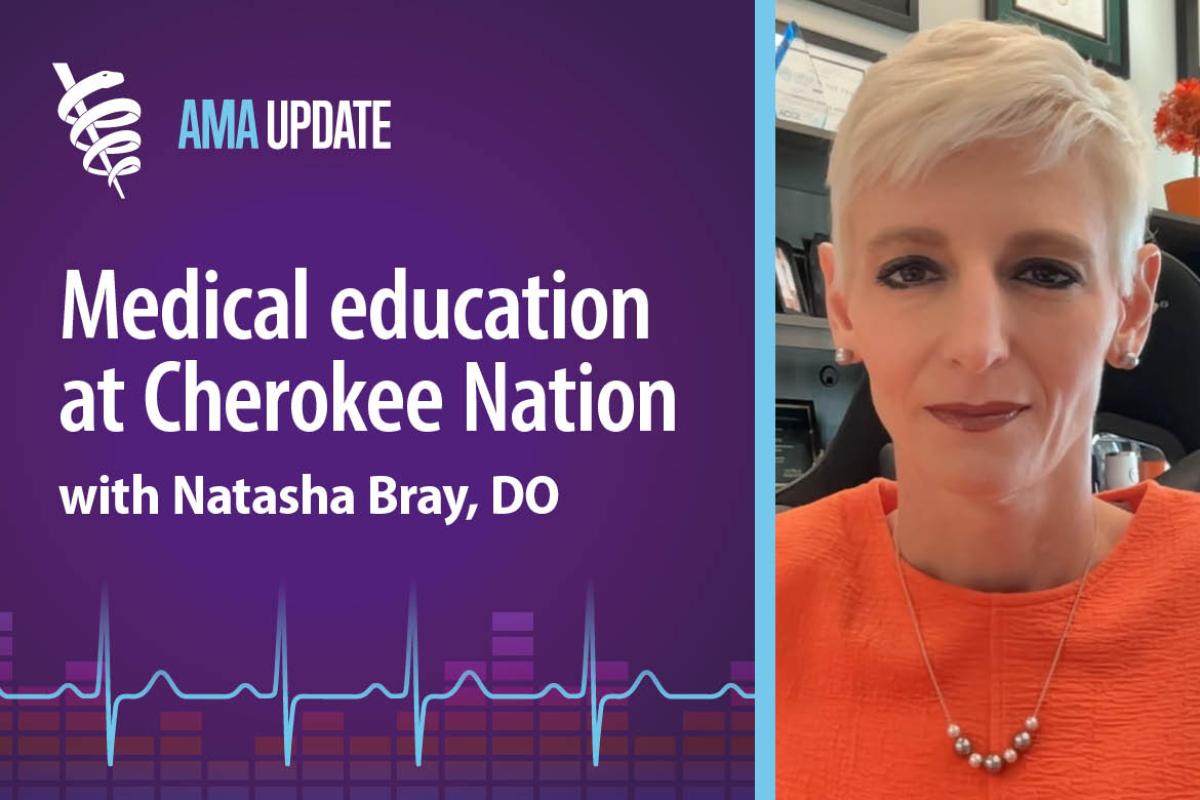
The AMA Update covers a range of health care topics affecting the lives of physicians and patients. Learn more about tribal medical education programs.
New AAMC enrollment data tells the tale, but sustaining the momentum will be hard in light of the Supreme Court’s affirmative-action ruling. Learn more.
As a mentor on his reservation and advocate in organized medicine, Sylvestor A. Moses, MD, PhD, hopes to increase pathways for Native Americans to become physicians.
LeeAnna I. Muzquiz, MD, experienced the challenges Native Americans face in pursuing careers in medicine firsthand. Now she’s working to conquer them.
Building a diverse health workforce that better reflects the U.S. population requires removing barriers to higher education. Learn how it’s being done.
With race-conscious policies restricted by the Supreme Court, leaders in medical education explore how to promote diversity in medicine. Learn more.
In response to the June 29, 2023, U.S. Supreme Court ruling that prohibits race-conscious admissions policies, the AMA convened a group of thought leaders in medical education and health equity equity to discuss.