The AMA's how-to guides focus on practical treatment strategies for patients’ behavioral, mental and physical health needs.
Menopause care can address much more than symptoms. Physicians can use midlife visits to support long-term heart, bone, sleep and metabolic health.
Learn what it takes to create teams that help physicians and care teams thrive.
Michael Jerkins, MD, MEd, heads up a physician-focused banking firm, so he knows the rookie mistakes by heart. Catch up with his expert insights.
A framework for educators and administrators who create programs for coaching medical students—view videos, purchase books or download directories of workshop participants.
Find how the AMA ChangeMedEd initiative focuses on increased diversity and an improved sense of belonging in medical education.
These expert insights help medical students build leadership experiences and skills that will resonate with residency programs down the line.
When looking at doctor salaries by specialty, competitive fields pay more. But experts say work-life balance and passion should guide career plans.
Resident physicians at LSU School of Medicine want to use child patients’ creativity to establish a connection.
Before you sign that first physician contract, learn the six moves that can boost your compensation, lifestyle and career development.
Stay informed with top advocacy news and essential updates on key national and state issues impacting physicians, patients and the healthcare environment in September 2026.
Energy and Commerce hearing highlights Patients First Act, and more in the latest National Advocacy Update.
Join AMA for a panel discussion on how primary care physicians and ob-gyns can approach sexual health conversations with patients. Learn more and register.
In this AMA STEPS Forward® Innovation Academy webinar, discover how healthcare organizations are transforming revenue cycle management for value-based care.
Details provided on the application process and deadlines for physicians, residents and medical students interested in joining AMA council and committees.
The 2026 SSS Interim Meeting will be held Nov. 7-9 at the Walt Disney World Swan and Dolphin Resort in Orlando, Florida.
The Council on Long Range Planning and Development (CLRPD) works on projects based on actions of the AMA House of Delegates or Board of Trustees.
The council investigates general ethical conditions and all matters pertaining to the relations of physicians to one another or to the public, and make recommendations to the House of Delegates or the constituent associations through the issuance of reports.
Find the agenda, documents and more for the 2026 WPS lnterim Meeting on Nov. 6 at the Walt Disney World Swan and Dolphin Resort, Orlando, Florida.
One of the unique benefits of membership in the AMA Resident and Fellow Section (RFS) is the chance to participate in the policymaking process.
Recommendations from the RVS Update Committee’s (RUC’s) Relativity Assessment Workgroup and CMS for new and revised CPT codes.
As part of the latest cohort of the Medical Justice in Advocacy Fellowship, these doctors will work on projects aimed at ensuring optimal health for all.
Gun violence is a public health issue that calls for physician leadership. Browse our latest coverage including firearm safety, gun violence prevention, and more.
Keeping firearms where kids can get at them in foster homes or home day cares is a recipe for death, injury and trauma. Learn more with the AMA.
AMA member Megan Ranney, MD, MPH, says there’s been a 10%–35% rise in firearms deaths during the pandemic, depending on the community. Learn more.
AMA applauds new law to confront the public health crisis of gun violence.
New AMA policies and strategies to prevent firearm violence and more in the latest National Advocacy Update.
AMA applauds the senators who negotiated and wrote the Bipartisan Safer Communities Act, and we urge the House of Representatives to act quickly and pass this legislation.
The U.S. Supreme Court’s harmful and disturbing 6–3 decision will frustrate appropriate responses to the public health crisis of firearms violence.
AMA disappointed with the Supreme Court’s harmful and disturbing decision to strike down a NY state measure regulating concealed carry licenses for handguns.
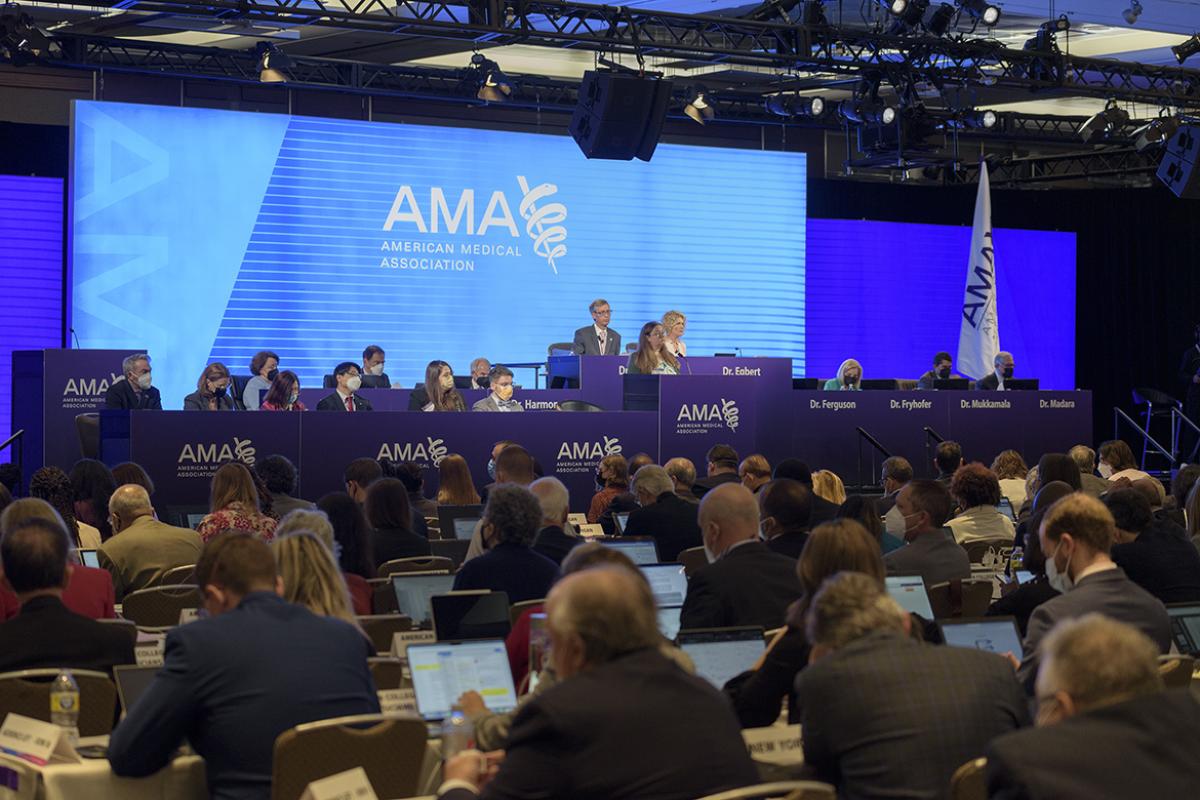
The House of Delegates moved to protect patients and doctors from the criminalization of care, gun violence and the public health “infodemic.”
Delegates adopt policy to address the public health crisis, addressing issues such as the unregulated trade in homemade “ghost guns.”