Each year, thousands of people across the U.S. wait for a call that could save their lives. For many, an organ transplant offers the only path forward, yet the need continues to far outpace the number of available donors. This gap not only reflects a growing medical challenge but also underscores persistent misconceptions about who can donate and how the process works.
Currently, more than 100, 000 people in the U.S. are waiting for organ transplants. Of those, more than 60,000 are active waiting list candidates. Meanwhile, the number of transplants performed in the U.S. has increased annually with more than 48,000 organ transplants performed in the U.S. in 2024. In fact, there were more than 7,000 living donor transplants and more than 17,000 decreased donors in 2021. But even with the continued increase in deceased donations, there is still an urgent need for organ donors. One organ donor can save up to eight lives, according to United Network for Organ Sharing (UNOS).
The AMA’s What Doctors Want Patients to Know™ series gives physicians a platform to share what they want patients to understand about today’s health care headlines.
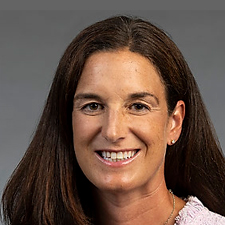
In this installment, Veronica Loy, DO, a transplant hepatologist specializing in liver diseases and liver transplants with Rush University System for Health in Chicago, took time to discuss what patients need to know about organ donation.
Rush University System for Health is part of the AMA Health System Member Program, which provides enterprise solutions to equip leadership, physicians and care teams with resources to help drive the future of medicine.
Organ donation can be done in two ways
“Organ donation is when either a person has decided to donate part of or an entire organ to someone in need,” said Dr. Loy. “It can be done as a live person who donates certain organs or parts of an organ.
“The most common type of donation is deceased organ donation where someone, unfortunately, has some sort of medical condition that’s no longer sustainable with life. They have decided and shared with their family their wish to donate their organs after death,” she added. “Therefore, saving several other people’s lives, which is really quite phenomenal.”
There are several major organs to donate
“The major organs that can be donated are heart, lung, liver, kidney, pancreas and intestines,” said Dr. Loy. “Then there’s also a lot of minor organs and tissues that can also be donated.”
In the U.S., according to the Organ Procurement and Transplantation Network, here are the organ transplant percentages by organ type:
- Kidney: 58.5%.
- Liver: 19.8%.
- Lung: 11.8%.
- Heart: 7.3%.
- Pancreas: 1.1%.
- Intestine: Less than 1%.
Most anyone can be an organ donor
“There really isn't anybody who is absolutely ruled out as an organ donor based on age or race,” said Dr. Loy, adding that there is also “no gender identity or sexual orientation that is excluded from being an organ donor.
“It's really just a stringent medical process,” she added. “So certain medical conditions and things could have the team rule someone out for an organ donation just based on whatever risk they have.”
Know where to register to be a donor
“Every state has a website and then when you go for your initial driver’s license—and then every renewal—there is an opportunity to become a registered organ donor at that point in time,” said Dr. Loy. “There’s also a national registry website called registerme.org where you can easily sign up at any point.”
“Even the iPhone health app now has an opportunity to register to be an organ donor, which is pretty cool,” she said. For Android phones, there are apps that are often linked to state registries or health portals such as MyChart that will allow you to register as an organ donor. Beyond that, you can also go to the National Donate Life Registry website to register to be a donor.
Share your wishes with your family
“It’s really important for everyone, especially for minors, to talk about your wishes with your family members because,” Dr. Loy said, “If you were to be at a point where you need to be considered for an organ donation, your family also needs to consent to this process.
“And if they’re not aware of your wishes, they may not know what to say in this moment that is really full of emotion,” she added. “So, it’s very important to preemptively have these conversations with your families.”
Organ donation is a stringent process
“In general, there’s a stringent process. First to determine who is a transplant candidate,” said Dr. Loy. “So, someone is identified as having a medical need for a transplant to have a normal lifespan.”
“Most of the transplants are performed because they’re considered a lifesaving surgery. In other words, the person would no longer be alive in the coming years or even months without an organ transplant,” she said. “Then to become an organ donor is also quite a stringent process, making sure that the risk of donation for a live donor isn’t too severe and that both the donor and the recipient have a very thorough medical, surgical and mental health screenings to make sure that it’s good for everyone involved.”
“For a deceased donor transplant, someone has been identified to have irreversible damage either brain damage or cardiovascular damage, which means that their injury or illness is not sustainable with life,” said Dr. Loy. “At that point, the risk to the donor is pretty negligible because they’ve already been determined to be either brain dead or have cardiovascular damage to the point where they wouldn’t live off of life support.
“But the risk for a recipient on the other hand is something that we really have to be very, very careful about, weighing against, of course, the risk of death if they don't receive a transplant,” she added.
An organ donor is matched through a national system
“If there is a potential organ donor, there’s a match system based on blood type, location and the recipient need,” said Dr. Loy. “And then the transplant center, if the match has been identified for the potential donor, has an opportunity to really review very carefully this particular donor and if it would be the best option and best choice for that potential recipient.”
“At first it’s very automated and then it becomes a highly individualized process because there are so many things that we need to consider in order to have a successful transplantation,” she said. “But also, of course, every moment weighing against the risk of not doing a transplant and the risk of death to that person waiting for a transplant.”
The benefit of organ donation is life
When it comes to organ donation, “the benefit is life. When you have a highly skilled team that’s very thorough and careful, the outcomes for transplant are expected to be phenomenal,” said Dr. Loy, noting “we have a greater than 90% national one-year survival for liver transplantation and even 10-year survival is ranging in the 60% or higher range.”
“You take someone from the likelihood of not being alive within a year to having more than half of the people doing very well 10 years later, so the impact is huge,” she said. “It is still a very risky surgery as far as surgeries go. So, there is an upfront risk, but of course the benefit is prolonged life.”
Your organ donor status isn’t known immediately
“One common statement we hear is that if you register as an organ donor, we as the health care community are not going to try to help you if you come into the emergency room and that we are just more interested in your organs,” said Dr. Loy. “And that’s just frankly false.”
“Most of the time in that emergency setting or intensive care setting, this isn’t something we even know about the patients that we’re treating until it gets to the point where it’s determined that the patient has, unfortunately, reached a point where their health conditions are not conducive for life,” she said. “It is our obligation, our oath and ethically correct and legally bound that we will always provide care to someone regardless of their donation status.”
Organ donation is about saving lives
“Another thing we hear is that people are transplanting patients who shouldn’t be transplanted or trying to make money off of transplants,” said Dr. Loy. “That is not true at all. It is a very challenging process, and sometimes there are complications and poor outcomes, but what we’re trying to do is provide a chance of life for someone who would no longer be alive otherwise.”
“Using every tool that we have in front of us, we identify the patients who have a need for transplant and have a capability of maintaining that precious gift of a second chance of life through a very stringent evaluation process,” she said. “This is about saving lives. There are always risks involved, but by far the transplant community is getting this right and saving thousands of lives by using every tool and multidisciplinary approach that we have available.”
Alcohol use isn’t a disqualifier for donor recipients
“It’s a common and outdated misconception that is a bit discriminative,” said Dr. Loy. “Substance use disorder needs to be treated just like any other health condition, and these patients need to be very carefully assessed just like you would with someone with diabetes or obesity.
“A multidisciplinary team needs to look at that particular patient and their risk factors, their insight, their social support, their willingness to comply with a medical regimen, which is complex after a transplant, and their ability to care for that organ after transplant,” she added. “We know that just like any other health condition, substance use disorder and alcohol-related liver disease, those patients need to be treated like anyone else.”
Individual assessment determines donation need
“If you know someone has health consequences related to alcohol misuse or overuse, they may not be able to be an organ donor because, unfortunately, their organs have been damaged too much,” Dr. Loy said. “But really, again, individual assessment as a potential transplant recipient, we're fairly methodical about someone's candidacy for transplant.”
“So, the first and foremost thing is to determine someone's need for transplant. Do they actually need this or is there something that can be done to help them medically improve their situation to the point where they don't need a transplant?” she added. “And then the second, once it's been identified that someone really needs a transplant is, will the transplant help them? Do they have medical risk factors that will make them unlikely to have a good outcome after a transplant?”
“The third issue is the ability to care for the organ. Part of that is medical coverage, social support and compliance. And when we’re talking about alcohol-related liver disease, willingness to commit to a different lifestyle that includes lifelong sobriety and a healthy lifestyle is key,” she said. “Just like other health conditions, such as obesity or diabetes, alcohol use disorder will—and can—recur after the transplant.”
“National studies are showing that in those carefully selected patients it is by far not the majority, but between 20% and 30% of patients will have trouble with alcohol after their transplant,” Dr. Loy added. “Then our job as the medical community is to continue to treat that disorder and help them in the future to do the best they can to avoid alcohol just like we would continue to treat any other health condition after a transplant.”
Donated organs go through a series of tests
“Every organ that's transplanted there are very specific blood tests that are sent on the donor and imaging tests,” said Dr. Loy. “Occasionally, biopsies will be requested to ensure the health of that organ.
“And then after a transplant, at certain time intervals, it's highly regimented screening for different things to ensure the health and safety for the longevity of that recipient's life,” she added.
More organ donors are needed
When it comes to being an organ donor, talking about it, being open if you are a transplant recipient or if someone you know is a recipient, how that has impacted your life and also the donor’s as well is really helpful,” said Dr. Loy. “This is incredibly powerful for the donor families as well to go through something so tragic and a very challenging time in life and see something good come of that.”
“It actually is quite healing and helpful for the donor families as well,” she said. “So, the more we can get this in the general public, the better.”
“Organ donation is such an important lifesaving tool that is jeopardized if we don’t support one another and encourage the advancement of all the technology surrounding organ transplant,” Dr. Loy said.