Ebola
Ebola disease is caused by a virus in the orthoebolavirus family; there are 4 species that cause human disease. These viruses are mostly found in sub-Saharan Africa. Outbreaks occur sporadically, and due to the contagious nature of the viruses, can affect hundreds of people. Fatality rates with Ebola disease depend on the virus involved.
- Ebola virus (species Orthoebolavirus zairense) causes Ebola virus disease; mortality rate is 90%.
- Sudan virus (species O. sudanense) causes Sudan virus disease; mortality rate is 50%.
- Taï Forest virus (species O. taiense) causes Taï Forest virus disease; rare with only one human case in 1994.
- Bundibugyo virus (species O. bundibugyoense) causes Bundibugyo virus disease; mortality rate is 30-50%.
View a map of ebola disease outbreaks by species and size.
Health alerts
- May 19, 2026: The CDC issued a HAN on Ebola Disease Outbreak in the Democratic Republic of the Congo and Uganda.
- May 17, 2026: The World Health Organization issued a public health emergency of international concern due to the Bundibugyo virus outbreak in the DR Congo and Uganda.
- The CDC issues Travel Health Notices for people planning to travel, so they are aware of the risk level.
Transmission
Ebola viruses spread between animals, especially fruit bats. Occasionally, there is a “spillover event,” when the virus spreads from an animal to a person. This can happen when a person comes into contact with an infected animal’s blood or other fluids. Ebola disease can then be spread person-to-person through the contact of bodily fluids in an infected, or sometimes dead, person.
Signs & symptoms
Symptoms typically start 8-10 days after exposure. Initial symptoms are nonspecific, such as fever, chills, myalgias and fatigue. These are known as “dry” symptoms. After 4-5 days of dry symptoms, the “wet” symptoms begin. This includes severe, watery diarrhea, nausea, vomiting, and abdominal pain. Eye irritation and redness can occur along with chest pain, shortness of breath and confusion. Bleeding can occur later in the disease and is not universal. About 40% of patients report unexplained bleeding, such as petechiae, epistaxis, and blood in stools.
Around the time the wet symptoms start, some patients can develop a mixture of raised and flat red skin lesions on the neck, trunk and arms that will peel or slough off.
Severe symptoms early on carry a higher mortality rate. Pregnant people may spontaneously miscarry. Even those who recover from mild illness can have a prolonged recovery course.
Diagnosis
Clinicians should suspect Ebola disease when patients present with concerning symptoms as well as an epidemiological risk factor, including relevant travel history, in the last 21 days. PCR and antibody testing are available. Patients may have leukopenia, thrombocytopenia, transaminitis, and proteinuria. They can also have prolonged prothrombin and partial thromboplastin times and fibrin degradation products consistent with disseminated intravascular coagulation.
Contact your state or local health department for consultation about Ebola diagnostic testing.
Prevention strategies
Vaccination
There is one FDA-approved vaccine, ERVEBO® that is effective against the Orthoebolavirus zairense strain of Ebola disease. It is a live, attenuated recombinant vesicular stomatitis vaccine. Because it uses just a small part of the Ebola virus that’s added to the vesicular stomatitis virus, it’s not able to cause Ebola. But it will teach the immune system how to make antibodies against this particular Ebola virus strain.
There are no clinical trials in pregnancy, but an unblinded study in Seirra Leone did not find a statistical difference in pregnancy loss among those who did or did not get the vaccine. Clinicians should discuss with their pregnant patients the risk of disease versus the potential vaccine-related risk. As always, suspected adverse reactions should be reported via the Vaccine Adverse Event Reporting System (VAERS).
There are no FDA-approved vaccines for other strains.
Treatment
There are two FDA-approved treatments for the O. zairense strain of Ebola disease. One is Ebanga®, a single monoclonal antibody, and one is Inmazeb®, a combination of 3 monoclonal antibodies. In addition, supportive care for hypovolemia, electrolyte abnormalities and blood loss are required. Each DHHS Region has a treatment center that is fully trained to care for patients with viral hemorrhagic fevers.
Other strains have no specific FDA-approved treatment.
Infection prevention & control
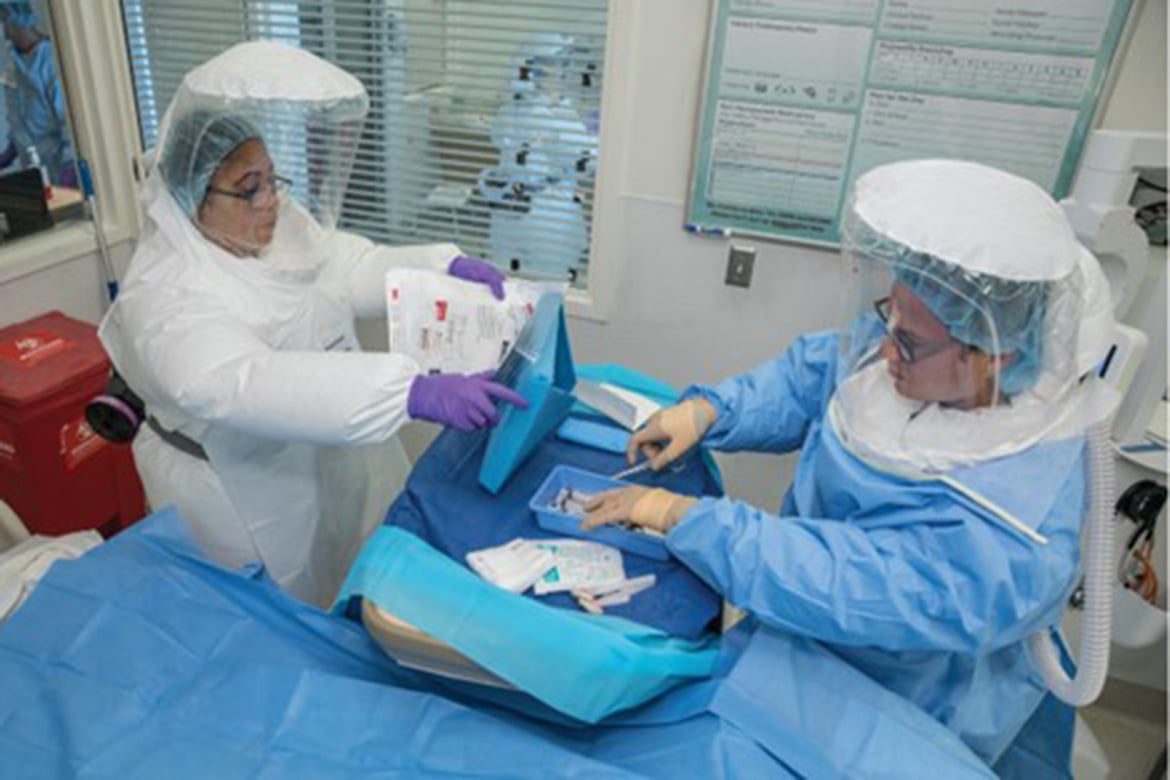
Personal Protective Equipment (PPE) is required when caring for someone with suspected Ebola disease. Patients should be isolated in a private room with the door closed and an adequate space for donning and doffing PPE. CDC has extensive guidance on how to keep healthcare professionals safe when caring for patients with Ebola disease. The National Emerging Special Pathogens Training and Education Center (NETEC) has continuing education courses for physicians who want to learn more about Ebola preparedness.
Reporting
In the U.S., Ebola is a nationally notifiable disease. Immediately notify state, tribal, local, or territorial health departments (24-hour Epi On Call contact list) about any suspected case of to ensure rapid testing and investigation. States report Ebola cases to CDC. In addition, CDC's Viral Special Pathogens Branch (VSPB) is available 24/7 for consultations on Ebola disease by calling the CDC Emergency Operations Center at 770-488-7100 and requesting VSPB's on-call epidemiologist.
Patient FAQs
The AMA offers FAQs (PDF) to help patients understand more about Ebola.