As a medical student, do you ever wonder what it's like to specialize in pathology, also known as laboratory medicine? Meet AMA member Sara E. Monaco, MD, a pathologist and a featured doctor in the AMA's “Shadow Me” Specialty Series, which offers advice directly from doctors about life in their specialties. Check out her insights to help determine whether a career in pathology might be a good fit for you.
The AMA's Specialty Guide simplifies medical students' specialty selection process by highlighting major specialties, detailing training information and providing access to related association information. It is produced by FREIDA™, the AMA Residency & Fellowship Database®.
Learn more with the AMA about the broader medical specialty of pathology.
“Shadowing” Dr. Sara E. Monaco
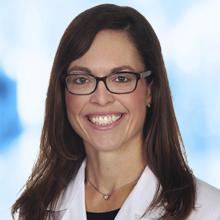
Specialty: Pathology.
Practice setting: Hospital.
Employment type: Employed by Geisinger, in Danville, Pennsylvania. Geisinger is part of the AMA Health System Member Program, which provides enterprise solutions to equip leadership, physicians and care teams with resources to help drive the future of medicine.
Years in practice: 18.
A typical day and week in my practice: A typical day includes a variety of tasks, including reviewing slides with residents and fellows, reviewing biopsies remotely using telecytology for rapid on-site evaluation, consulting with colleagues within pathology and clinical medicine, attending meetings and educational conferences, and presenting at conferences or tumor boards.
A typical week involves 40–50 hours of work in the hospital, plus occasional weekday evening and full weekend coverage for frozen sections for emergency surgeries.
The most challenging and rewarding aspects of pathology: The most challenging aspect is making diagnoses with small biopsies and cytology specimens that are limited in amount, which requires strong morphological skills and judicious use of ancillary studies to do just enough to get the correct diagnosis while saving material for appropriate theranostic testing.
The most rewarding aspect is when we make a huge impact on the patient’s care and discuss the impact at tumor boards. As pathologists, we don’t get to see the patient in most cases for direct patient care, so it is rewarding when we get feedback on how our results made a difference.
The impact burnout has on pathology: Burnout leads to a lack of engagement and a lack of interest in doing more to improve or change things.
How Geisinger is reducing physician burnout: We are making a strong effort to appropriately allocate work to various subspecialties based on physicians’ levels of experience and expertise. This is important so that pathologists have enough time to work on cases that they have the expertise to review. Also, our health system is a hybrid practice, where we don’t demand that everyone does diagnostic work, research, teaching and administrative tasks. Instead, we try to adjust to faculty members’ interests and career goals to put them to best use throughout our system.
How my lifestyle matches, or differs from, what I had envisioned: One of the attractive features of pathology is the work-life balance, in that we often don’t have a set schedule and there is flexibility with some parts of our everyday practice. This has been important to me as a mom of three and wife to a husband who works in a demanding surgical subspecialty. I have the flexibility to be there for most of my children’s school events, but it does take planning and finding coverage sometimes, which is a challenge.
Skills every physician in training should have for pathology but won’t be tested for on the board exam: The main skills for pathologists are having genuine curiosity to think of a range of diagnostic possibilities, being well organized and working well on a team.
One question physicians in training should ask themselves before pursuing pathology: Do I like viewing slides in the absence of direct patient care, making a difference behind the scenes?
Books, podcasts or other resources every medical student interested in pathology should be reading or listening to:
- Robbins, Cotran & Kumar Pathologic Basis of Disease, by Vinay Kumar, MD, Dr. Abul K. Abbas, Jon C. Aster, MD, Jayanta Debnath, MD, and Abhijit Das.
- The PathPOD Podcast.
- The American Society for Clinical Pathology’s Inside the Lab Podcast.
Additional advice I would give students who are considering pathology: A career in laboratory medicine can be very rewarding and offers so many options, especially because we intersect with all types of clinical medicine and generate data that plays an important role in quality of care