As a medical student, do you ever wonder what it’s like to specialize in general surgery? Meet Krista Bodrey, MD, a general surgeon and a featured doctor in the AMA’s “Shadow Me” Specialty Series, which offers advice directly from physicians about life in their specialties. Check out her insights to help determine whether a career in general surgery might be a good fit for you.
The AMA Specialty Guide simplifies medical students’ specialty selection process, highlights major specialties, details training information, and provides access to related association information. It is produced by FREIDA™, the AMA Residency & Fellowship Database®.
Learn more with the AMA about the medical specialty of general surgery.
“Shadowing” Dr. Krista Bodrey
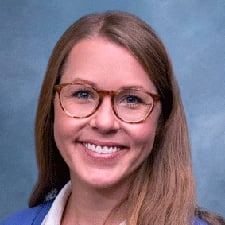
Specialty: General surgery.
Practice setting: Multispecialty group practice.
Employment type: Employed by the multispecialty, physician-owned and-operated Wenatchee Valley Medical Group, which is part of Confluence Health, in Wenatchee, Washington. Confluence Health is a member of the AMA Health System Program, which provides enterprise solutions to equip leadership, physicians and care teams with resources to help drive the future of medicine.
Years in practice: Three.
A typical day and week in my practice: A typical operative day starts around 7:30 a.m. and ends by 5 p.m., but days can go much later depending on cases. As a general surgeon, I do a variety of cases, including hernia repair, removal of the appendix or gallbladder, and removal of cancers involving the breast, skin, small intestine or colon. Often, operative days will involve a combination of these procedures.
Clinic days typically start around 8:30 or 9 a.m. and end around 4 p.m. During clinic, I meet new consults and evaluate their needs for surgery, explain surgical procedures and discuss anticipated results, risks and benefits with them and often their family members. I also see people after their surgery and ensure they are recovering appropriately and healing well. In our clinic, we also have the capability of performing small procedures in our procedure room with local anesthetic.
Call days are variable depending on how busy the general surgery service is and how many cases are booked for that day. While on-call, I am responsible for managing the surgical patients, which can include getting people ready for surgery, managing people after surgery, doing discharges and dealing with any new surgical consults admitted to the hospital or coming through the ER, including emergencies or trauma patients.
Our call shifts are typically 12 hours during the week and 24 hours on the weekend. Most weeks are a combination of the above with one or two operative days, one or two clinic days and one or two call shifts.
The most challenging and rewarding aspects of general surgery: The most challenging aspect of taking care of patients in our specialty, and often one of the most rewarding, is the acuity and breadth in which a general surgeon practices—often dealing with life-or-death situations. It is common to meet someone having a surgical emergency, discuss the need for surgery, along with the details, risks, benefits and alternatives of a procedure, and have them in the operating room within an hour. Having the opportunity to take care of somebody in this situation and potentially provide lifesaving care is extraordinarily rewarding. The surgery can involve nearly any portion of the body on people of all ages.
It is challenging and rewarding to be able to establish an empathic relationship upon meeting someone and gain their trust enough that they are agreeable to going to the operating room (OR) and often having a portion of their body removed. It is a privilege to care for people when they are most in need, and I find it exceptionally rewarding to establish rapport with patients and their families in this setting and contribute to lifesaving care.
The impact burnout has on general surgery: Burnout can affect all specialties. There are certain aspects of general surgery, specifically in regard to the acuity of care necessary, long hours and the frequency of dealing with life-or-death situations, that can especially contribute to burnout.
How my medical group is reducing physician burnout: Wenatchee Valley Medical Group provides numerous resources to help combat burnout. I have access to life coaching, peer mentoring and support, the Bringing Encouragement and Support In Difficult Events, or BESIDE, program—which is a 24/7 program that provides immediate support during stressful situations—and numerous social engagement activities outside of work.
How my lifestyle matches, or differs from, what I had envisioned: My lifestyle is quite in line with what I envisioned in medical school and in surgical residency. I love the breadth that each week offers and feel I have a nice balance between call, clinic and the OR.
The hours and workload are dramatically improved compared with when I was a resident, though obviously as a surgeon there are still days when I am in the hospital much longer than I intended or I miss events due to work requirements.
As a resident, I found it easier to disconnect completely from the hospital when I was off. Now, as an attending, I often feel compelled to stay up to date on anything happening with my personal patients, which can make it more challenging to mentally be off, even when I am physically away from work.
Skills every physician in training should have for general surgery but won’t be tested for on the board exam: Empathy is a necessary skill for general surgery in particular but also any other medical specialty or subspecialty. It is challenging to teach it or test for it, but it is critical to establishing therapeutic patient relationships.
Problem-solving skills and the ability to think outside the box are also very beneficial for general surgery. I can think of countless situations where the right thing for a particular patient is not necessarily the "board answer" due to particular anatomic, physiologic or social considerations.
One question physicians in training should ask themselves before pursuing general surgery: Is taking care of people in life-or-death situations something that is going to give you fulfillment, or will it add stress? I think it goes without saying that a normal response to saving someone's life is to have a sense of fulfillment and that feeling stress, sadness or remorse is a normal response to losing a patient. The degree to which these affect you is certainly something to consider when pursuing a specialty, as certain specialties are more likely to deal with life-or-death situations on a routine basis.
Books, podcasts or other resources every medical student interested in general surgery should be reading:
- “Behind the Knife” is an excellent podcast for surgical residents and board preparation.
- Being Mortal: Medicine and What Matters in the End, by Atul Gawande, MD, is a highly recommended book that explores the nuances of end-of-life care and dying in the U.S. and provides an excellent framework for having tough discussions with patients and their families.
- The Emperor of All Maladies: A Biography of Cancer, by Siddhartha Mukherjee, MD, spans ancient to modern times and approaches cancer from all aspects, including history, research, activism, the patient perspective and politics.
Additional advice I would give to students who are considering general surgery: Master one- and two-handed knots with both hands, ideally prior to your surgical rotation. It will enable you to focus on developing other surgical skills and increase your participation and efficiency in the operating room.