As a medical student, do you ever wonder what it's like to specialize in cardiothoracic surgery? Meet AMA member Jennifer Abelson, MD, a cardiothoracic surgeon and a featured doctor in the AMA's “Shadow Me” Specialty Series, which offers advice directly from doctors about life in their specialties. Check out her insights to help determine whether a career in cardiothoracic surgery might be a good fit for you.
The AMA's Specialty Guide simplifies medical students' specialty selection process by highlighting major specialties, detailing training information and providing access to related association information. It is produced by FREIDA™, the AMA Residency & Fellowship Database®.
Learn more with the AMA about the broader medical specialty of thoracic surgery.
“Shadowing” Dr. Jennifer Abelson
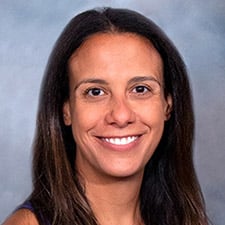
Specialty: Cardiothoracic surgery.
Practice setting: Hospital.
Employment type: Employed by a group practice within Confluence Health in Wenatchee, Washington. Confluence Health is part of the AMA Health System Member Program, which provides enterprise solutions to equip leadership, physicians and care teams with resources to help drive the future of medicine.
Years in practice: Seven.
A typical day and week in my practice: Our group is composed of two cardiothoracic surgeons. Our partnership is structured as a week-on, week-off rotation. However, cases may spill over into the next week from weekend consults, and my partner and I will often do complex cases together on our off weeks. Additionally, we may choose to round on our patients even on weeks when we are off in order to provide some reassurance until they are in the home stretch of their recoveries. But I only take call for the weeks when I am on.
On my on-call weeks, Mondays are usually days when my partner and I make the transition and sign our patients out unless a case needs to be done. These are also days for multidisciplinary case conference, where challenging cases from the week before or weekend are discussed, and new consults are likewise discussed. Tuesdays are clinic days. Wednesday and Thursday typically have scheduled outpatient cases. Fridays and the weekends are reserved for more urgent inpatient cases.
In an average week, I do three to five cardiac cases. For their immediate post-op recovery in the ICU, I take all the phone calls from the nursing staff. After patients transfer to the progressive care unit, the physician assistants take phone calls from the nursing staff, but I remain the primary hub for managing care on a daily basis.
Given the erratic nature of consults, our hours change drastically from week to week, and hours worked are very nebulous because they do not correlate at all with hours physically spent in the hospital. There are a lot of calls taken after hours and in the middle of the night to ensure the best care of our patients. Our patients have detailed care plans to ensure that they are successful in their recoveries, and these require a high degree of oversight.
The most challenging and rewarding aspects of cardiothoracic surgery: The most challenging aspects of caring for patients in our specialty are the critical nature of their illnesses, the advanced ages of a large portion of our patients and their associated comorbidities. These patients each require at least one long, high-risk surgery, which poses challenges in and of itself, but their advanced ages and associated comorbidities can contribute to difficulties with their surgeries and post-op recoveries that are independent of successfully performing the technical aspects of the surgeries themselves.
But this specialty proves to be so rewarding because we perform life-saving surgeries and see measurable improvements in our patients that are so satisfying. There is nothing more rewarding than having a patient or their family member give you a hug for making them feel better. The gratifying part of heart surgery is not the technical portion; it is the opportunity to improve someone’s quality of life.
The impact burnout has on cardiothoracic surgery: There is a high impact of burnout on our specialty because we do not have the luxury of shifts in our practice. Our patients need us at all hours of the night. And there is a high level of unpredictability in what our weeks will bring. Though there is some elective case work that is done, most of our work is governed by the patients who come into the emergency room on any given day or week.
How Confluence Health is reducing physician burnout: More so than the individual health system that I am working in—which has implemented numerous measures to reduce burnout—I have found that my relationship with my partner has been the greatest contributor in reducing my burnout. A good partner will be a sounding board for difficult cases and be there to talk through challenging situations. They will step up when needed so that you can successfully take care of both yourself and your patients. Good partners support your growth and independence. These relationships have been the cornerstone of burnout prevention in my experience.
How my lifestyle matches, or differs from, what I had envisioned: I am not sure that I envisioned a particular lifestyle when I was in medical school. In fact, I was very focused on finding the career path that felt most fulfilling because I was not sure that I was interested in a lifestyle that involved a family and children at the time. I first thought I might be a pediatrician, but when I began rotating in the surgical specialties, that is when I felt especially stimulated in the medical field. I never considered the impact that following the path of cardiothoracic surgery might have on my lifestyle outside of work. I just knew that this specialty made me excited to go to work.
As the years progressed, I did indeed get married and have a family, though this was at the end of my fellowship training and into my early years in practice. Having my first child greatly altered how I felt about my work-life balance. My first job out of training had me covering two and eventually three hospitals between two surgeons. We were also starting an extracorporeal membrane oxygenation (ECMO) program, which was time-consuming.
And concurrent with the birth of my first child, the COVID-19 pandemic hit, which drew me back to the hospital and putting patients on venovenous ECMO just one week later. This was a light bulb moment for me, as I felt that my excitement for my specialty was being heavily tamped down by the regret I felt about missing precious moments with my child that I would never be able to get back. I then pursued looking for a job in my specialty that would allow me to achieve a balance that was comfortable for me.
There will never be a scenario in this career in which I will not miss out on some things with my family, but I did make very calculated choices that would enable me to minimize the sacrifice that both my family and I had to make so that I could continue pursuing my career. And I began defining my priorities and successes differently. My priorities shifted to being well known in my field to being well known by my family. My successes were having a full load of cases but almost always being able to kiss my kids goodnight before bed. And that shift enabled me to take care of myself, my patients and my family without having to feel like I was shortchanging all of them anymore.
Skills every physician in training should have for cardiothoracic surgery but won’t be tested for on the board exam: Apart from the knowledge base that physicians in training are tested for, there are technical aspects involved in all the surgical specialties that cannot be tested on a board exam. It is important for trainees to pursue doing as many cases as possible and soliciting feedback often to ensure that they are prepared for practice following graduation.
Additionally, though clinical decision-making is tested on the boards, making timely decisions in high-pressure situations while in the operating room—often during times when fatigue has set in—can never truly be tested until you are an attending in those situations. It is important to observe your mentors and how they respond to difficult clinical scenarios.
It is also important to be acutely aware of your support systems and ask for help early and often. Your mentors may be facile in their skill set and you rarely witness times when they need to ask for help. Physicians in this specialty must be comfortable knowing the limits of their ability and skill set, especially early in their practice, and never hesitate to ask for help. You will be admonished for the times you do not ask for help, not the times you do, regardless of the outcome.
One question physicians in training should ask themselves before pursuing cardiothoracic surgery: What am I willing to sacrifice to pursue the specialty of cardiothoracic surgery?
Books, podcasts or other resources every medical student interested in cardiothoracic surgery should be reading or listening to:
- King of Hearts: The True Story of the Maverick Who Pioneered Open Heart Surgery, by G. Wayne Miller. That part after the colon, “The True Story of the Maverick Who Pioneered Open Heart Surgery,” says it all. I’m not sure how you could say you are a cardiac surgeon and not read this book.
- David and Goliath: Underdogs, Misfits and the Art of Battling Giants, by Malcolm Gladwell. It helps put in perspective how we think about obstacles, disadvantages, suffering and adversity.
- Final Exam: A Surgeon’s Reflections on Mortality, by Pauline W. Chen, MD. We all enter the surgical specialties thinking about the impact we will have when we save a life, but we rarely consider how much death is also a part of our work.
Additional advice I would give students who are considering cardiothoracic surgery: I would tell students to talk to a diverse group of people who are currently cardiothoracic surgeons, because their perspectives will all be valuable in helping determine if it is the right path for you. Cardiothoracic surgery requires a lot of time, dedication and sacrifice that is unique even among the surgical specialties, but it also varies widely depending on factors such as geographical location and practice setting.
When in training, you are in a bubble of surgeons who only practice academic surgery. It is important to talk to academic surgeons but also community surgeons, surgeons with families, surgeons without families, etc. They will all provide perspectives that will help you make a really informed decision about whether this specialty is right for you.