As a medical student, do you ever wonder what it's like to specialize in physical medicine and rehabilitation? Meet AMA member Juewon Khwarg, MD, a physical medicine and rehabilitation physician and a featured doctor in the AMA's “Shadow Me” Specialty Series, which offers advice directly from doctors about life in their specialties. Check out his insights to help determine whether a career in physical medicine and rehabilitation might be a good fit for you.
The AMA's Specialty Guide simplifies medical students' specialty selection process by highlighting major specialties, detailing training information and providing access to related association information. It is produced by FREIDA™, the AMA Residency & Fellowship Database®.
Learn more with the AMA about the broader medical specialty of physical medicine and rehabilitation.
“Shadowing” Dr. Khwarg
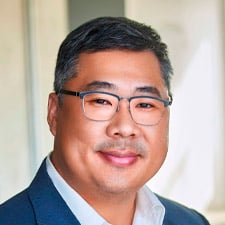
Specialty: Physical medicine and rehabilitation (PM&R).
What the physician specialty of physical medicine and rehabilitation is: PM&R is a medical specialty focused on optimizing function, preventing disability and improving quality of life for individuals with illness, injury or chronic conditions. The physiatrist takes a holistic biopsychosocial approach to the patient, forming team-based treatment plans for each step of the rehabilitation journey. Given the broad and somewhat nebulous nature of what affects a person’s function, PM&R requires creative problem solving and a strong knowledge of neuromusculoskeletal medicine.
Practice setting: Solo.
Employment type: I am working as regional physician leader with Medrina in Los Angeles. Medrina is part of the AMA Health System Member Program, which provides enterprise solutions to equip leadership, physicians and care teams with resources to help drive the future of medicine.
Years in practice: Six.
A typical day and week in my practice: My typical day consists of a combination of telemedicine clinic, utilization review and meetings. The ratios of these three jobs often vary daily, especially depending on what active projects my AI role is working on. Thankfully, scheduling for my telemedicine clinic and utilization review work is relatively flexible, though I do try to maintain consistent days for each.
I usually work about 45 hours per week. I also have found myself traveling more frequently for my AI company role, meeting with healthcare systems to better understand their workflows and how we can best utilize AI to address their pain points.
In my role as regional physician leader, I help implement new initiatives and train physicians in my region. Medrina provides significant support for physicians looking to expand their scope of practice, whether that means staffing more facilities, supervising mid-level providers or exploring new growth opportunities.
In my case, I helped launch a telemedicine clinic to serve amputee and paralysis populations that generally have significantly more difficulty with transportation and finding physicians with expertise in prosthetics and orthotics.
Through Medrina, I also work with Wellsky, a healthcare technology company that utilizes analytics to coordinate healthcare systems between providers and payers. In my role as medical director, I help inform decision-making on appropriate post-acute care for members. It has been interesting working with payers, seeing their perspectives on what constitutes a member appropriate for LTACH vs inpatient rehab vs skilled nursing facilities. Payers have been very interested in PM&R’s specific perspectives on how to optimize patient rehabilitation and minimize complications and rehospitalizations.
All of these experiences helped inform my decision to serve as chief medical officer for Curee.AI. Our company provides AI-powered solutions to healthcare practices to minimize administrative burden, increase reimbursement and perform advanced analytics. Especially with the US’s movement towards value-based healthcare companies, we’ve come to realize providers are increasingly required to prove the value they bring to patient care. AI’s ability to quickly process and digest large quantities of data is very helpful for studying exactly what impact our interventions have on patient outcomes.
Moreover, our AI technologies use Medicare as well as payer-specific criteria and historical data to ensure practices are optimizing their revenue to ensure physicians are being compensated appropriately for their work. It is surprising to see how many of us currently underbill, given our lack of education on what constitutes the complexity of the work we do.
The most challenging and rewarding aspects of physical medicine and rehabilitation: The most challenging aspects are getting prior authorization approvals and dealing with administrative burden. This was a big impetus for why I joined an AI company that specifically addresses these concerns. My perspectives from working with payers have also helped me navigate these hurdles much more efficiently.
The most rewarding aspect of PM&R has been interacting with patients throughout their rehabilitation journeys. You often first meet patients who’ve experienced devastating medical episodes, with significant losses to their functional agency and independence. With PM&R, I utilize creative team-based problem solving to address the concerns that directly affect their qualities of life. It makes a big difference when someone can walk again, return to work or return to independent living. It is amazing to see how resilient patients can be despite devastating medical episodes. In some of my most memorable cases, these patients, informed by perspectives and support they gained from their rehabilitation journeys, are even able to live lives even more fulfilling than before their medical episodes. I think of one VA patient who suffered a high cervical spinal cord injury from an IED explosion while serving in Afghanistan. With the appropriate adaptive equipment, he now travels the world as a motivational speaker and engages in his hobby as a scuba diver!
The impact burnout has on physical medicine and rehabilitation: Many physiatrists are experiencing frustration from a number of factors, especially prior authorization with inpatient rehab facility denial rates hovering around 60%. There is an increasing push towards diversification or early retirement.
I believe this should serve as impetus for our field to do more to prove the value we bring in patient care, especially optimizing functional outcomes, reducing complications and rehospitalizations. We need to demonstrate with data that our involvement will reduce long-term costs for payers while significantly improve patient quality of life.
How Medrina is reducing physician burnout: Medrina prioritizes providing education and diversification opportunities, and it is investing in innovations that leverage technology to reduce administrative burden. Medrina has started providing access to scribe services, which have greatly reduced paperwork for many of our physiatrists.
Medrina is also working with Curee.AI to improve reimbursement and prove our value to our partner facilities and payers. We have educational workshops for our physiatrists directly addressing burnout and also provide individualized attention through our regional physician leadership for physicians reporting burnout.
Lastly, we have significant diversification opportunities available to our physiatrists, including our telemedicine clinics and work with Wellsky. By nature, working at skilled nursing facilities allows for flexible hours, and these other diversification opportunities have similarly flexible hours to allow physicians to best decide how they would like to best utilize their time.
How my lifestyle matches, or differs from, what I had envisioned: My lifestyle is different from what I expected. I thought I would have one profession in which I would work regular hours and then go home. Instead, I am working multiple jobs, but fortunately it has provided me with more flexibility. Balance has been a challenge depending on the varying work responsibilities, but I feel fulfilled by the multitude of experiences.
The benefit of having multiple positions means a lack of overreliance on one. I can increase or decrease my commitment to each job based on my current priorities. I am fortunate that all of my workplaces have been overall supportive and flexible, and I believe the diversity of my experiences have made me more valuable to each work setting I am in. I have made it a regular practice to question how each job meets my personal goals, whether professional, lifestyle, financial or most importantly, alignment with my personal values. I then titrate my time commitments to each accordingly.
Skills every physician in training should have for physical medicine and rehabilitation but won’t be tested for on the board exam: Every physiatrist should have an understanding of the U.S. health care system, including payment structures, billing/coding and other basic business operations. It is important for future physiatrists to understand how the rapidly changing business of medicine affects the field. Specifically for PM&R, we are a younger field with admittedly less data and evidence directly proving the efficacy of our interventions. Whereas American healthcare historically focused more on acute care, I believe recent shifts towards value-based care is pushing physicians to think deeply about how we are taking care of patients long term. I believe PM&R is well-positioned to be leaders in this new system, but we need to be flexible, creative and understand how healthcare is funded in order to position ourselves as integral to appropriate post-acute patient care.
One question physicians in training should ask themselves before pursuing physical medicine and rehabilitation: The broadness of our specialty can be a strength and a weakness; how do you plan to navigate it?
Books, podcasts or other resources every medical student interested in physical medicine and rehabilitation should be reading or listening to:
- KFF HealthNews.
- Braddom’s Physical Medicine and Rehabilitation, edited by David X. Cifu.
- The Obstacle is the Way: The Timeless Art of Turning Trials into Triumph, by Ryan Holiday.
Additional advice I would give students who are considering physical medicine and rehabilitation: Physiatry came from meeting patients where they are. PM&R was officially established in 1947 caring for war veterans, who for the first time survived life-altering injuries after the broadened use of antibiotics, but with disabilities and difficulties returning to functional independence.
Patients’ needs will continue to change, and it is important medicine continues to evolve to meet them. I think recently of PM&R’s crucial role in establishing the diagnosis and treatment of long COVID syndrome. Acute medicine has done an excellent job of keeping patients alive with increasing success, but not as much attention has been paid historically on how to keep patients healthy after significant medical events, when they are most at risk. Like our patients, we need to be able to adapt!