As a medical student, do you ever wonder what it's like to specialize in physical medicine and rehabilitation? Meet AMA member Matthew Cowling, DO, a physical medicine and rehabilitation (PM&R) physician and a featured doctor in the AMA's “Shadow Me” Specialty Series, which offers advice directly from doctors about life in their specialties. Check out his insights to help determine whether a career in physical medicine and rehabilitation might be a good fit for you.
The AMA's Specialty Guide simplifies medical students' specialty selection process by highlighting major specialties, detailing training information and providing access to related association information. It is produced by FREIDA™, the AMA Residency & Fellowship Database®.
Learn more with the AMA about the broader medical specialty of physical medicine and rehabilitation.
“Shadowing” Dr. Cowling
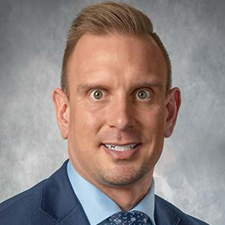
Specialty: Physical medicine and rehabilitation.
What the specialty of physical medicine and rehabilitation is: Physical medicine and rehabilitation, also known as physiatry, is a medical specialty focused on restoring function, improving quality of life and helping patients achieve the highest level of independence possible after injury, illness or disability.
Practice setting: Group practice.
Employment type: Employed physician at Medrina, a private, physician-led group practice. Medrina is part of the AMA Health System Member Program, which provides enterprise solutions to equip leadership, physicians and care teams with resources to help drive the future of medicine.
Years in practice: Five.
A typical day and week in my practice: A typical day starts early with inpatient rounds in acute rehab or skilled nursing facilities. I evaluate new admissions, follow up on ongoing rehab plans and coordinate care with therapy, nursing and case management teams. Mornings are highly clinical and fast-paced, focusing on optimizing function, pain management and discharge readiness. In the afternoons, I transition to administrative work, program development, nonphysician provider supervision and clinical education. This balance allows me to stay connected to patient care while shaping larger systems of care delivery.
My week follows a structured rhythm. I spend mornings in direct patient care and afternoons on leadership duties, documentation and strategic projects. Depending on the week, I may also dedicate time to interdisciplinary meetings, mentorship or site visits. The schedule is steady but flexible, allowing for strong continuity with patients and meaningful time for professional development.
The most challenging and rewarding aspects of physical medicine and rehabilitation: One of the most challenging aspects is navigating complex, multifactorial conditions while coordinating across large interdisciplinary teams.
The most rewarding aspect is seeing measurable functional improvement and helping patients regain independence.
The impact burnout has on physical medicine and rehabilitation: Burnout can reduce engagement and continuity of care, especially in post-acute settings, where relationships and consistency are key.
How Medrina is reducing physician burnout: Medrina takes a proactive approach to addressing burnout by promoting team-based care, improving workflow efficiency, and emphasizing leadership support and peer collaboration.
How my lifestyle matches, or differs from, what I had envisioned: It’s more balanced than I expected. I have flexibility and autonomy, which allow me to work in a way that aligns with my values.
Skills every physician in training should have for physical medicine and rehabilitation but won’t be tested for on the board exam: Physiatrists need emotional intelligence, communication finesse and leadership because real success depends on managing teams and motivating patients, not just having medical knowledge.
One question physicians in training should ask themselves before pursuing physical medicine and rehabilitation: Do I find meaning in long-term, relationship-based care and helping patients make steady progress over time?
Books, podcasts or other resources every medical student interested in physical medicine and rehabilitation should be reading or listening to: Braddom’s Physical Medicine and Rehabilitation by David Xavier Cifu, MD, for a comprehensive introduction to the specialty and Physical Medicine and Rehabilitation Board Review by Sara J. Cuccurullo, MD, for a high-yield clinical framework.
I also recommend exploring resources from the American Academy of Physical Medicine and Rehabilitation (AAPM&R), particularly PM&R Knowledge NOW®, as well as FREIDA™—the AMA Residency & Fellowship Database®—to better understand training pathways and practice settings.
Additional advice I would give students who are considering physiatry: Physiatry is truly an amazing specialty. Shadow physiatrists in multiple settings and focus on developing your interpersonal and leadership skills, as they will define your career satisfaction as much as clinical expertise will.