As a medical student, do you ever wonder what it's like to specialize in infectious disease? Meet AMA member Erica Kaufman West, MD, an infectious disease (ID) physician and a featured doctor in the AMA's “Shadow Me” Specialty Series, which offers advice directly from doctors about life in their specialties. Check out her insights to help determine whether a career in infectious disease might be a good fit for you.
The AMA's Specialty Guide simplifies medical students' specialty selection process by highlighting major specialties, detailing training information and providing access to related association information. It is produced by FREIDA™, the AMA Residency & Fellowship Database®.
Learn more with the AMA about the medical specialty of infectious disease.
“Shadowing” Dr. Erica Kaufman West
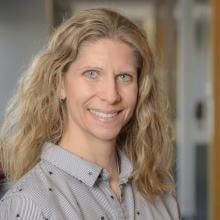
Specialty: Infectious disease.
Practice setting: Group practice.
Employment type: Employed by health system in Northwest Indiana.
Years in practice: 16.
What the specialty of infectious disease is: We treat all kinds of infections. Any organ system or body part can get infected, but some infections are more common than others. Some ID physicians will specialize in HIV care or transplant-related infections, but most of us do a little bit of everything.
A typical day and week in my practice: Most ID work is done in the hospital as a consultant. The referring physician—sometimes the emergency department physician, sometimes the hospitalist—will call and ask me to see a patient who they either know has an infection or suspect has one.
Every day, I’ll have a list of patients I’m actively following and also new consults I get asked to see. It’s flexible, in that I can start the day when I want and also break for lunch or a snack when I want. But it also means that some days can get long if there are a lot of patients with infections to see.
Then most of us have one or two half-days per week when we do clinic. This is a mix of hospital follow-ups, new outpatient consultations and chronic patients. The latter typically have viral hepatitis or HIV, but we have a few patients with chronic bone infections who take antibiotics for months or even years. Fortunately, those cases are rare.
I have two half-days of clinic in a typical week. Otherwise, I start in the hospital around 8 a.m. I can’t say there’s a typical ending time. Sometimes I finish at 3 p.m., sometimes at 6 p.m. We have enough people in our ID group that we work every fourth weekend. Night call averages to about one in every eight or nine days.
In ID, you will get phone calls at night, but there are very few emergencies that require me to go in and see a patient. Most of what I do is talk to the referring physician, give some guidance on tests to order and antimicrobials to start, and then evaluate the patient in the morning.
The most challenging and rewarding aspects of infectious disease: Many patients referred to ID don’t have a diagnosis. They have a constellation of symptoms that might be an infection but might not be. So, ID physicians have to be very good general internists. We need to know about Crohn’s disease and lupus and gout because they can mimic infections and vice versa. Staying up to date on both my specialty and other specialties is challenging.
But to have a patient in front of you who is extremely sick with some unknown entity, to take a careful and detailed history, to determine which tests are most appropriate and then to give a diagnosis and treatment plan, that’s the most rewarding aspect. Most infections are temporary and curable, and it’s great to help people return to their baseline quality of life.
The impact burnout has on infectious disease: There are not enough ID physicians right now. Over 80% of counties have no ID physician available. So, we get pulled in a lot of directions. Many ID-related issues are quality issues—antibiotic stewardship, sepsis mortality, infection prevention—and so we get asked to be involved in a lot of committee and quality improvement work. That can make for long hours. In addition, a lot of ID-related topics are high stress topics right now—vaccine-preventable illnesses, measles and other outbreaks, congenital syphilis. Everything can seem like an emergency, which can lead to burnout.
How my health system is reducing physician burnout: We get a lot of autonomy in our schedules. We can pick our clinic day and adjust it if needed. We can add a patient on another day. We can start in the hospital early or late, and also leave and come back. All that flexibility helps reduce burnout.
I think the pandemic really opened my health system’s eyes to both what ID physicians do and the value they bring to a health system. So, they are very open to discussing when we feel we need to hire another physician.
How my lifestyle matches, or differs from, what I had envisioned: I think the flexibility of this specialty wasn’t apparent when I did my rotation in training. The diversity of cases is certainly the same, as is the “medical mystery” feel that ID carries.
The camaraderie and coordination between teams is the same too. There is a lot of discussion with other specialties. We work very closely with hospital pharmacists, which is an absolute perk of the job—I’ve learned so much from them. I think ID physicians in general are well-regarded among other physicians: We are seen as thorough and thoughtful, which for most of us is a source of pride.
In general, the flexibility allows for a good work-life balance. The thing to remember about balance is that you don’t “achieve” it. Balance implies a continuous struggle to stay upright. So, some days I end up working more, but other days I work less. Not every day is perfect.
Skills every physician in training should have for infectious disease but won’t be tested for on the board exams: This is my favorite topic. The No. 1 skill is communication. We have to communicate clearly with patients and families—about diagnostic uncertainty, treatment and possible outcomes. We have to talk to patients with new HIV or hepatitis about what to expect.
To do our job well, we need to gain the patient’s trust in just a matter of minutes. They must feel comfortable telling us about their hobbies, sex lives, vacations, exposures, jobs, pets, etc. If patients hold back because they don’t trust you, you might not get all the information you need to make the diagnosis.
One question physicians in training should ask themselves before pursuing infectious disease: “Am I okay with things constantly changing?" There are constantly new pathogens, new antibiotics, new outbreaks, new vaccines. It’s a field that frequently has rapid advances.
Books, podcasts or other resources every medical student interested in infectious disease should be reading or listening to:
- The "Febrile" podcast covers a wide variety of infectious diseases. It’s for ID docs, but I don’t think it’s too esoteric.
- The Infectious Diseases Society of America is a great resource for those interested in ID. They have a blog called "Science Speaks," which is a collection of editorials from ID docs and also journal club reviews of recent articles.
- Finally, Paul Sax, MD, has had a blog for years. It’s amazing and very real-world in its approach to ID topics and current events. It’s funny and relevant and something I make sure to read weekly.
- Anyone interested in HIV should read, And the Band Played On: Politics, People and the AIDS Epidemic, by Randy Shilts. It’s a real-time account of what happened in the 1980s during the AIDS epidemic, and it’s equal parts fascinating and heartbreaking.
Additional advice I would give students who are considering infectious disease: ID is the perfect combination of “cure” and “chronic.” I think of ID physicians as the surgeons of internal medicine. Unlike in most other aspects of internal medicine, we in ID can cure people. I can diagnose an infection, devise an antimicrobial treatment plan, and then the patient can get back to their life.
Also, our HIV patients in clinic provide longevity. We get to know and grow with them and their families. For me, it’s an honor to take care of these patients.
However, the bulk of an ID physician’s practice is the hustle of the hospital. We never know what we’ll get called to see, and the excitement of securing the diagnosis that evaded others never gets old.