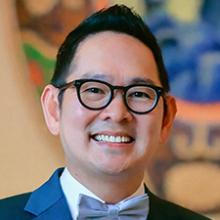
In July 2025, Ben Hur Aguilar, MD, of Bayhealth Internal Medicine in Milford, Delaware, received Drexel University College of Medicine’s Clinical Educator Award. Recognized for his dedication to academic medicine, guidance and mentorship, Dr. Aguilar has been foundational in establishing the burgeoning reputation of Bayhealth’s undergraduate medical education (UME) program.
“His comprehensive approach to education makes him a cornerstone of Bayhealth’s learning environment,” Muhammad Zohaib Ghatala, MD, core faculty for the health system’s UME program, said in a release.
Dr. Aguilar is an internal medicine physician who serves as the associate program director of the Bayhealth Internal Medicine Residency Program and the medical director of Bayhealth’s GME Continuity Practice, where he oversees the training of medical students, interns and residents.
Bayhealth is part of the AMA Health System Member Program, which provides enterprise solutions to equip leadership, physicians and care teams with resources to help drive the future of medicine.
“It was a nice surprise to receive the award from Drexel, and I appreciate it,” Dr. Aguilar said. “It was unexpected, but I cherish it because I value medical students, and because when I was a medical student, I had mentors and professors who guided me, and without them I wouldn’t be able to have what I have now. It’s like paying it forward, and when they become successful, I feel like I’m more successful too.”
In an interview with the AMA, Dr. Aguilar discussed the award, what motivates him and the work he is doing to help students through hands-on clinical experiences, quality improvement projects and national conference presentations.
AMA: What guiding philosophies or values shape your approach to mentorship?
Dr. Aguilar: I encourage medical students to adopt a tunnel vision, develop a real drive to achieve their dream and have someone to look up to while they do it. Because having someone to look up to who can function as a motivator to become even better and even more successful leads to even more personal satisfaction.
Sometimes there’s a question about whether being a teacher or being a doctor is the most noble profession. I’m from a family of teachers, but I’m the only doctor, so when I decided to become a doctor, I thought that maybe I could be both. And so far, so good.
I’ve been both an academician and a doctor for the last five years, and I enjoy the hybrid role. The award is a validation that maybe I am better at doing both than focusing only on being a physician.
AMA: How do you facilitate hands-on clinical experiences for students?
Dr. Aguilar: I’ll give you an example. I’m very detailed and organized when it comes to creating systems. Because time in the ambulatory medicine rotation is limited, I developed a structured approach for the clinic. I want to make sure those 10 days are as high-yield as possible for the students.
If it is their first time working with patients, I give students the option to shadow a resident or intern during the first half of the day. In the second half, they begin seeing patients and become more immersed in internal medicine. The resident serves as the primary provider, and I ask them to introduce the student and obtain verbal consent from the patient.
The student then has the autonomy to take the history and perform the physical examination. Afterward, the medical student discusses the case with the resident, who confirms the findings and ensures the student performed the exam appropriately. When the student presents the case to me, I do the same. In this way, students feel like they are truly part of the team rather than simply observing.
I also challenge them to think critically. I ask what they believe is going on with the patient and what other possibilities should be considered. If we needed to narrow the differential, what would they recommend to help arrive at a diagnosis or guide therapy?
At the same time, I reassure them that it is not expected for them to know everything—not only because they are medical students, but because medicine is a lifelong learning process, even as one progresses toward becoming a specialist. I encourage them to read before and after their patient presentations so that their knowledge retention is stronger, rather than simply presenting a case and forgetting about it afterward.

AMA: What is a project or initiative you’re proud of and why is it important for medical education?
Dr. Aguilar: I co-authored a quality improvement (QI) project with a resident and a Drexel student. When the resident who submitted the project was unable to present, the student volunteered to step in—and he won. It was especially meaningful because it was the first time Drexel participated in the American College of Physicians (ACP) research competition.
Our project focused on increasing access to care for LGBTQ+ patients in Sussex County and promoting awareness that our clinic values diversity and inclusivity. We intentionally incorporate subtle signals of inclusivity, such as wearing a rainbow pin, to communicate to patients that they are welcome and valued. At times, this also requires educating staff, since there can be misunderstandings about what such symbols represent. The pin is not necessarily a statement of personal identity; rather, it is a visible sign of support and respect.
We believe everyone deserves a voice, and we strive to listen to those voices. We were very proud of the project—it was not something we expected to receive recognition for, but it was acknowledged, and we are honored to be presenting it at the national ACP meeting in San Francisco in April.
AMA: What do you think the impact of these opportunities is on students’ development?
Dr. Aguilar: These experiences are highly motivating for students. They help them appreciate that patients are some of the best teachers. Students also begin to see themselves as advocates for individuals whose voices may not be heard strongly enough in the health care system.
Just as importantly, they learn to value their own efforts and carry that standard of excellence with them into their future roles as attendings.
AMA: What challenges have you faced in expanding medical education opportunities?
Dr. Aguilar: There’s always a challenge. Probably the number of preceptors needed is a big one. Let’s face it, not everyone is suited for academic teaching. Most physicians practice medicine because they prefer to help patients and have less preference for academics. But having said that, we keep an open mind.
There may be someone out there who is willing to take the path that I have—a combination of academic and clinical medicine—so it’s challenging to fill volunteer positions in academic medicine.
I strongly advocate for recognizing the true value of education. Lower revenue generation should not be interpreted as lower value. Educational efforts should be viewed in the proper context and given the consideration they deserve.
That’s not an easy job, but I want that voice to be heard. The more value that is placed on academic positions, the better, especially since we are only a few compared to the general group of doctors.
AMA: What new initiatives or goals are you excited about in your role as a clinical educator to support and inspire the next generation of doctors?
Dr. Aguilar: My goal is to encourage more students to participate in research and other scholarly work. I always tell them that they don’t have to be researchers or scientists to publish—even the simplest projects, such as a case report, can lead to a publication. As third- or fourth-year medical students, the experience itself is valuable and often sparks interest in academic work.
For me, that’s the simplest type of research they can start with. Once they begin working on a case report and see it come together, they gain confidence. From there, they may feel encouraged to step up to something like a quality improvement (QI) project. After gaining experience with QI, they can move on to more challenging work, such as a cohort study.
I usually focus on what I would call tier-one research at the beginning. Starting students with something too complicated can be discouraging and difficult to motivate. I want them to master the basics first, and once they gain confidence, they can build from there and move on to more advanced research.
AMA: What else is important to remember about working with medical students?
Dr. Aguilar: There are many people who speak more eloquently than I do, but I see myself as someone who represents those who still need a voice. I’m still growing into that role, but it has become my way of paying it forward.
My hope is that when students reach a stage where they are able to mentor others, they will pay it forward. Everyone needs help at some point, and no one succeeds entirely on their own. That belief has always been my guiding principle.