As a resident physician, are you thinking about where you want to build your future in medicine? Meet Jonathan Mizrahi, MD, a medical oncologist with Ochsner Health in New Orleans, and a featured voice in the AMA’s “Finding My Place in Medicine” series.
In this series, physicians reflect on what influenced their personal decisions when choosing where to work—and what they wish they had known earlier. Explore Dr. Mizrahi’s journey to help guide your own path toward a fulfilling medical career.
If you are looking for your first physician job after residency, get your cheat sheet now from the AMA. In addition, the AMA Transitioning to Practice series has guidance and resources on deciding where to practice, negotiating an employment contract, managing work-life balance, and other essential tips about starting in practice—including in private practice.
“Following” Dr. Jonathan Mizrahi
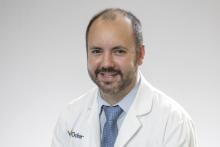
Specialty: Medical oncology.
Practice setting: Health system.
Employment type: Employed by Ochsner Health in New Orleans. Ochsner Health is part of the AMA Health System Member Program, which provides enterprise solutions to equip leadership, physicians and care teams with resources to help drive the future of medicine.
Years in practice: Five.
Key factors that led to me choosing to work at Ochsner Health: The first thing I looked at was geography. My wife and I wanted to live in a city where we would feel comfortable, and a number of factors contribute to that. One of those was a place where we had family. My wife's family is from New Orleans, so that helped us narrow down to at least which areas we were considering.
And then I chose Ochsner for a variety of reasons. One is they were able to meet the particular career interests I was pursuing, which was specializing in a subtype of oncology. Not just general oncology, but treating—specifically—gastrointestinal malignancies. And there weren’t any other systems in the area that offered the focus I wanted for my position.
I felt that Ochsner was in a good spot from a reputation standpoint. I felt comfortable and confident in hitching my wagon with Ochsner. That’s important. You don’t always know—moving to a new city and looking at different employment opportunities—how a system is going to be perceived in the region, city and community. Ochsner really excels reputationally.
What stood out to me during the interview and hiring process: I really liked who my boss was going to be. I felt very comfortable with her and her investment in what I wanted to do. The role wasn’t presented as, “Here’s what we have to offer you. This is what it’s going to look like. Take it or leave it.”
It felt very much like she wanted to know my interests and what I would like to be doing six months from now, two years from now, five years from now. Ochsner wanted to make this a job that works for what my career interests are too. That, right off the bat, I felt from her, and even the higher-ups.
I talked to people who worked at Ochsner and people who I knew previously had walked similar paths as me and trained at similar programs as I had. They spoke to Ochsner fulfilling that promise of meeting us where we wanted to be and working with us to fulfill our career aspirations.
How feedback from peers and mentors influenced my evaluation process: It helped a lot. I actually first heard about Ochsner through a peer who was a year ahead of me in training and he was from New Orleans. He said, “Hey, if you want a subspecialty oncology job, Ochsner is the place you’ve got to look.” And that’s when I first heard of Ochsner.
I’m not from here, so it was a new institution to me, and that’s how I got my foot in the door. He spoke highly of his experience and his work at Ochsner. Without that being the first foray into my relationship with Ochsner, I probably wouldn’t have even known to look there. At some point I would’ve learned about it, hopefully, but certainly I wouldn’t have known at that point. That’s why relationships and peer networks are so important.

Why I chose to work for a health system rather than another kind of practice setting: My goal is not to worry too much about business and building a practice. There are people who enjoy that and want to have their hands in every facet of their practice, but that wasn’t my interest.
I wanted to work somewhere where I knew that the referrals were going to be there, whether I had to advertise myself or not. I knew that there was going to be an infrastructure available to me, from nurses and medical assistants and colleagues. I didn't want to work by myself. I wanted to have people I could learn from and talk to.
Then, most importantly, oncology is a very collaborative and multidisciplinary field. I’m literally sitting in the same clinic as the surgeons, as the radiation oncologist, and I can't practice good oncology without talking to them every day.
The biggest challenges I faced when transitioning from residency to practice: Some of it is confidence. The notion of impostor syndrome where you feel like: “I’m really considered an expert now—how did it come to this? I just graduated medical school a few years ago, are you sure I’m ready for this?”
It takes time to overcome that. You have to remind yourself that this is how everyone started, and you don’t need to know everything. You need to just know what you know—and what you don’t know. And know how to ask the questions and get the best answers possible.
Then, learning a new institution is always a challenge. Ochsner wasn’t where I trained, so learning a new hospital system, learning new people who I’d be working with—that takes time. To complicate my transition, I started this job in 2020 during the peak of the COVID-19 pandemic, and everyone was wearing masks, so I didn’t know what anyone looked like, and it was hard. It was hard to socialize, and it was a tough time to move to a new city and start a new job.
What I wish I had known about evaluating a job offer: It's good to know that you can negotiate and ask for things, and you shouldn't feel bad about that. We’re not really trained to advocate for ourselves in medical training. We're kind of used to just doing what we're told to do and showing up when we're told to show up and trying to impress everyone and get the best grades and get the best evaluations.
At some point, you have to be your own advocate. It's hard to do, and no one teaches us how to do that, but when you are looking at where to work, you’ve got to know what you want. Sometimes you don't know that until you look around at your offers or at potential practices. And then you can figure out what you want.
Once you figure it out, you have to feel comfortable and push yourself to really request what you want. Everyone's going to give you what they want, but this might be your best chance to advocate for what you want.
What I would have done differently when choosing my first job: I don’t think I would have done anything differently because I’m happy with the way things turned out. I will admit that there was one opportunity I looked at that, in the end, did not materialize into what I thought it was going to be. And had that been the only place I looked at, I would’ve been in a real bind.
It's good to have plan A, plan B and plan C because you never know what's going to happen with all of the potential opportunities. So, definitely don't put yourself in a situation where you only have one option until you have a final offer—have multiple options. Even if you've identified what your favorite and preferred job opportunity is, it's good to have a backup just in case.