As a resident physician, are you thinking about where you want to build your future in medicine? Meet Anuj Bhatnagar, MD, a family doctor and private practice physician, and a featured voice in the AMA’s “Finding My Place in Medicine” series.
In this series, physicians reflect on what influenced their personal decisions when choosing where to work—and what they wish they had known earlier. Explore Dr. Bhatnagar’s journey to help guide your own path toward a fulfilling medical career.
If you are looking for your first physician job after residency, get your cheat sheet now from the AMA. In addition, the AMA Transitioning to Practice series has guidance and resources on deciding where to practice, negotiating an employment contract, managing work-life balance, and other essential tips about starting in practice—including in private practice.
“Following” Dr. Anuj Bhatnagar
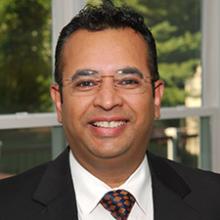
Specialty: Family medicine.
Practice setting: Private practice.
Employment type: In private practice at Frederick Primary Care Associates, Mid-Atlantic in Frederick, Maryland. His practice is a member of Privia Health, which is part of the AMA Health System Member Program that provides enterprise solutions to equip leadership, physicians and care teams with resources to help drive the future of medicine.
Years in practice: 12.
Key factors that led to me choosing to work in private practice: Hospital systems were increasingly intruding on my practice of medicine by controlling my workflow and schedules—without providing clear information on quality metrics. The productivity bonuses were vague and subject to change at their discretion. I was initially concerned about joining private practice because maintaining physician autonomy is extremely important to me, so I asked questions about how much control I would retain.
What stood out to me during the process of starting my practice: Physician autonomy, shareholder track and professional growth opportunities.
How feedback from peers and mentors influenced my evaluation process: My mentors advised me that there is no shortcut to success—except through hard work. As physicians, if we are willing to work hard, do what is right for our patients, and collaborate effectively within an accountable care organization (ACO), the potential for financial satisfaction, work-life balance and professional growth is seemingly limitless.
Factors I considered as I chose a practice setting to work in: Opportunity to build and potentially own your own practice, with a transparent productivity-based payment structure. Physicians report directly to supervising physicians rather than administrators, and benefit from an easy-to-learn EMR system—Athena.
The top three qualities for a great place to work:
- Practices that grant you autonomy to control your schedule and practice style.
- Competitive salary and productivity bonuses.
- Encouragement to achieve a healthy work-life balance.
How my current practice supports physician well-being and work-life balance: We have dedicated one-on-one support staff who assist physicians with chart preparation and patient triage. Additionally, we use advanced tools like SUKI Ambient and Dragon software, which help physicians efficiently complete patient-chart documentation. Thanks to these technologies, I rarely need to bring charts home.
We also use virtual medical assistant services to manage physicians’ inboxes, filtering patient questions, messages, lab reports and refill requests.
Monthly site-performance meetings keep physicians informed about their productivity trends, value-based care concepts such as hierarchical condition category coding/risk-adjustment factor (HCC/RAF), and updates from biweekly board of directors meetings. We use performance metrics to facilitate profit sharing of Medicare Shared Savings Program/Privia Quality Network funds with employed physicians.
Additionally, we encourage new physicians to actively manage their patient panels and address any inappropriate controlled-substance prescriptions through patient education rather than enforcement. In our organization, no physician is forced to continue previous prescribing patterns—the approach always begins with patient education.

Benefits and workplace attributes that have contributed to my job satisfaction: I am fortunate to work daily with good and honest leadership and am grateful to serve an excellent patient population. Frederick Primary Care Associates has entrusted me with various leadership opportunities, which I deeply enjoy as I serve my team and patients.
Last year, I was appointed as a physician-organized delivery (POD) leader, a role that allows me to collaborate closely with our ACO leadership and bring valuable education and information back to my team.
As quality committee chair and a board member, I contribute to leading our organization's quality metrics. Frederick Primary Care Associates is recognized as a leader in the Mid-Atlantic region, and as a board member, I am committed to advancing our organization into a new era of primary care.
The biggest challenge I faced transitioning from residency to practice: I have had the opportunity to shape my own path beyond formal training, thanks to the guidance of my mentors who helped shape my decisions. I began my career in an organization that had an excellent capitated model focused on elderly care. However, it was governed by a hospital board of directors in which physicians had very limited voting power.
Later, I joined a hospital-owned practice in Maryland, working in primary care and geriatrics. There, I encountered a lack of respect for physician autonomy and a lack of transparency around productivity metrics.
What I wish I had known about evaluating a job offer before choosing my first position: There should be more input from physicians in private practice and accountable care organizations during residency and fellowship training. This would allow new graduates to gain exposure beyond hospital settings, see the full scope of family medicine and make more informed career decisions.
What I would have done differently when choosing my first job: I wish I had an opportunity to choose electives in the business of medicine because these essential skills are rarely taught in medical school, residency or fellowship. They prove invaluable when running your own practice.
Why I changed practice settings midcareer: Lack of autonomy in managing my practice, interference from hospital administration unfamiliar with patient care and a lack of transparency in productivity bonuses have been significant challenges.
How I knew I was ready for a change: I was ready to make a change during the COVID-19 pandemic in 2020, as growing frustration with my work life made me certain it was time.
How my current role compares with what I imagined:
- Improved infrastructure to own and manage your practice.
- Four-day workweek for enhanced work-life balance.
- Complete physician autonomy.
- Opportunities to lead and educate on value-based care concepts.
- Financial satisfaction.
- Empowerment to inspire fellow physicians to join ACO-supported practices.
- Leadership roles within the organization that support professional development.