Resident physicians who care for children are learning about how to engender trust in their youngest patients—a particular challenge when visits are likely to be confusing or stressful. The resident ophthalmologists behind one project in Louisiana hope to use patient artwork to gain insight into how the children they treat see the world—literally—to the benefit of all involved.
“In ophthalmology, there are so many ways to institute humanity, which is the purpose of this grant. But pediatric ophthalmology is kind of an obvious one,” said Tanvi Chokshi, MD, a PGY-2 ophthalmology resident at LSU Health New Orleans School of Medicine. “An eye exam is so different than the regular appointments.”
This year, the Accreditation Council for Graduate Medical Education (ACGME) awarded one of 23 Back to Bedside grants to a project helmed by Dr. Chokshi and Kyle Crawford, MD, also an ophthalmology resident at LSU School of Medicine, for their “Geaux See” initiative. They plan to improve the clinical environment and make it more welcoming for children in ophthalmology appointments.
Finding a way to connect
The initiative makes art a central part of the child patient’s ophthalmology appointment, working it into the existing wait time for imaging or dilation, which the physicians noted in their proposal can be stressful and anxiety-producing.
In the waiting room, patients will be asked to draw a picture of how they feel about the visit. For children with amblyopia, diplopia or progressive vision loss, the proposal noted, the drawings can give physicians better insight into how their patients are seeing the world. The project also aims to ease children into the process of dilation and patching for amblyopia, giving them the opportunity to decorate amblyopia patches and dilation sunglasses as part of a second activity.
“There’s this inherent dead time in dilation. And amblyopia patches and sunglasses—all of it is kind of foreign,” Dr. Chokshi said. “So, being able to decorate it and add a little bit of fun during dilation and then having that be a bridge to the resident, was just something that was very intuitive.”
Resident physicians in the “Geaux See” program will be assessed for burnout, for whether the patient-created artwork helped create a connection and for whether the artwork provided more insight into the patient’s condition.
The exam room “is such a vulnerable place to be, and as residents, we get to facilitate the conversation. Oftentimes, we spend the longest amount of time with the patient in that room and that visit,” Dr. Chokshi said. “A majority of our testing is so intense and it's shining bright lights in your faces, and kids don’t love that—nor do adults. It [the project] allows us the space to have something more fun, more creative, more subjective while we’re doing all this objective testing.”
Establishing a link between joy and residency
This is the fifth, two-year grant cycle of the ACGME Back to Bedside initiative since it was launched in 2017. More than 250 applications were received for this year’s grants of up to $10,000, which can go toward new ideas or for projects already in development.
Projects were evaluated on whether they strengthened the patient-physician relationship, as well as whether they were sustainable, cost-effective, had defined outcome measures, innovated and were adaptable to other training programs and contexts.
The current Back to Bedside cycle will culminate in a presentation at the ACGME’s 2028 Annual Educational Conference in Orlando, Fla.
“Back to Bedside demonstrates the powerful impact residents and fellows can have when they are given the opportunity to lead meaningful change,” said Nikhil Goyal, MD, the ACGME senior vice president of accreditation and the adviser to the Back to Bedside Work and Advisory Group. “The program’s focus on strengthening the physician-patient relationship is more important than ever, helping ensure that innovation in healthcare remains grounded in compassion and human connection. The remarkable quality of this cycle’s applications reflects the talent, dedication and compassion of residents and fellows across the country.”

Connection through creativity
The idea for the “Geaux See” project, currently in the process of securing institutional review board approval, made sense to Drs. Chokshi and Crawford as they thought about the relationship between ophthalmology visits and children.
“Most of these kids that we are seeing in the pediatric ophthalmology clinic have some decreased [vision] or some kind of abnormality to their vision,” said Dr. Crawford, a PGY-3. “Vision is how we perceive the world. If your vision is not what we would call ‘normal,’ then you're going to perceive the world differently than other people your age, other children.”
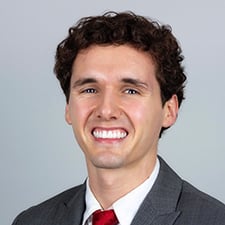
It was important, he said, to find a way to smooth the process for children in an unfamiliar ophthalmologic setting.
“Already for most kids going to the doctor is a nerve-wracking event,” he noted. “With this initiative, we're hoping to help bridge the gap between how these patients are perceiving the world and what's going on around them so that we can bring that into how we deliver the care to them.”
Lee Engel, MD, PhD, is associate dean of academic affairs for LSU Health New Orleans School of Medicine and the designated institutional official at the LSU Health Sciences Center. He oversees the “Geaux See” project.
Dr. Engel said the grant offered a chance to celebrate the physicians’ hard work.
“The LSU Health Sciences Center is proud to support our outstanding residents and their ‘Geaux See’ project, and we are all honored to have been selected to participate in the ACGME Back to the Bedside initiative,” he said. “This project—it's a way to build trust with people. With patients, and especially the pediatric patients, there’s going to be a lot of anxiety and fear.”
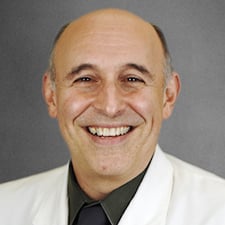
Dr. Engel said the project not only made sense, clinically, but also provided for continuity if it was found to be effective.
“Once really established, it should be easy to continue,” he said. “The residents have a great plan for succession, which is important. It's not just the one and done project.”
In the long run, he anticipates that these connections with patients will yield benefits for the resident physicians, as well.
“This project reduces fears and anxieties with the patients. It’s going to lower their stress, which is going to result in improved cooperation with our patients, which results in better exams and better treatment success,” he said. “And that’s a huge aspect [of physician job satisfaction]. When people do better, when your patients do better and you see success, that reduces burnout.”
LSU School of Medicine is part of the AMA GME Competency Education Program, which helps institutions meet the ACGME Common Program Requirements through a flexible on-demand micro learning approach for residents. The program fits into demanding clinical schedules and is supported by streamlined reporting tools that reduce administrative burden for administrators. Learn more.