- Physicians open national Rx and Illicit Drug Summit
- CY 2027 Medicare Advantage final rule: What physicians need to know
- 2027 Medicare Advantage Final Notice adopts AMA recommendation to modify risk score policy
- CMS delays WISeR authorization for Deep Brain Stimulation and spinal procedures
- CDC Health Alert Network issues advisory about medetomidine
- More articles in this issue
Physicians open national Rx and Illicit Drug Summit
Continued access to affordable, evidence-based care must lead the way to continue progress in the nation’s overdose epidemic, according to the AMA, American Society of Addiction Medicine (ASAM) and American Pharmacists Association (APhA) at the 15th Annual Rx and Illicit Drug Summit in Nashville, Tennessee. Drug overdose deaths, which continue to be driven by illegally-made fentanyl, have decreased overall by nearly 38% between Oct. 2023 and Oct. 2025 (from 109,703 to 68,408), according to provisional data provided by the U.S. Centers for Disease Control and Prevention.

“While recent declines in opioid-related overdose deaths represent meaningful progress, this epidemic tragically continues to affect millions of families,” said AMA President Bobby Mukkamala, MD. “Accelerating progress requires continued investment in physician-led, team-based, community-centered care. Physicians, pharmacists, public health leaders, and policymakers must work together to ensure patients with opioid use disorder (OUD) and pain can access timely care and stay on a path to recovery.”
Dr. Mukkamala was joined on the conference’s main stage by Stephen Taylor, MD, president of ASAM, and Michael Hogue, PharmD, the executive director of APhA. The session was moderated by Nora Volkow, MD, director of the National Institute of Drug Abuse.
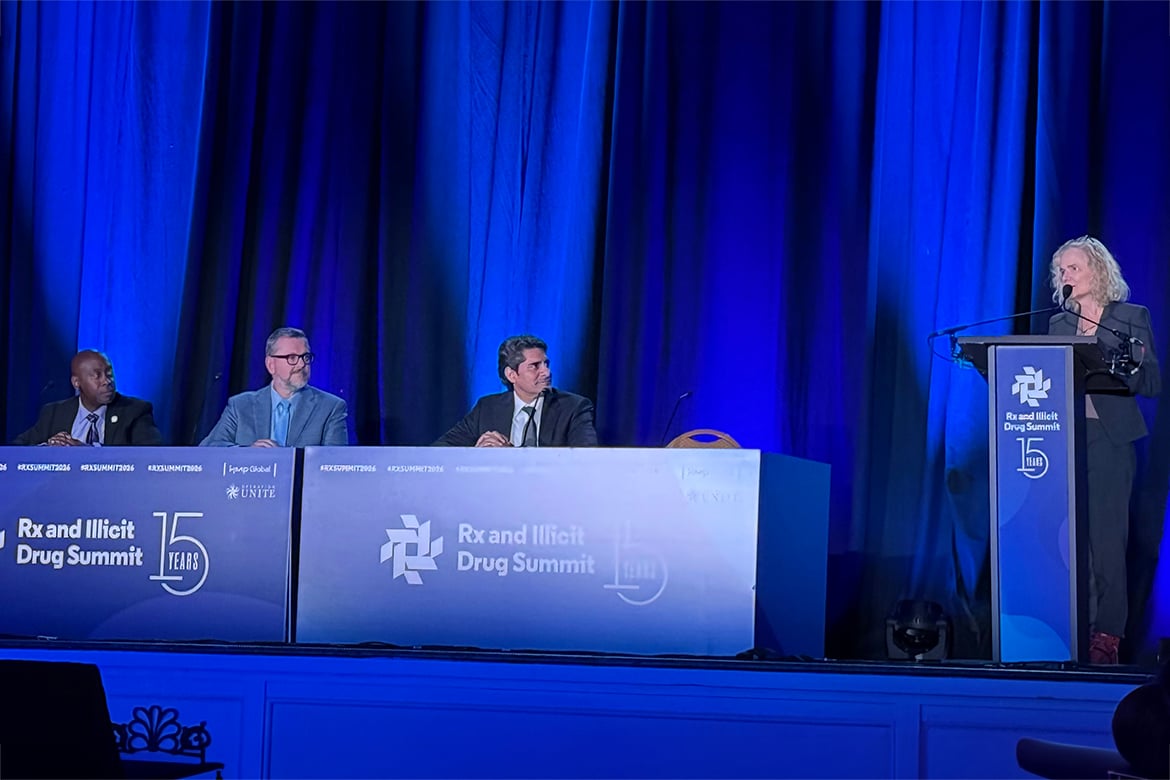
Collectively, the speakers emphasized the need to increase communication among professions, reduce and remove stigma of substance use disorders and pain, and remove barriers that prevent more individuals from receiving affordable, evidence-based care. Drs. Taylor and Mukkamala specifically highlighted the importance of authorizing addiction medicine physicians to prescribe methadone for OUD outside of Opioid Treatment Program settings as well as increasing access to care for seniors. The speakers also stressed the need to protect patients with pain and improve access to individualized patient care. This includes reducing the fear among physician practices and pharmacies for providing opioid therapy to patients with pain.
CY 2027 Medicare Advantage final rule: What physicians need to know
The Centers for Medicare & Medicaid Services (CMS) released the CY 2027 Medicare Advantage and Part D final rule alongside the annual rate announcement, delivering a mixed set of outcomes for physicians.
The AMA secured several meaningful wins. CMS finalized the exclusion of unlinked chart review records from risk score calculations—a change that helps ensure Medicare Advantage plan payments reflect actual patient encounters rather than disconnected documentation. CMS also adopted 120-day continuity of care protections for dual-eligible beneficiaries passively enrolled into integrated D-SNPs, a provision the AMA championed to prevent dangerous gaps in treatment.
On the payment side, the final rule delivered a 2.48% average payment increase—significantly higher than the 0.09% initially proposed—driven largely by CMS' decision to retain the current risk adjustment model for an additional year. While this outcome stabilizes plan revenue in the near term, the AMA continues to advocate for a payment system grounded in clinically valid diagnoses tied to care actually delivered, rather than one sustained by coding intensity.
At the same time, the final rule weakens several mechanisms for holding plans accountable for providing timely, equitable care. The Health Equity Index reward was not implemented for 2027, eliminating a financial incentive for plans to invest in improving outcomes for socially at-risk populations. CMS also finalized the removal of utilization management committee requirements, including the annual health equity analysis of prior authorization practices, despite AMA opposition. Additionally, CMS removed 11 Star Ratings measures that had evaluated plan operations—including appeals processing, complaint handling and customer service—while retaining clinically focused measures that depend heavily on physician performance, effectively shifting the balance of accountability away from plans and toward physicians. These are areas where the AMA will continue pressing for stronger plan oversight in future rulemaking cycles.
CMS also codified criteria identifying physicians in the top 25th percentile relative to specialty peers as opioid "outlier" prescribers, with persistent outliers reported to Part D plan sponsors—a framework the AMA opposed as likely to chill appropriate prescribing and restrict patient access to pain treatment. While CMS declined to withdraw the provision, it did adopt the AMA's recommendation (PDF) to exclude patients receiving palliative or end-of-life care from outlier calculations, protecting physicians who manage complex pain needs from unwarranted scrutiny.
2027 Medicare Advantage Final Notice adopts AMA recommendation to modify risk score policy
In its Final Notice with 2027 Medicare Advantage (MA) rates and policies released April 6, CMS responded to pushback from the MA plans on several policy changes that were proposed in the Advance Notice and did not finalize its proposal to switch to an updated risk adjustment model. The agency did finalize its proposal, however, which had been recommended and strongly supported by the AMA (PDF), to exclude from MA risk score calculations any diagnosis codes that are derived from MA plan chart reviews and are not linked to a service provided to the patient. The new policy includes an exception that will recognize unlinked diagnosis codes for MA enrollees switching from one plan to another.
Consistent with AMA policy that plans’ risk adjustments should reflect their actual costs of delivering care, the new policy will only recognize diagnosis codes for risk adjustment if there is an actual service provided to the patient, such as a test or treatment, that is associated with the diagnosis code. As the AMA comments on the Advance Notice stated, the purpose of identifying patients’ health conditions with diagnosis codes should be to manage and treat them, and delivery of these treatment services is what increases health plans’ costs. For risk adjustment to reflect the actual cost of providing care, patients need to not just have a diagnosis but to obtain services related to treatment or management of their diagnosis.
CMS delays WISeR authorization for Deep Brain Stimulation and spinal procedures
CMS is delaying the implementation of prior authorization and pre-payment review for Deep Brain Stimulation for Essential Tremor and Parkinson’s Disease and Percutaneous Image-Guided Lumbar Decompression for Spinal Stenosis under the WISeR Model. CMS announced (PDF) that these services will not be subject to either process starting Jan. 1, 2026, and that any future implementation date will be announced later, giving physicians and stakeholders additional time before these requirements take effect. The AMA continues to work with impacted state medical associations as well as national specialty societies and CMS to improve the WISeR Model.
CDC Health Alert Network issues advisory about medetomidine
The U.S. Centers for Disease Control and Prevention (CDC) issued a Health Alert Network (HAN) advisory on April 2 about medetomidine being increasingly found in the illegal drug supply. Medetomidine, which is not approved for human use, “can cause profound sedation, bradycardia, and hypotension. Stopping medetomidine following regular use may lead to severe withdrawal, similar to clonidine withdrawal, with symptoms including hypertension, anxiety, nausea, vomiting, and fluctuating alertness, that can require emergency or intensive care,” according to the CDC. The CDC further advises that “because fentanyl is involved in most overdoses involving medetomidine, opioid overdose reversal medications (e.g., naloxone) should be administered to restore normal breathing in suspected overdoses.”
The full HAN advisory provides additional information, resources and detailed recommendations for clinicians, public health professionals, laboratories and people at risk of overdose.
Read the full HAN medetomidine advisory.