An empty bedroom can hold a whole childhood with posters on the wall, a favorite hoodie draped over a chair, toys scattered on the ground, an unmade bed, the imprint of a life that was supposed to keep unfolding. In the Netflix documentary, “All the Empty Rooms,” those spaces become the center of the story: A memorial to children killed in mass shootings, told through the rooms that their families cannot bring themselves to change.
For Chethan Sathya, MD, MSc, a pediatric trauma surgeon and director of the Center for Gun Violence Prevention at Northwell Health, the film’s power is its simplicity. It does not argue policy. It shows what violence leaves behind.
“These families, from different parts of the country, never thought this was going to happen to their child. And when it affects them, all that’s left behind is this empty room,” said Dr. Sathya, who was also consulting producer on the film.
He became involved in “All the Empty Rooms”—which is nominated for a 2026 Academy Award for “Best Documentary Short” film—after caring for the child of someone connected to the filmmaker and later joined the project as a consulting producer who helped fact-check the film’s information and sharpen what it asks of viewers once the credits roll.
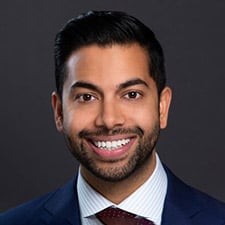
“I was fortunate to be a producer on the film and to help not only with content on the film and that viewpoint but also help to build the coalition of support and action as the next steps with those families,” Dr. Sathya said.
That same throughline—honoring families by preventing the next empty room—shapes Northwell Health’s broader work to reduce firearm injury as a public health issue.
Northwell Health is part of the AMA Health System Member Program, which provides enterprise solutions to equip leadership, physicians and care teams with resources to help drive the future of medicine.
It’s about the families
“The concept and what it’s trying to do really stood out to me having been working in this space as a pediatric trauma surgeon and as a gun violence prevention researcher and public health researcher for years,” Dr. Sathya said. “There was something different about this film in that it didn’t talk about guns. It showed the empty rooms and parents who have lost their kids.”
“One thing that rings true is that it resonates with everybody. It doesn’t matter which side you’re on,” he said. “I have yet to meet a family that doesn’t want their kids to be safe, doesn’t want zero mass shootings and less violence. You just won’t find a family that doesn’t want that.”
“People’s solutions might be different, and we often might think they’re radical, but they want the same thing,” Dr. Sathya said. “It’s just how they get there that might appear different and this film brings that raw reality to everybody because we can all think about our kids or kids in our lives and what those empty rooms are like—the smells and what it would be like and how we probably wouldn’t want to ever touch that empty room.”
“This film shines that vantage point from an apolitical lens in a way that’s extremely powerful. We’ve had people on both sides of the spectrum watch this film and really shift the way that they think about this because of it,” he said. “And then, for me personally, it was an honor because working with these families, becoming close with a lot of the families that have gone through these tragedies has been heartbreaking, but also just to see their advocacy and their strength is inspiring.”
Make a change in gun violence prevention
“That empty room can happen to anybody of any ideology across this country. It’s really that element that is bringing people together. It’s that viewpoint rather than talking about guns, the history of guns. It’s really what’s left behind,” said Dr. Sathya. “There are solutions we know that can work, that can still preserve the second amendment … but we don’t have to have public mass shootings.”
His work involved a lot of content and fact checking and ensuring no lines were being crossed with respect to politics or highlighting things that may be perceived poorly from gun prevention advocacy groups or pro-gun groups.
Beyond that, Dr. Sathya also helped with building out the campaign that occurs after watching the documentary.
“The website, alltheemptyrooms.com, where we are driving people and the hashtag #NoMoreEmptyRooms, we’re trying to create a campaign from that,” he said, noting that “even in the panels we did after the screenings of the film, it is about being able to take what’s in that film and understanding how we can make change.”
“We’ve done screenings in academic universities, hospitals, movie theaters, sports venues, and they all have a different audience,” Dr. Sathya said. “So, I was able to help the team quite a bit in just understanding those different audiences and how you can tailor the conversations around this film to be able to make everybody in the audience feel like they can do something about this issue.”
While there are a lot of solutions around gun violence, “there are other solutions that people can focus on that have nothing to do with guns: violence intervention work, suicide prevention work,” he said. “It’s much more about the other types of gun violence, so just bringing out all that stuff in the post-film discussions was important.”
Dr. Sathya also represents the American Pediatric Surgical Association on the AMA’s Firearm Injury Prevention Task Force. The task force has collaborated with the Ad Council and health care leaders on a new digital resource hub as part of the “Agree to Agree” campaign to equip physicians and other health professionals with the educational tools to help counsel patients about firearm safety. Northwell Health is part of this work along with other organizations.

Make prevention routine in clinical care
For Northwell Health, firearm injury prevention is designed to work the way other public health screening does: routine, systemwide and built into care. The Center for Gun Violence Prevention—which began in 2019 and now has more than 110 different initiatives—describes its work as spanning clinical care, best practices, support services and research so physicians and other health professionals have a clear pathway from “ask” to “help.”
“We work across multiple different domains, regionally, statewide and federally. We have a public health policy arm where we really help inform through evidence,” Dr. Sathya explained. “We have a community outreach arm. We work closely with faith-based organizations, schools and law enforcement to implement programs, firearm safety education programs, and violence intervention education programs in the community.”
Additionally, there is a “research arm and an education arm. We educate all our residents and medical students on gun violence prevention efforts,” he said.
But one of Northwell Health’s big efforts internally is the National Institutes of Health-funded gun violence prevention screening program.
“We’re the first system in the country to universally screen all patients for gun violence risk,” Dr. Sathya said. How it works is “every patient who comes into our hospitals gets questions about firearm access, related risk and violence related risk—do you have access to a firearm, and do you hear gunshots in the community? Or how often do you hear gunshots in the community?"
From there “we offer violence intervention or gun safety interventions as a primary prevention lens, not a secondary prevention,” he said. “We’ve now screened 350,000 patients as a result of that program, and that’s scaling to other hospitals in the country.”
Measuring impact is complex, Dr. Sathya added, so the team tracks practical markers—whether people use gun locks, store firearms safely and connect with violence intervention resources—which signal that behavior can change when prevention is built into usual care.
Community and health system partnerships are key
Northwell Health’s strategy extends well beyond the exam room. For example, on the community side, Dr. Sathya pointed to programs aimed at upstream drivers of violence. Through a mentorship and workforce pipeline effort, young people are connected with job opportunities and partnerships that bring prevention into schools.
Another example is the work with Sandy Hook around an anonymous school reporting system, with Northwell Health serving as the health care resource when students are identified as being in crisis.
Then, at a national level, “we have our health system collaborative with 600 hospitals in 38 states that we started in 2020,” Dr. Sathya said. “That’s a collaborative where hospitals can learn what they can do on the topic of gun violence prevention, how they can implement those programs.”
“That’s actually what helped launch the ‘Agree to Agree’ campaign that the AMA is also part of. It was those health systems coming together on public awareness,” he said. “We could not do this without our many partners.”
Physician education on this topic is also available on the AMA Ed Hub™ and includes the AMA Firearm Injury Prevention Task Force educational session, Health Care Strategies for Firearm Injury Prevention, as well as the AMA developed module, The Physician's Role in Firearm Injury Prevention.