For physicians in Washington state, the credentialing form that most hospitals, health plans, physician groups and others use has been overhauled for the second time in less than five years to better ensure that physicians are not discouraged from seeking mental and behavioral health care.
In 2023, officials revised the Washington Practitioner Application to get rid of questions about past care related to mental health or substance-use disorder and instead posed questions that only asked about any current conditions. That was a change the AMA, the Dr. Lorna Breen Heroes’ Foundation and others have championed.
Changes made early this year fine-tune the wording even further to make questions less stigmatizing—all in an effort to support physician well-being and reassure doctors that it will not hurt them professionally to get the care they need.
Here are a couple of differences in how questions will be asked in 2026.
2023: Do you presently use any drugs illegally?
2026: Do you currently use any substance (legal or illegal) that impairs in any way your ability to practice with skill and safety?
2023: Do you have any physical, mental health, or substance use condition that currently impairs, or could impair, your ability to practice your profession in a competent, ethical, and professional manner?
2026: Are you currently suffering from any condition that impairs your judgement or that would otherwise adversely affect your ability to practice medicine in a competent, ethical, and professional manner?
“It took multiple iterations, but … I think it encourages people to get help that they need,” said Makrina Shanbour, MD. She is the director of provider experience at Confluence Health in Wenatchee, Washington, and was involved in helping make the changes happen.
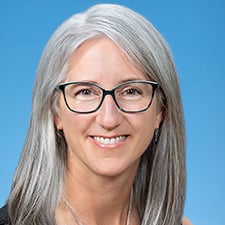
Confluence Health is part of the AMA Health System Member Program, which provides enterprise solutions to equip leadership, physicians and care teams with resources to help drive the future of medicine.
Studies show changes like those made in Washington are needed to make physicians more willing to seek mental and behavioral health care for themselves.
In one national study, four in 10 physicians told researchers they were reluctant to seek help. And physicians who lived in a state where the initial or renewal licensing application had overly broad questions about mental health history were 20% likelier to be reluctant about seeking help.
Meanwhile, an American Hospital Association report lists stigma associated with talking about and seeking behavioral health care—including fear of losing hospital privileges via the credentialing process— as a key driver of suicide in the health care workforce.
As the leader in physician well-being, the AMA is reducing physician burnout by removing administrative burdens and providing real-world solutions to help doctors rediscover the Joy in Medicine®.
More certainty for physicians
Washington was one of the early adopters of physician health programs 40 years ago, resulting in the independent nonprofit Washington Physicians Health Program (WPHP) that since 1986 has worked confidentially with physicians and other health professionals to restore their health.
Christopher Bundy, MD, MPH, is the executive medical director of WPHP, which provides assessment, treatment, referral and monitoring for the state’s doctors who have mental health or substance-use disorders or other conditions that can affect a physician’s ability to practice medicine safely. Through that work, Dr. Bundy has seen firsthand how the different questions over the years have impacted physicians’ decisions on whether to seek treatment or whether to disclose treatment if they sought it.
People seeking help are sometimes under pressure from a credentialing entity or an employer saying they need to get a seal of approval from WPHP before returning to work, he said. But they are anxious and not sure what to do if they are later asked questions about their health during a credentialing or approval process. WPHP professionals always advise physicians to be honest when answering the questions.
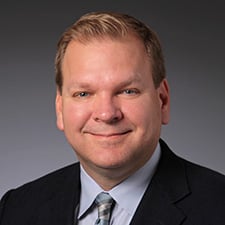
Now, Dr. Bundy said, he and his WPHP colleagues can reassure a physician or other health professional that they will be OK and that there will not be negative professional consequences.
“It’s just a whole other level of being able to reassure knowing that for the vast majority of cases now, those questions aren’t going to be asked,” said Dr. Bundy, who is also chief medical officer for the Federation of State Physician Health Programs.
Nearly 40% of the staffers from state medical associations and national specialty societies surveyed by the AMA (PDF) said physician burnout and well-being will be a top state advocacy priority in 2026.
By September 2025, more than 40 medical boards and over 1,800 health systems, hospitals, medical centers, clinics and other facilities verified their licensing or credentialing applications are free from stigmatizing questions. That’s a big jump from 2022, when only 19 medical boards and a few dozen hospitals and health systems had reviewed their applications.
More than 2 million physicians and other licensed or credentialed health professionals can benefit from these reforms. “This success would not have been possible without the collaboration between the AMA, the Dr. Lorna Breen Heroes’ Foundation, the Federation of State Medical Boards, the Federation of State Physician Health Programs, the National Association of Medical Staff Services and all the organizations that helped to make these changes a reality,” according to the “AMA State Advocacy Impact Report: 2025 Year in Review” (PDF).

Creating a safer patient environment
Moving to a credentialing system that does not penalize people makes it easier for physicians who need help to seek it.
“The truth shall set us all free,” Dr. Bundy said. “And that, to me, is the kind of person you want to be bringing into your institution and not penalizing by asking intrusive questions.”
Confluence Health’s Dr. Shanbour and Dr. Bundy both pushed for the changes to the Washington Practitioner Application that had to go through the Washington Credentialing Standardization Group, which is tasked with updating the application and only makes changes every other year.
They encouraged others seeking changes in their state or health care organization to find other advocates who will help move the issue forward. For example, they built a coalition of diverse Washington state stakeholders, including major players in academic medicine and health care delivery.
Drs. Shanbour and Bundy also said it’s important to dispel any misperceptions about standards involving the questions that organizations must ask. For example, they got clarification from URAC, a widely recognized, independent, national accreditation organization, on their standards.
Dr. Bundy also noted that the changes to the Washington Practitioner Application bring it into alignment with the National Association Medical Staff Services’ Ideal Credentialing Standards.
The physician champions also pointed to the importance of involving the AMA, including the fact that the reforms have been made part of the AMA’s Joy in Medicine Health System Recognition Program.
Drs. Bundy and Shanbour encouraged others to pursue credentialing question changes as the culture toward well-being has changed for the better since the COVID-19 pandemic began.
“It’s just had this tremendous domino effect of getting these reforms going in ways that we really struggled for many years to achieve,” Dr. Bundy said.
Dr. Shanbour agreed that “it really seems like the tide has turned across the country on this issue,” and she encouraged others to ride “on that wave and that that momentum that's already started.