As the AMA’s new vice president of professional satisfaction, Heather Farley, MD, MHCDS, takes the helm of a portfolio focused on cutting physician burnout and elevating joy in work across care teams. She succeeds Christine Sinsky, MD, and brings more than a decade of health system-level experience with embedding well-being into daily operations.
Dr. Farley previously served as the inaugural chief well-being officer at the Medical University of South Carolina and ChristianaCare, where she launched one of the nation’s first peer-support programs, designed and operationalized enterprise-wide well-being infrastructures, and built integrated strategies that drove lasting culture change.
Now at the AMA, Dr. Farley is guiding national strategy for initiatives such as the Joy in Medicine® Health System Recognition Program and the Organizational Biopsy® to help health systems measure what matters, remove barriers to care and support teams at scale.
Through their ongoing efforts to reduce physician burnout and enhance well-being, 109 hospitals, health systems and medical groups have been honored in 2025 by the AMA Joy in Medicine Health System Recognition Program. These organizations join a strong cohort of organizations from 2024. This brings the currently recognized total to 164 organizations, which represents 449,058 physicians. Each health system is recognized for a two-year period.
As the leader in physician well-being, the AMA is reducing physician burnout by removing administrative burdens and providing real-world solutions to help doctors rediscover the joy in medicine.
“The need could not be clearer. Across the country, physicians are signaling that the way we work is unsustainable,” said Dr. Farley. “We have both an urgency and an opportunity to reimagine health care so that professional satisfaction is not the exception, but the norm.”
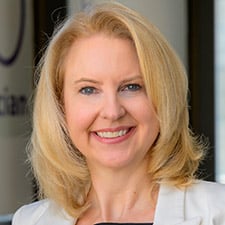
“As the inaugural chief well-being officer at two different organizations, I truly enjoyed building that infrastructure and demonstrating that system change is possible, but I’ve also felt a calling to do this work on a larger scale and at the national level,” she said. “This opportunity to work with all of my colleagues at the AMA was something that really spoke to me. The AMA is uniquely positioned to lead this work, and I am really excited to be part of that journey.”
For this Q&A, Dr. Farley shared what she has learned from building enterprise programs, her early priorities in the role and how the AMA will work with physicians and health systems to make meaningful, measurable progress on professional satisfaction.
AMA: What are your short- and long-term goals in this new position at the AMA?
Dr. Farley: Immediately, in the short term, my goal is to really listen and to learn from physicians and our health systems. How can the AMA be most helpful in addressing their pain points and removing barriers to meaningful work? I want to ensure the strategies we develop are grounded in reality, and that our efforts are targeted where they will yield the greatest benefit.
In the long term, one of my major goals is to build partnerships. These are unusual times, and it’s going to require us to partner in unique ways that we haven’t before in order to drive truly transformational work.
Those partnerships are also important in creating alignment. There are lots of entities that are involved in this growing well-being and professional satisfaction movement, but it’s so important for us to be rowing in the same direction and have alignment around what the most important levers are for us to pull and how we’re going to measure our progress.
Ultimately, my aspirational goal is that professional satisfaction and well-being are integrated into the strategic plan for every health care organization, and truly viewed as an operational imperative for success. That’s my future vision and goal.
AMA: How do you see your role advancing the AMA’s mission to reduce physician burnout in new ways?
Dr. Farley: The AMA has been a national leader in elevating burnout as an urgent issue and also championing joy and professional satisfaction as essential to medicine. My role is to build on that foundation.
In terms of advancing the mission in new ways, I would point to an experience from several years ago that has significantly influenced my approach to this work. Back in 2022, during one of the darkest periods of the COVID-19 pandemic, I collaborated with Dr. Christine Sinsky at the AMA and Dr. Tina Shah, former senior advisor to the surgeon general, to co-lead the development of the “2022 Healthcare Workforce Rescue Package.”
Within weeks, leaders from the American Hospital Association, American Organization of Nursing Leadership, Dr. Lorna Breen Heroes Foundation, Institute for Healthcare Improvement, AMA and others came together to offer practical, high-impact steps to stabilize and support the workforce. That kind of swift, unified action was pretty powerful and shows what’s possible. We need more of that.
One of the other trends that really worries me about our U.S. health system right now is that I see this growing trust gap between front-line physicians and care teams and health system leaders. We’ve got to figure out a way to have different conversations and to heal that trust gap.
That requires elevating and bringing back the physician and care team voice, so that our workforce feel like they have agency and are able to impact their work environment. So, I’d like to see us work collaboratively with health-system leaders and these different entities to move the needle here—that will go a long way to healing the trust gap.
Finally, I’d also like to see us approach this work more comprehensively. Physicians are the focus of the AMA, but we work in interdisciplinary care teams, so approaching this more comprehensively to attend to the well-being and satisfaction of the entire care team is important.
AMA: You worked with the AMA in your previous roles as chief well-being officer and receiving Joy in Medicine recognition. How did that prepare you to guide other organizations through similar journeys?
Dr. Farley: At ChristianaCare, our work with the AMA was really instrumental to our progress and our success. We used AMA-supported tools to measure burnout and professional fulfillment, and that really gave us a clear picture of what we were dealing with and where we needed to target improvements. It opened doors for some candid conversations with our physicians, our care teams and with our leaders. We used that data to help prioritize improvement and build trust.
The Joy in Medicine recognition program was another important milestone for us at ChristianaCare. It didn't just validate our efforts. It also provided a road map for where we needed to go and helped us to hold ourselves, our leaders and our organization accountable. We also leaned pretty heavily on the AMA STEPS Forward® resources to guide our efforts, and we were able to contribute back to that body of resources as well.
Those experiences really showed me how AMA resources can move an organization from insight to action. Having that firsthand experience is something that I can bring to other organizations who are on this journey with us together.
AMA: What makes the Joy in Medicine program so impactful and how will you help expand its reach and influence?
Dr. Farley: There are three things that make it so impactful. One, it provides that road map for organizations that want to make meaningful changes. It also signals to physicians and care teams that their well-being is a priority for their organization and it’s being taken seriously at the highest levels. And finally, it creates that organizational accountability.
What I especially value is that the program balances recognition with rigor. It celebrates organizations that are making progress, but it also sets the bar high, requiring evidence of system level change.
Looking ahead at opportunities to deepen the impact of the Joy in Medicine recognition program, I’d love to see us expand participation and support for smaller organizations so that health systems of all sizes see this as an attainable and meaningful path.
We’ve done a great job of creating peer-to-peer learning networks, but we can expand those and foster even stronger learning across the recognized organizations so that the practical and successful strategies are spread more quickly. Finally, and we’re starting to do this already, we are listening closely to the organizations that have applied so that we can understand how we can make this an even more valuable resource and platform for them.
AMA: How do you balance the systemic policy level changes the AMA advocates with the day-to-day needs of physicians?
Dr. Farley: The AMA is certainly listening to physicians and care teams and advocating for changes that will help them to do what they do best—caring for our patients and our communities. But policy change takes time and people need help now.
While we are working to reduce the administrative burdens, improve EHR usability, and strengthen workforce support, the AMA is also helping to connect the dots between big picture advocacy and local practice. So, practical tools such as the Getting Rid of Stupid Stuff initiative, the de-implementation checklist (PDF), debunking regulatory myths and “real PTO” help remove some of those pebbles in people's shoes on a shorter timeline.
The AMA also has a wealth of other resources that help boost support for physicians and care teams, especially around mental health and well-being. For example, peer support, stress first aid and removing regulatory barriers through our partnership with the Dr. Lorna Breen Heroes’ Foundation.
There is a wealth of resources that help bridge that gap between the big-picture advocacy efforts and what it's like on the ground today, with more to come.

AMA: What does professional satisfaction mean to you, and how do you envision creating a prevalent culture in U.S. health care where that is not an exception, but a norm?
Dr. Farley: Professional satisfaction—for me—is being able to do the work that we're called to do in a way that feels meaningful and sustainable. What we're striving for, in my opinion, has been best described by our former surgeon general Dr. Vivek Murthy in the surgeon general's framework for workplace mental health and well-being.
That framework shows us that when we work in an environment that supports our professional satisfaction and our well-being, we first and foremost feel like we have a voice. We are protected from harm physically, emotionally, and morally. We have a sense of connection and community. We have opportunities for growth. We enjoy work-life harmony, and we feel valued. We know that we matter and our work matters.
So, how do we create that culture so that what I just described is the norm and not the exception? That requires us to prioritize well-being and professional satisfaction at the highest levels of an organization, and hardwired it into daily operations. We need to help organizations and leaders understand that this is a win-win situation. This work is not separate from the broader performance priorities of health systems.
When we do this work well and we support our workforce, we perform better, our patients have a better experience, we see better quality and safety outcomes, and systems have better financial performance as well.
AMA: What message do you most want physicians and health systems to take away about the AMA’s commitment to well-being under your leadership?
Dr. Farley: The AMA is unwavering in its commitment to advancing professional satisfaction and well-being for physicians and care teams. That means we are listening. We hear the frustration and exhaustion that come from practicing in systems that don’t always feel designed with you in mind. We also hear the hope—the desire to have meaningful patient relationships, to work in environments that allow you to do your best and to feel valued for the contributions you make every day.
Our commitment is to advocate for you at the national level and to equip your organizations with the tools and frameworks to make those hopes a reality.
For health systems, the message is that prioritizing well-being is not optional. It’s essential to deliver on your commitments to your patients and communities. This is a win-win. When we invest in the well-being of our health care workforce, we are better positioned to execute our ambitious strategic and operational plans. Well-being drives performance and it’s the right thing to do.
At its core, this work is about creating environments where the people who care for others can do so with meaning, connection and joy. Let’s restore humanity to health care. The AMA is ready to lead with courage and collaboration, to align the field around the most important levers and to measure what matters so progress is real and lasting.
The AMA is all in on building a future where professional satisfaction and well-being are not the exception, but the norm.
AMA: What else would you like to emphasize?
Dr. Farley: We have a once-in-a-generation opportunity to reshape how health care supports its workforce. Work can and should be a source of meaning, connection and joy. Let’s remember that what we do in health care is uniquely challenging—but it’s also uniquely rewarding.
I am encouraged by the momentum we’re seeing across the country, and I’m eager to partner with others to accelerate that momentum and create an environment where our entire health care workforce can thrive.