Hattiesburg Clinic has been on a path toward value-based care for more than three decades now—except that the term “value-based care” had not yet been coined when this effort started. Similarly, its mission statement, adopted June 22, 1992, also sounds a lot like health care’s “quadruple aim,” but the statement was drafted decades before that term was developed as well.
The statement notes that Hattiesburg Clinic’s mission is to provide high quality, patient-centered health care in an efficient and cost-effective manner, and that its goal is to be the health care provider of choice in the communities it serves.
Value-based care is commonly defined using an equation that shows value equaling quality (as measured by patient safety, outcomes and service) plus patient experience divided by cost.
Citing the continuous cuts to Medicare physician pay, Bryan Batson, MD, CEO of the independent, physician-led and -governed Hattiesburg Clinic said “our organization realized that if we relied solely on fee for service … we would not remain independent.”
Dr. Batson, who is also the vice chair of the AMA Integrated Physician Practice Section (AMA-IPPS) Governing Council, spoke at an education session on value-based care and independent practice at the 2025 AMA Annual Meeting last month in Chicago. The session was sponsored by the AMA Private Practice Physicians Section (AMA-PPPS).
Growing complexity and numerous other barriers have discouraged many practices from adopting value-based care, but physicians remain interested in the model and they are looking for more clarity before moving ahead, said Carol Vargo, the AMA’s director of physician practice sustainability.
Hattiesburg Clinic is part of the AMA Health System Member Program, which provides enterprise solutions to equip leadership, physicians and care teams with resources to help drive the future of medicine.
Doctor buy-in aids culture change
Hattiesburg Clinic has more than 450 physician and nonphysician providers in 17 counties in South Mississippi. The AMA and consulting firm Manatt Health recently published a case study (PDF) highlighting Hattiesburg Clinic’s journey to value-based care (VBC) through its adoption of multiple technology platforms.
Subscribe for the latest news in value-based care.

“Nestled in a geographic region with historically poor health outcomes, Hattiesburg Clinic’s journey to VBC is an impressive story of how leaders committed to high-quality patient care can leverage technology to meet their organization’s needs,” says the case study.
“Hattiesburg Clinic then started participating in the Centers for Medicare & Medicaid Services’ (CMS) Physician Quality Reporting System (PQRS) through the Group Practice Reporting Option (GPRO) in 2012 to understand how its organization was performing compared to other group practices around the nation,” the case study notes. “It did not perform as well as it had hoped, spurring investment over the next several years in technology solutions to better support its VBC initiatives and improve care.”
Dr. Batson acknowledged that, according to the PQRS, Hattiesburg Clinic was designated as a low-quality, high-cost health care provider.
“This was a real ugly look at where we were,” Dr. Batson said, but it also spurred a six-year effort that reversed that classification and eventually earned Hattiesburg Clinic recognition as a high-quality, low-cost health care organization.
“We were delivering better health care to our patients,” Dr. Batson said.
Among other quality initiatives, Hattiesburg Clinic launched an accountable care organization (ACO) that has saved the Medicare system almost $82.5 million between 2016 through 2023.
This effort included investing in technology solutions and engaging its EHR data to address three critical areas to prevent unnecessary hospitalizations: chronic care management, transitional care management and health inequities.
Along with delivering high-quality care at reasonable cost, Hattiesburg Clinic has also been well-rated by its staff, and it has been honored by Forbes magazine multiple times as one of Mississippi’s best places to work.
Learn more with the AMA about value-based care, including ways to improve data sharing and best practices for payment methods.
Bottom-up approach a must
Dr. Batson noted that moving to value-based care requires a culture change with strong physician buy-in.
“This is not a top-down concept,” he said. “The ‘why’ really matters.”

While fee for service is reactive, value-based care is predictive, and its focus on proactive, preventive care “keeps patients healthier,” Dr. Batson said.
And, by using risk adjustment and AMA Current Procedural Terminology (CPT®) care-coordination codes, practices can be fairly reimbursed for the nonpatient-facing tasks that this type of care requires.
For this population-based approach to work, practices must “think about not just the patients on our schedule for the day, but all those that aren’t,” Dr. Batson said.
He said that this approach requires “a good foundation of data,” which might be a “potential hurdle” for some practices or groups to overcome.
Also speaking was Karen L. Smith, MD, an AMA member and family physician with a solo practice in rural Raeford, North Carolina—an area she described as the “buckle of the stroke belt.”
Dr. Smith noted that small practices like hers can participate in value-based care and she joined an ACO in 2018.
The first year, however, was a tough one as her practice’s linkage to a small critical-access hospital with poor measures led to her practice having to give money back to CMS.
Even with that uneasy start, Dr. Smith said she had no plans to drop out of the ACO.
“We knew what we had to do to make community healthier,” she said. “It’s something inside of me and I needed to do this to fulfill my satisfaction in being a family physician.”
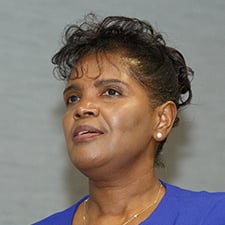
To meet her cost and quality targets, Dr. Smith focused on bringing her patients’ hypertension under control. At the end of 2023, she had done so for 73.1% of her patients. Noting that she gets weekly data updates, Dr. Smith said that—at the time of the PPPS program—that figure was up to 86%.
“BP control is the single most effective opportunity to save lives in primary care,” she said, adding that it also lowers overall costs.
Dr. Smith recounted her experience and how her ACO helped during the COVID-19 pandemic in an episode of “AMA Moving Medicine.”
It takes astute clinical judgment as well as a commitment to collaboration and solving challenging problems to succeed in independent settings that are often fluid, and the AMA offers the resources and support physicians need to both start and sustain success in private practice.
AMA resources can help
Dr. Smith noted that AMA educational materials have been particularly useful in helping to get her patients’ hypertension under control.
The AMA has also worked with the health insurer trade group AHIP and the National Association of Accountable Care Organizations to advance sustainable value-based care adoption.
A highlight of that collaboration has been the publication of a playbook of best practices for value-based care payment arrangements (PDF). The playbook offers an in-depth guide to help overcome key challenges in such arrangements.
The payment best-practices playbook builds on prior work that was focused on improving data collection and sharing within these value-based care arrangements.