As a medical student, do you ever wonder what it's like to specialize in orthopaedic surgery? Meet AMA member Jeffrey Pratt, MD, MPH, an orthopaedic surgeon and a featured physician in the AMA's “Shadow Me” Specialty Series, which offers advice directly from physicians about life in their specialties. Check out his insights to help determine whether a career in orthopaedic surgery might be a good fit for you.
The AMA's Specialty Guide simplifies medical students' specialty selection process by highlighting major specialties, detailing training information and providing access to related association information. It is produced by FREIDA™, the AMA Residency & Fellowship Database®.
Learn more with the AMA about the medical specialty of orthopaedic surgery.
“Shadowing” Dr. Jeffrey Pratt
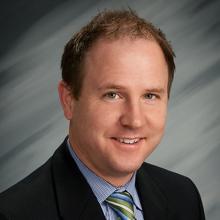
Specialty: Orthopaedic surgery.
Practice setting: Physician-led multispecialty group.
Employment type: Employed by a group practice that is part of Confluence Health in Central Washington. Confluence Health is part of the AMA Health System Member Program, which provides enterprise solutions to equip leadership, physicians and care teams with resources to help drive the future of medicine.
Years in practice: 18.
A typical day and week in my practice: I love variety in what I do daily. My specialty affords me the opportunity to experience time in the operating room two to three days a week at the surgery center and hospital; two to three days a week in clinic and doing office-based procedures; and time as a service line director. I often work 45–50 hours per week, but the total can be higher with on-call responsibilities.
The most challenging and rewarding aspects of orthopaedic surgery: The most challenging aspect of caring for patients in my specialty is finding enough time to connect with people, and not just patients. Time is a scarce resource and learning how to be efficient and effective is constantly evolving. Not far behind would be dealing with insurance companies, in some cases just to provide what we consider the standard of care.
The most rewarding aspect is changing lives and improving function and quality of life for patients. Watching someone with a chronic or acute process improve, sometimes dramatically and sometimes instantaneously, is immensely satisfying.
The impact burnout has on orthopaedic surgery: As in most of health care, the pandemic affected burnout in our field. I believe a lot of our surgeons operate at the highest level, which doesn’t always leave margin for increasing one’s bandwidth when other stressors of life come into play. As a result, I feel burnout is real and plays a role for some, resulting in a choice to retire earlier than other professions.
How Confluence Health is reducing physician burnout: I am fortunate, as I believe that Confluence Health takes the reality of burnout very seriously. Our health system has taken an active role in organizing physicians across the system and from all specialties with not only social events—where providers can discuss their concerns—but also a dedicated advocate to address issues and increase engagement.
Programs such as “Purposeful”—a well-being program based on behavioral science that helps people connect with their purpose to increase job satisfaction and engagement—book clubs and a concierge service have all become available over the last year to assist in minimizing the effects of burnout.
How my lifestyle matches, or differs from, what I had envisioned: With the sometimes-limited exposure we have as medical students, it is difficult to fully understand the career path and its tolls when we embark upon it. I enjoy what I do and the complex problem solving it affords. But there are trade-offs. There is the stress and sometimes long weeks, but there is also the reward of helping people and positively changing lives and function. I think the latter concepts are the things I envisioned entering medicine.
Work-life balance is a learned art and one that I am still striving to do better at. I think traveling abroad and listening to the next generation coming into practice has provided me with more clarity of what that balance might look like. I am excited about newer technologies and how we might leverage them to help us achieve a better balance in EMR and patient experience.
Skills every physician in training should have for orthopaedic surgery but won’t be tested for on the board exam: Knowledge base, anatomy and pathology of disease processes are all important, and I believe our system does do well at instilling these and testing for them.
In recent years medical training has done a better job with improving bedside manner and patient-physician communication which is a critical skill in providing care for patients when they are sometimes at their most vulnerable. Additionally, while there really isn’t a way to test for technical skill and dexterity, they are critical to what we do in the operating room.
One question physicians in training should ask themselves before pursuing orthopaedic surgery: I was told once by a chief resident that the right thing to do is usually the most arduous, whether it be more time consuming or more inconvenient. I think it is true, and how selfless we are is reflected in this notion. I think success in this specialty—and a lot of medicine—comes down to: Are you willing to commit to doing this on a daily basis?
Books, podcasts or other resources every medical student interested in orthopaedic surgery should be reading or listening to:
- The Resident Orthopaedic Core Knowledge online learning platform from the American Academy of Orthopaedic Surgeons.
- The “Journal of Hand Surgery” podcast.
- A textbook, Green’s Operative Hand Surgery.
Additional advice I would to give students who are considering orthopaedic surgery: Without a doubt: If you haven’t rotated through orthopaedic surgery, you need to get your feet wet and your hands dirty—there isn’t really any other way to experience the specialty firsthand (pun intended). Also, upper-extremity orthopaedics is a particularly exciting and rewarding sub-specialty.