As a resident physician, are you thinking about where you want to build your future in medicine? Meet Christopher Garofalo, MD, a family medicine physician in private practice and a featured voice in the AMA’s “Finding My Place in Medicine” series. Dr. Garofalo is also a delegate to the AMA House of Delegates.
In this series, physicians reflect on what influenced their decisions when choosing where to work—and what they wish they had known earlier. Explore his journey to help guide your own path toward a fulfilling medical career.
If you are looking for your first physician job after residency, get your cheat sheet now from the AMA. In addition, the AMA Transitioning to Practice series has guidance and resources on deciding where to practice, negotiating an employment contract, managing work-life balance, and other essential tips about starting in practice—including in private practice.
"Following” Dr. Christopher Garofalo
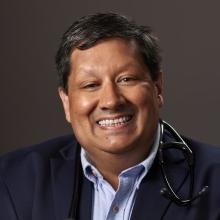
Specialty: Family medicine with obstetrics.
Practice setting: Outpatient group.
Employment type: Private practice within Family Medicine Associates of South Attleboro, in Massachusetts.
Years in practice: 24.
How I got my start in medicine: I was born and raised on the South Shore of Massachusetts, graduating from Weymouth South High School. I chose to attend Northeastern University because I wanted to go to college in Boston and it had a cooperative education program. That co-op program allowed me to work and earn money, so it minimized my education debt. This was an important consideration, as my family was lower middle class and we didn’t have a lot of money to support my education, and I knew I wanted to be a physician.
I then chose UMass [Chan] Medical School, in Worcester, as it had financial incentives that reduced the cost of medical school by two-thirds if I practiced in Massachusetts as a primary care physician. following my residency. Finally, I matched with the UMass family medicine residency for the final leg of my training. Before ranking UMass, I did investigate moving to another part of the country, and I interviewed at multiple programs in North Carolina because it was still close to family and friends. During residency interviewing, however, I met my future wife, which was a strong pull to stay in Massachusetts.
After completing residency, I wanted to include obstetrics (OB) in my family medicine practice, so that was helpful in limiting the places I could go. Sturdy Memorial Hospital, in Attleboro, offered the opportunity for family physicians to practice obstetrics, so I chose that as my first “real job.”
Why I chose to work in this practice setting: Sturdy Memorial was very supportive of family physicians in general, but it was particularly supportive of including OB as part of my practice. I joined three other family physicians who did OB, which made call responsibilities manageable and provided valuable mentorship.
There were two OB groups who were very collegial and nurturing to us. Also, I was part of an established hospital-affiliated practice with two other family physicians, so there was a helpful office environment with peers, staff and patients who understood family medicine philosophy. And the office had a lab and an x-ray, which helped support patient needs.
Sturdy allowed me to practice obstetrics as a full part of my practice. Working alongside family medicine colleagues who were already established in practice was important, as it eased the transition from being supervised as a resident. My first job also allowed me to practice the full spectrum of family medicine, including pediatrics, adults, women’s health and geriatrics, as well as chronic, urgent and preventive care. I did procedures such as mole removals, partial toenail removals and endometrial biopsies. Many family medicine physicians find their scope limited in some way, even when coming out of training.
The top three qualities for a great place to work for physicians:
- Autonomy for physicians.
- Good management that allows physicians to be physicians and not micromanagers.
- Modeling, as in smiling and having fun.
How my current practice supports physician well-being and work-life balance: As a physician-owner in private practice, I set my schedule, the hours I work and how many patients I see during those hours. This autonomy allows me the freedom to take time to be with family when needs come up.
We have an EHR that is cloud based, which allows me the flexibility to get work done in places other than my office. Guardrails and limits on EHR use outside of the office are necessary, but having the freedom to leave the office at the end of the day—knowing I can finish work in a few hours after seeing my wife and children, going to a meeting or exercising—is critical.
Our practice has five physicians and three nonphysician clinicians, and we all work different schedules. This flexibility allows each of us to be satisfied with our work situation, which encourages longevity and stability in the practice, evidenced by the fact that all of the physicians have been at our practice for at least 15 years, which is nearly unheard of.
The varying work schedules also give flexibility to our staff—something we can offer that many nearby larger systems cannot. We encourage our staff, from our practice manager to medical assistants, to take time off when they need it. Our practice is open until 6 p.m. and on Saturdays, and we have a couple of employees who we might not have if we were strictly 9 to 5, Monday through Friday. We also have two staff parties every year that help us socialize away from the office and get to know one another in a more relaxed setting.
The workplace attributes that contribute most to my job satisfaction: I cannot stress enough how much the autonomy that comes with being an owner in a private practice is key to my satisfaction. If I had to work for a large system that stripped my autonomy, I likely would have left the traditional practice of medicine long ago.
One other way that I maintain happiness is through advocacy at the state and national levels. I am a delegate to the Massachusetts Medical Society and serve on multiple society committees, including as chair for the Committee on the Sustainability of Private Practice. I also advocate at a national level as a delegate to the AMA and can do so only because I have the ability to take time away from my patient duties to attend the meetings twice per year. Although advocacy work can be challenging and “wins” can be hard to come by, the very act of participating and being a voice for my colleagues and patients recharges my battery.
The other piece of my being able to do advocacy work is that the physicians and nonphysician providers in our practice help take care of each other’s patients when needed. I couldn’t do this without them and I hear from colleagues, residents and students that their ability to advocate is curtailed by less flexible and less supportive work environments.
The biggest challenges I faced when transitioning from residency to practice: The biggest is having confidence in making decisions independently about patient care. I went from an environment in residency where I was supervised—and there was always an attending physician to go to—to being the “someone” when needed.
On the first day as an attending, I did have colleagues that I could ask for help and consultants that I could call on, but at the end of the day, I made the decision about care and that decision was laden with the risk that it was a wrong decision. That is a heavy weight to carry. You rely on your training not just in memorizing facts, but in how to think about a patient's medical problems and where to go to get the information you need to make the best decision you can.

What I wish I had known about evaluating a job offer before choosing my first position: I wish I had more experience in the business side of medicine and employment. Our residency had a longitudinal program in our final year when we learned a little bit about this, but it wasn’t enough. Physicians are trained to provide top-notch, expert medical care to human beings, but when we are employed, we have only so much control over how we provide that care. Knowing more about the business aspect would have been helpful.
Why I changed practice settings midcareer: When I started at Sturdy, I took over the established practice of another family physician, so I had plenty of patients. Over a couple of years, I kept many of those patients and brought new ones to my practice to really make it mine. I was “their doctor,” which was a wonderful sentiment!
But when I moved from Worcester to my current home in North Attleboro, I needed a new primary care physician. Because I didn’t want to have my medical records at the same institution where I worked, I chose a local physician in private practice. After a couple of visits with him, he asked when I was going to leave my employed position and come work at his private practice. I had no interest initially.
However, about four years into my employment, I started to see a large influx of new patients into my schedule. Since the location I worked at was considered to be part of the hospital, whenever a patient came to the emergency department and didn’t have a primary care physician, they established care with me. This was not disruptive initially, but in time the new patients began to crowd out established patients.
The essence of family medicine practice is to provide longitudinal care over many years and decades. My patients and I valued that relationship, but it began to crumble when, instead of seeing my patients with diabetes every three months, it changed to become less frequent, even if this was detrimental to their health. I was less available to see patients when they had acute illnesses, and I had to triage them to urgent care. I lost the ability to have a longitudinal relationship with my patients.
Although more patients were able to obtain medical care, it was coming at the expense of my established patients. I wanted to reestablish a better balance, so I met with the chief financial officer of my organization, and when I explained my concerns, I was told that “some care is better than no care.” He meant that I would have to continue to see new patients even if it took time away from my established patients.
Some people don’t place a high value on the longitudinal relationship family medicine encourages, but I did, and it was critical to my happiness as a physician and a person. If I couldn’t have that, then it was time to look for a place and a model where I could. Leaving that meeting, I realized I needed a change and needed to move to a private practice. I called my primary care physician and told him I was ready to be in private practice.
How my current role compares with what I imagined: My current role has been a bit more stressful, as I share responsibility for everything in the practice—finances, hiring and firing staff, keeping the office clean and changing light bulbs. I didn’t truly understand the breadth of responsibility. Fortunately, I have four partners and we work together to run our practice and make it successful.
No matter the challenges or tribulations of owning my own practice, they are mine, and I have the ability to shape the solution in a way that works the best for everyone. That is how I imagined it.