Residency training can be one of the most stressful times of a physician’s career—demands are high, experiences are novel, and the pay is hardly commensurate with the work. Fitting in scholarly pursuits or publishing might feel like too lofty of a goal.
But if residents take on manageable projects and try to avoid getting discouraged, one expert said they might find that conducting scholarly work serves as an opportunity to learn while they’re advancing the practice of medicine.
“If you have passion, you do it,” said AMA member Ricardo Correa, MD, EdD, an endocrinologist and fellowship director and patient outreach and belonging director at the Cleveland Clinic in Ohio. “In medicine … science always changes, and one of our jobs is to continue promoting that science. That's why publication is so important. Sometimes just a simple case report can produce a lot of changes and can give a lot of information to many people.”
Dr. Correa also is a member of the AMA Council on Medical Education and an experienced physician researcher. He recently took the time to talk with the AMA about what he wishes he’d known as a resident about publishing—details that span from getting a mentor to dealing with manuscript rejection.
Having a passion is key
Dr. Correa, who completed his residency training in internal medicine and fellowship training in endocrinology, said he has always been interested in conducting research.
“I was very interested in research and publishing, so I took two years of research fellowship prior to starting residency,” said Dr. Correa. He recalled always wanting a career as a researcher.
“Originally, I am from Panama, and I really came to the U.S. to master that, because the opportunity here was great in the sense that they give you the opportunity to do research,” he said.
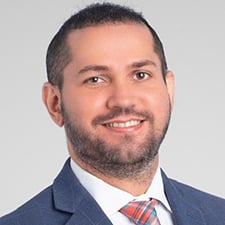
Dr. Correa said the passion helped him find a way to fit publishing into what is already a demanding schedule.
“It's more intense—residency—and you have less time, so almost all of the things that I did, they were during my own time,” he said. “It's not like you have, in residency, a lot of protected time. You are a very clinical person, so you don't have a lot of protected time for doing research or scholarly activities.”
The AMA Research Challenge virtual poster symposium and semifinals take place Oct. 22–23 and will feature research from more than 1,000 medical students, residents and international medical graduates from hundreds of medical schools and health care institutions in the U.S.
You can register now for the opportunity to:
- Score posters in the semifinals to help decide the top five finalists (AMA member exclusive).
- Connect with presenters and provide feedback to help advance their research.
- Get exposure to top research projects.
Free virtual event—Register now. Once you’ve had a taste of the event this year, you can start planning ahead to submit your abstract for next year’s Research Challenge to:
- Showcase your research for a chance to win $10,000, presented by Laurel Road.
- Gain research and presentation skills to enhance your CV.
- Discover what judges look for in a poster and presentation.
The 2026 AMA Research Challenge call for abstracts will open this month.
Rightsize your scholarly work
Resident physicians should look broadly at the options for publication and find a way to do it that works for them, Dr. Correa said.
“Not everybody has the same experience,” he noted. “During residency, there are many opportunities to do scholarly activities. And when I say scholarly activities, it doesn't have to be exactly research but can be literature review or a case report that you can find a way of publishing.”
A key early step is identifying the right mentor—a person who can be anything from a senior resident with experience in case reports to an established researcher with many publications under their belt. It all depends on what your goals are.
“Find somebody who already has published in the past, whatever you want to publish, and get guidance from them,” Dr. Correa said.
Especially early on, residents might want to aim for case reports or narrative reviews, he said. Mentors might even ask you to write a commentary on an article.
“It's variable from person to person, because sometimes it's easier to publish a case report than [it is to conduct] research,” Dr. Correa said. “Research takes more time. You have to be part of a team. You have to work intensely on your research, and finally you can publish it.”
An important next step is to find the journal that will best fit your project. Carefully check the instructions for authors, which may include limitations on the number of authors or the word count.
Here is a look, for example, at the author instructions for JAMA®. AMA members can explore an entire range of cutting-edge, peer-reviewed research and clinical information. The JAMA Network™ is a world-class resource for the whole medical community. If you are a member or interested in becoming one, keep reading to learn how to access these educational materials and innovative tools. Learn more.

Manage your expectations
The publication process isn’t always smooth sailing, particularly in the beginning. Resident physicians engaged in scholarly pursuits should be prepared for some early rejections.
“Do not get discouraged if the first time that you publish something, it doesn't get approved immediately, because that's normal,” Dr. Correa said. “If it's your first time, it's not going to be perfect, and during residency even more so because you don't have a lot of experience.”
Though some residents have previously completed PhD programs and are familiar with the process of journal article submission, Dr. Correa said most will have some bumps along the way.
“Most likely, it [your submission] is going to get rejected—sometimes two to three times—and then you find a final journal that will accept you,” he said. “Then, you learn for the next time, because the next time it's going to be easier.”
It’s also key to get your hands dirty as you prepare your materials. What does that mean?
“Do it the first time yourself,” Dr. Correa said, urging residents to get comfortable “learning the process, following the instructions” and developing mastery. “You will make mistakes, and that's why you have a group of people, co-authors and your mentor, who will review it and then will give you feedback.”
It’s normal to feel frustration if your first attempts don’t yield immediate publication, he said, but remember: There are many rungs on the ladder to achievement.
“Sometimes you can get disappointed because you wrote what you think is the best article in the world and when it comes back to you, everything's in red,” Dr. Correa said. “That will happen. But that's a process that will take some time to learn.”
Find out more about the AMA Resident and Fellow Section, which gives voice to—and advocates on—issues that affect resident and fellow physicians.