Thanks to the time spent shoulder to shoulder and the intense environment, physicians in residency and fellowship training likely will necessarily develop relationships of some kind with their co-residents. But it’s the caliber of those relationships that matter to your training experience, say experts and physicians who have been there.
“Having a positive kind of social connection really can make a huge difference for people in their experience of residency,” said Emily Lisco, MD, a psychiatrist and director of the emotional health and wellness program for house staff at Philadelphia-based Jefferson Health. “I’ve seen both where it doesn't feel that way and where it does, and I think it really can completely change how you feel about your training and even how you feel about your job day-to-day.”

Jefferson Health is part of the AMA Health System Member Program, which provides enterprise solutions to equip leadership, physicians and care teams with resources to help drive the future of medicine.
Dr. Lisco said the question then remains: How can programs and residents themselves create those positive peer relationships?
The key to unlocking those experiences may be psychological safety, which is enabled when residents feel comfortable letting their guards down with each other without worrying that they will be jeopardizing their academic standing or careers.
Co-workers can be powerful
Establishing a relationship of some kind may come naturally to physician residents and fellows, who are going through the same training programs at the same times.
“Sometimes you’re with your co-residents more than your family or your spouse,” Dr. Lisco said. “Depending on the rotation—some of those Q3 24-hour calls—you may not see anyone else except the people you work with, for a couple of weeks at a time.”
Ideally, the relationships that then emerge are positive ones. Research shows that relationships with physician colleagues can foster both learning and well-being.
“Peer groups can develop shared, evidence-informed pathways that later adopters can implement without reinventing solutions,” wrote the authors of a Perspective essay published earlier this year in JAMA®. Professional societies of physicians “illustrate how trusted peer exchange can accelerate learning, spread effective practices, and complement the formal published literature,” they wrote.
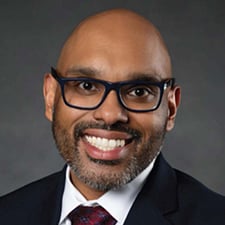
Jerry P. Abraham, MD, MPH, CMQ, is a family and community medicine physician and director of integrated services and public health at Kedren Community Health Center, a community health center and psychiatric hospital in South Los Angeles, where he also teaches psychiatry and family medicine at Charles R. Drew University of Medicine and Science.
“That's the beauty of mentorship. The more connected you feel with your peers and with your mentors, that is how we stay resilient and safeguard ourselves from all of these external pressures, burnout and moral injuries we're experiencing as physicians and trainees," said Dr. Abraham, who is also an active AMA member and the immediate past chair of the AMA Council on Constitution and Bylaws.
Explore this topic further with the AMA STEPS Forward® toolkit, “Resident and Fellow Well-Being: Optimize Well-Being at Work for Physician Learners.”
How to create relationships that work
Interactions among physicians in training can be complicated, particularly in situations where residents and fellows feel they are being judged against one another.
“The programs that maybe struggle more are where there is a lot of competition between peers, so it may not feel as safe to feel connected,” Dr. Lisco said.
But there’s another way of doing things, she added.
“Trying to have an environment that's supportive—where we're not constantly comparing residents to each other—helps to make it feel more psychologically safe to be close to one another,” Dr. Lisco said. “It will naturally allow for people to connect with one another.”
Well-being activities in which residents have the chance to socialize can be a good first step, she said. For the 2025–2026 year, Jefferson Health was honored with gold-level recognition as part of the AMA Joy in Medicine® Health System Recognition Program.
“There are now peer groups that can be built into didactics, where you can periodically meet and come together and build that space where you can actually vent about work in what feels like a safe way,” Dr. Lisco said. “I think a lot of residents really like that and it feels like there’s less explanation needed and there's more understanding and shared experience with their co-residents.”
The collegiality that develops can be positive for residents, for their training programs and for the patients they treat.
“The idea being: We lift one person up, and everyone comes up together,” she said.
For institutions interested in launching or revitalizing a residency peer support program, the AMA is hosting a Peer Support Workshop Oct. 28-29 that takes participants from strategy to execution in two days.

Peer relationships can last
Dr. Abraham also recommended that residents and fellows take the time to connect with their fellow physicians, for a variety of reasons.
In addition to boosting your well-being, having a professional network can also help you find your direction post-graduation. Spending time with physicians who have similar goals and career plans will create a natural framework for your professional and personal development.
“Find your tribe and your people, because that’s where you’ll be most successful,” he said.
Find out more with the AMA STEPS Forward playbook, "The Value of Feeling Valued: How Organizations Can Support Individual Physicians." It is enduring material and designated by the AMA for a maximum of 0.75 AMA PRA Category 1 Credit ™.
Learn more about AMA CME accreditation.